Picture of Mateusz 'Dziki' Dzikowski

Mateusz 'Dziki' Dzikowski

Senior Game Designer · 12+ Years in Game industry

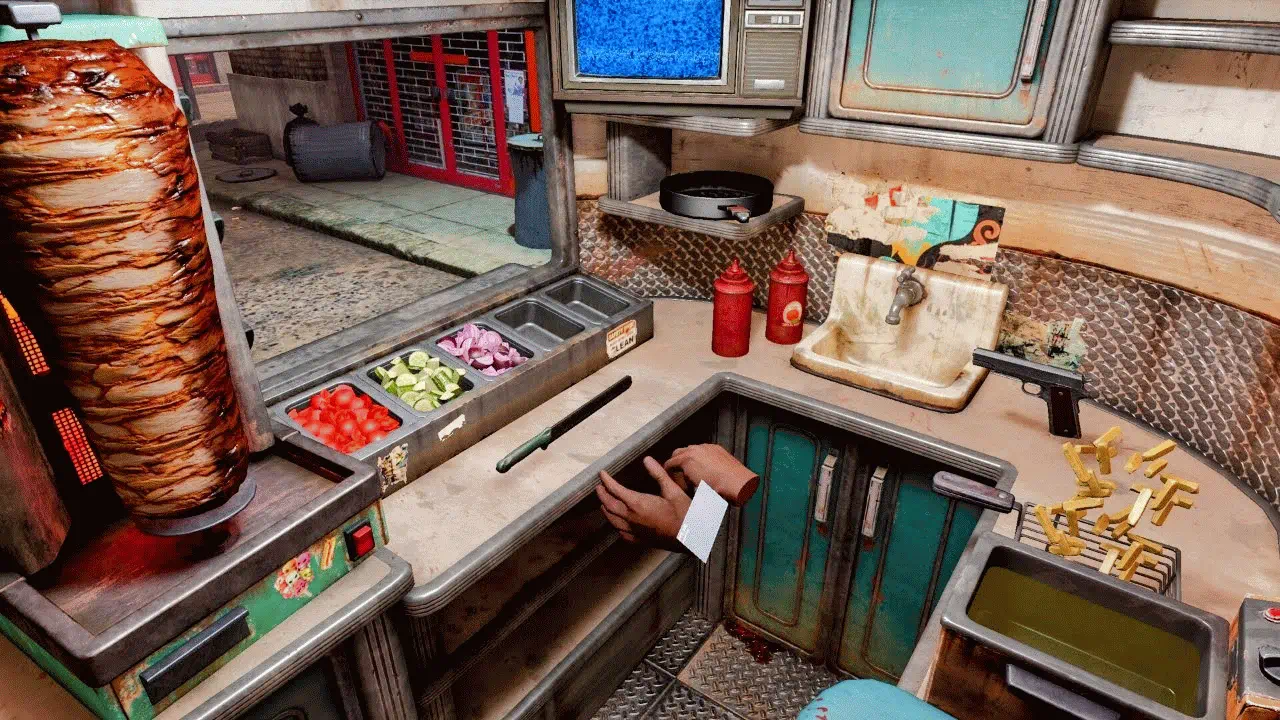
A PCVR survival horror game where you run a kebab truck through a zombie outbreak, cooking for people too scared to leave their flats.
 
Status: In development
Role: Director & Lead Designer
Developer: ZOMBIE KEBAB TEAM
Genre: survival horror (cooking, combat, scavenging)
Platform: PC VR (Steam)
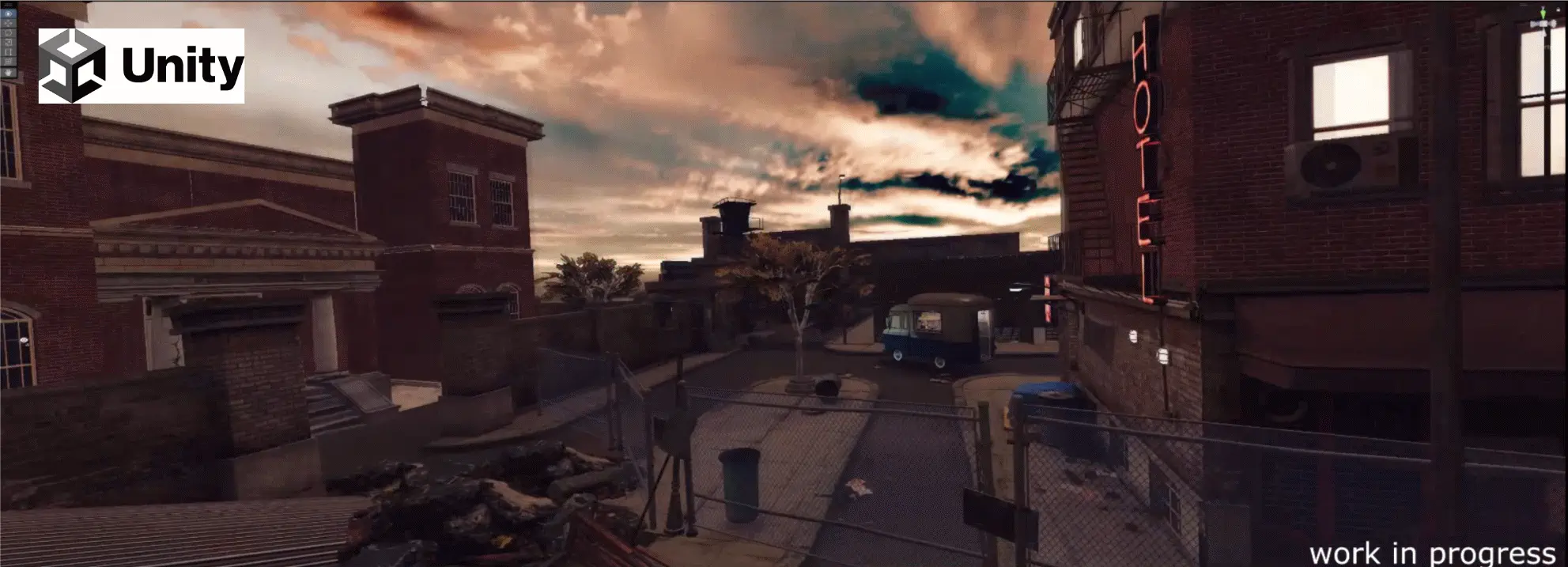
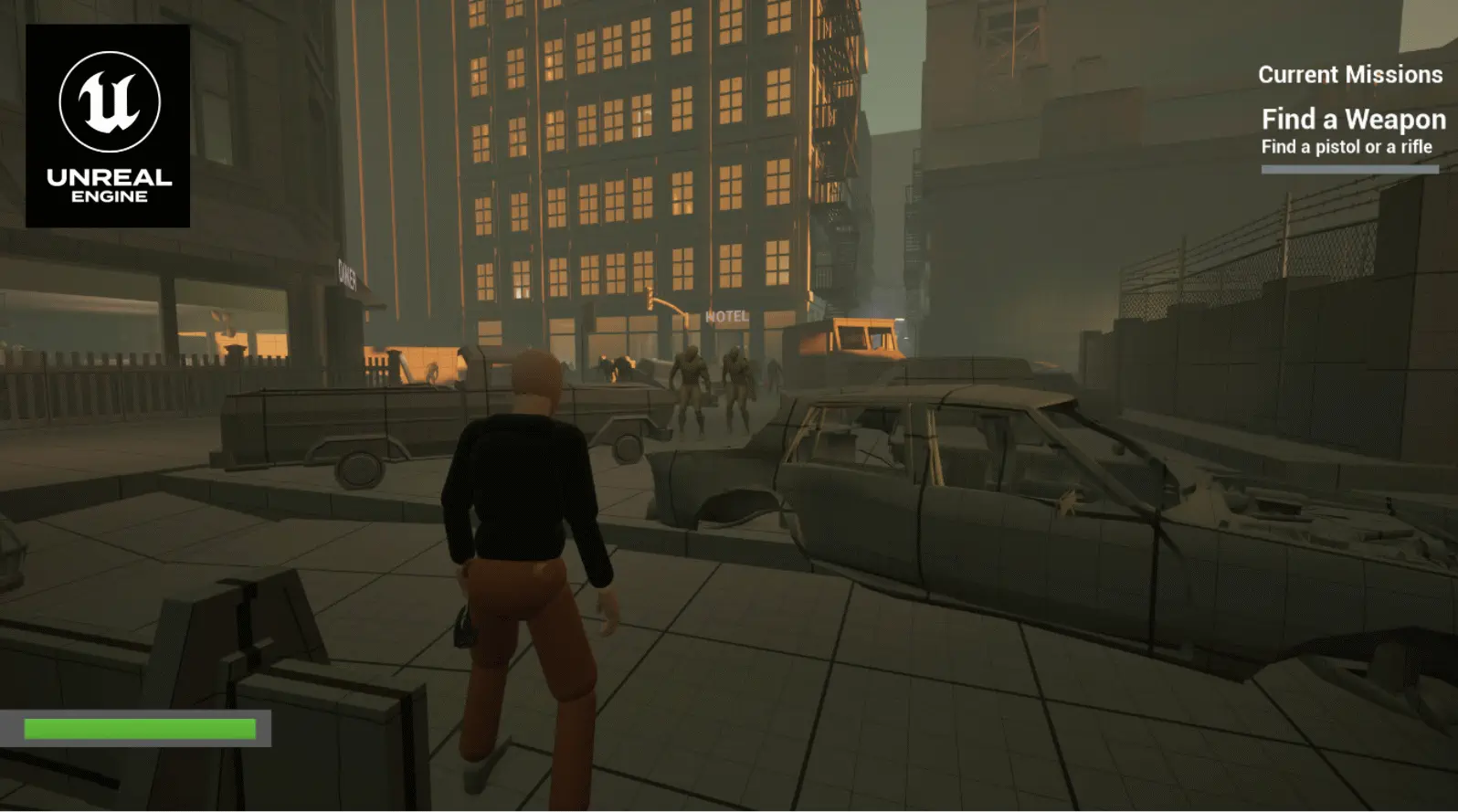
Engine & Tools: Unreal Engine 5.6 (current build) · Unity + OpenXR (proof of concept) · Blender, Tilt Brush
Contribution: Game direction, game design, level design, VR interaction design, devlog and social content
 

Reception

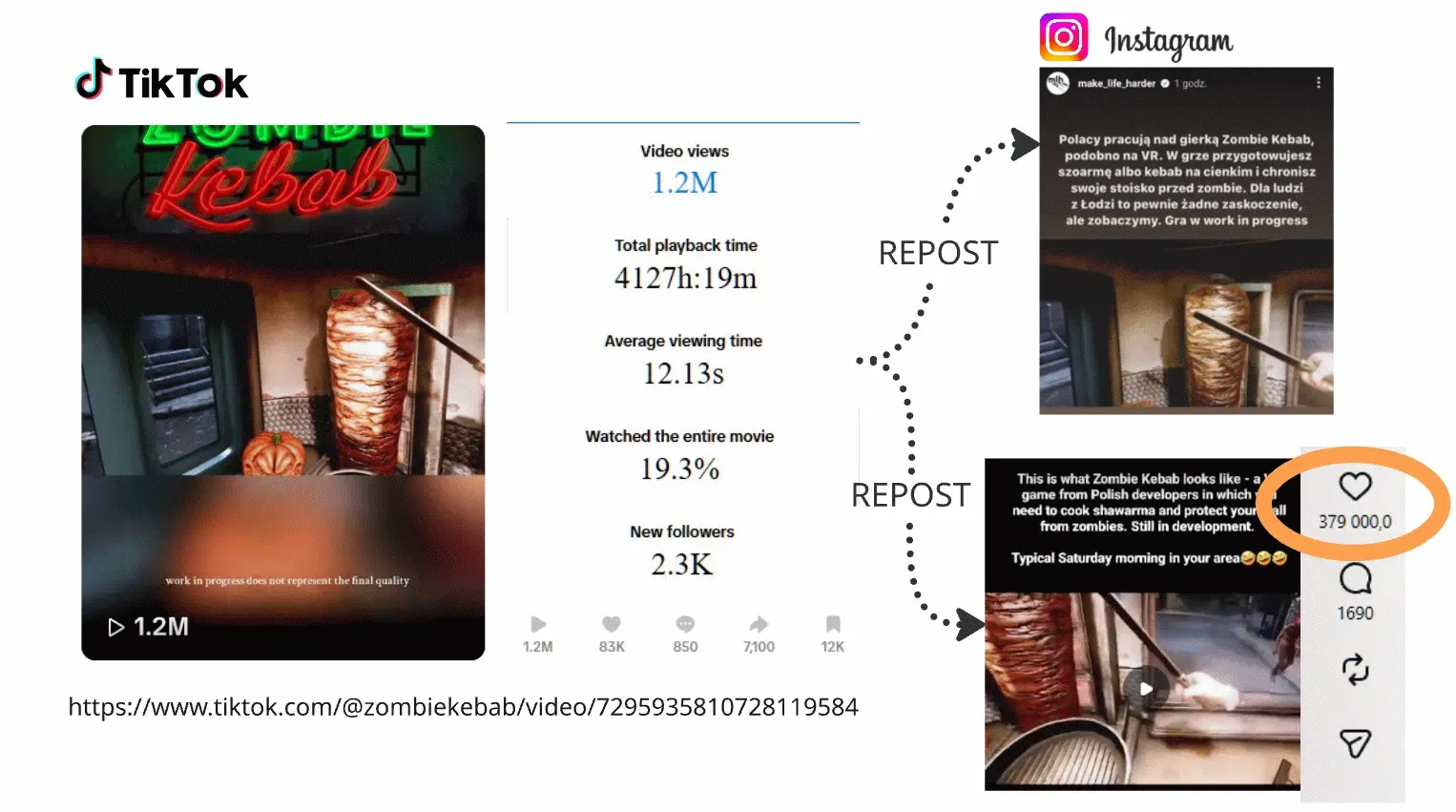
  • A pre-alpha clip posted on TikTok passed 1 million views within two days and stands at 1.2M.
  • Reposts followed on Instagram and YouTube. The widest single pickup came from @make_life_harder, Poland’s largest satirical account (1.5M followers), which is not a games account. One other re-upload passed 379K likes on instagram.
  • ~50 million organic reach over the following 30 days
  • None of that reach was paid for, and the clip carried no explanation of the game.

Development footage posted to TikTok generated organic debates about the game’s premise. Viewers questioned the logic of shooting hungry customers.

I restructured the game’s logic to resolve these gaps using the community feedback. The zombies act exclusively as hostiles attacking the truck. Legitimate customers remain barricaded in their apartments, submitting orders through a repaired television and receiving deliveries via an armed drone.

The audience engagement also validated the environmental design. Commenters mapped the urban food truck aesthetic onto various global cities, confirming the scenario possessed broad geographic appeal. (i.e. Paris, Berlin, Manchester, Ankara, New York and Vancouver)

Prototyping

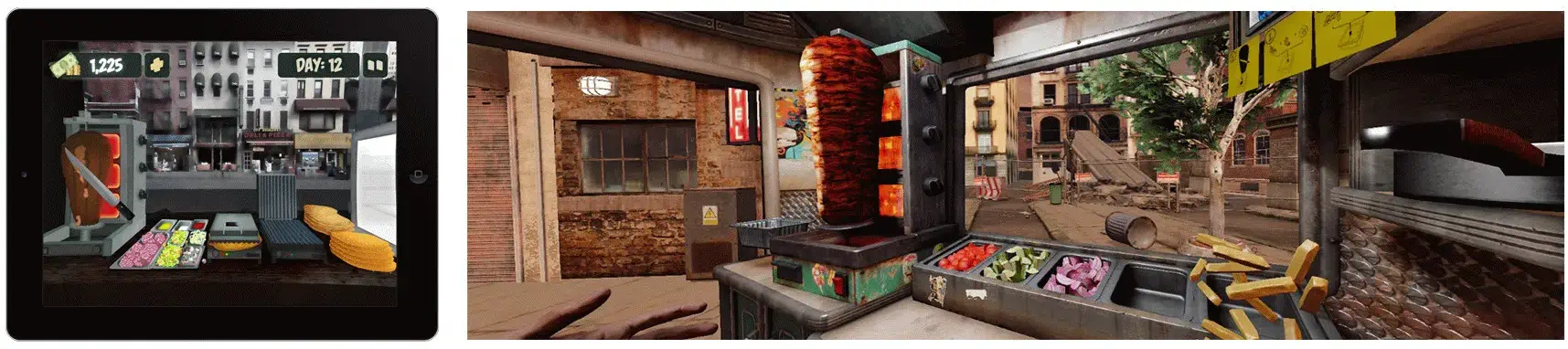
The project initially started as a mobile time-management prototype, somewhere between Cooking Fever and Into the Dead. Kitchen games where you serve orders against a clock were selling then, and zombies were at their peak. But the feedback on two consecutive prototypes was consistent: shooting zombies on a mobile device was mediocre. The camera was stationary and the usable screen area was small, which capped control precision below what the shooting needed.

The trigger was one line of feedback during another redesign of the mobile screens: “Make it so the players feel they’re there.” 

The visual evolution from the mobile mockup to the VR build

Playtests

The VR prototype went into live playtests. The loop held. People enjoyed slicing the meat, assembling the food and shooting whatever came at the window. What they said afterwards was consistent and none of it was about the cooking. After a while they wanted depth, and space, and something larger around the truck than the truck.

We expanded the district using commercial marketplace asset packs to quickly evaluate exterior layouts. This approach deployed the environment rapidly but introduced severe technical and structural constraints.

From a technical standpoint, integrating multi-vendor packages inflated the build size. Each asset pack utilized conflicting texture budgets, disparate material shaders, and incompatible asset conventions.

From a design standpoint, the resulting environment failed to generate tactical choices for the player. The exterior spaces offered visual density without functional gameplay architecture, failing to guide navigation or support structured combat encounters

We agreed as a team that none of it would scale. A prototype assembled from off-the-shelf parts answers the question it was built to answer, but everything past that point we considered debt. We scrapped the build. The other team members accepted external job offers during this milestone and reduced their project availability. I assumed sole responsibility for the environment pipeline and the subsequent development phases.

A space that looks OK and plays flat is a level design problem, and level design was the discipline I had never been formally trained in. I had been building environments and calling them levels.

Level Design & Training

I addressed this by completing a twelve-week Level Design Blockout Bootcamp with Game Design Skills. I also finished the “Fundamentals of Level Design with Unreal Engine” by Epic Games and Alex Brazie‘s “The Craft of Funsmithing” and “Directing Game Mechanics Satisfaction” courses.

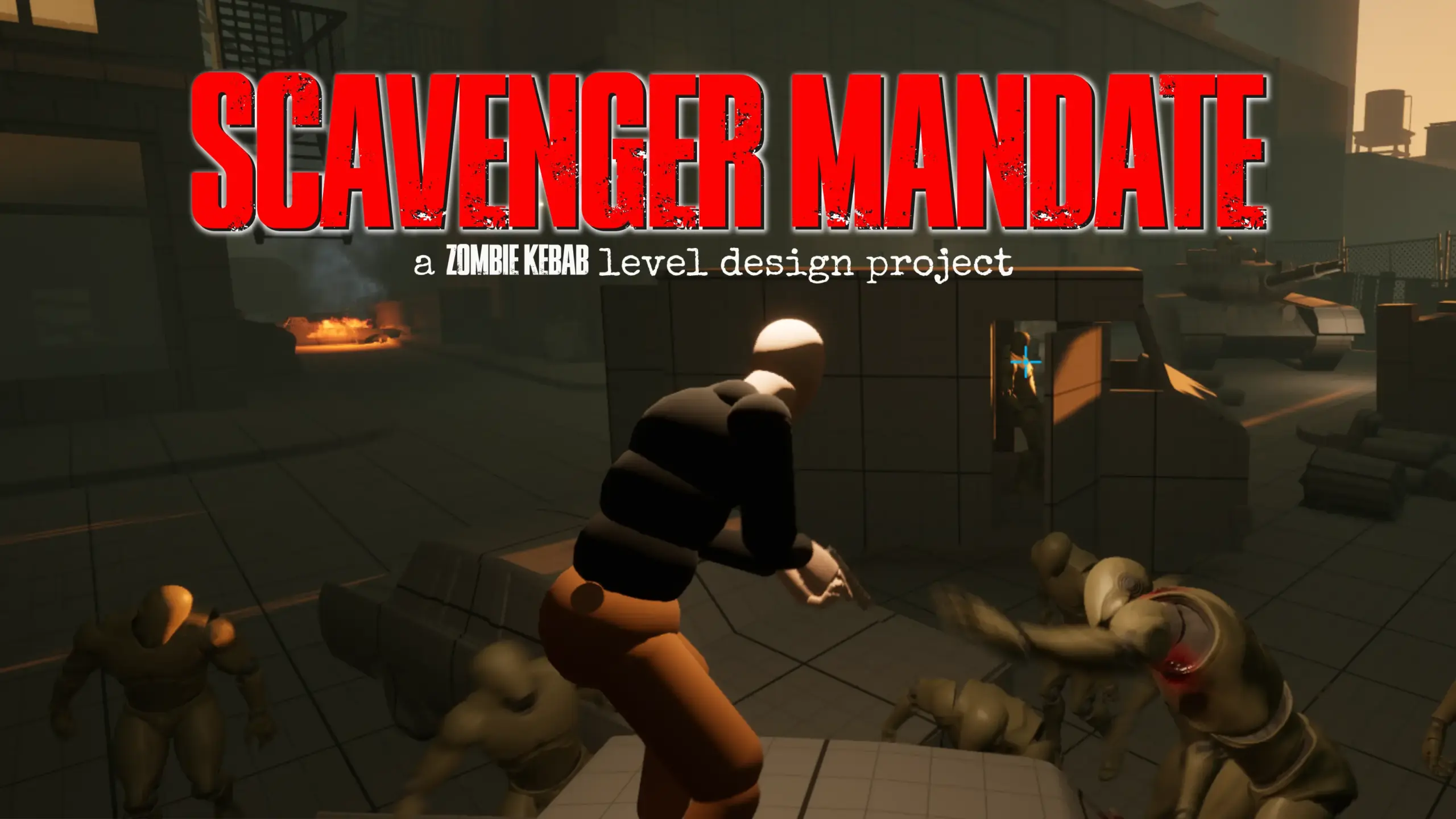
I designed Scavenger Mandate as my bootcamp coursework to execute this specific pipeline. 

Current Architecture & Pipeline

  • Accelerated production schedules and integrated AI tools into the pipeline to automate documentation formatting.
  • Currently developing Zombie Kebab VR for Steam PC VR using Unreal Engine 5.8, following a complete migration from the original Unity prototype repository.
  • A comprehensive 30-page Game Design Document was finalized prior to full engine integration. The established AI pipeline translates Unreal 5.8 technical documentation into actionable user stories, systematically processing raw specifications into structured core design and system architecture tasks.
See other projects