Role: Game Designer → Product Owner
Developer: Vivid Games
Genre: 2.5D arena brawler with RPG progression and real-time multiplayer
Platform: iOS, Android
Engine & Tools: Unreal Engine 4, analytics and BI stack
Team size: 4 core, 41 at peak, 8 in late stage
Contribution: monetization economy design · FTUX overhaul (D1 retention 11% → 25%) · unit economics (CPI/LTV) · product ownership · sunset recommendation
Global Launch & Retention
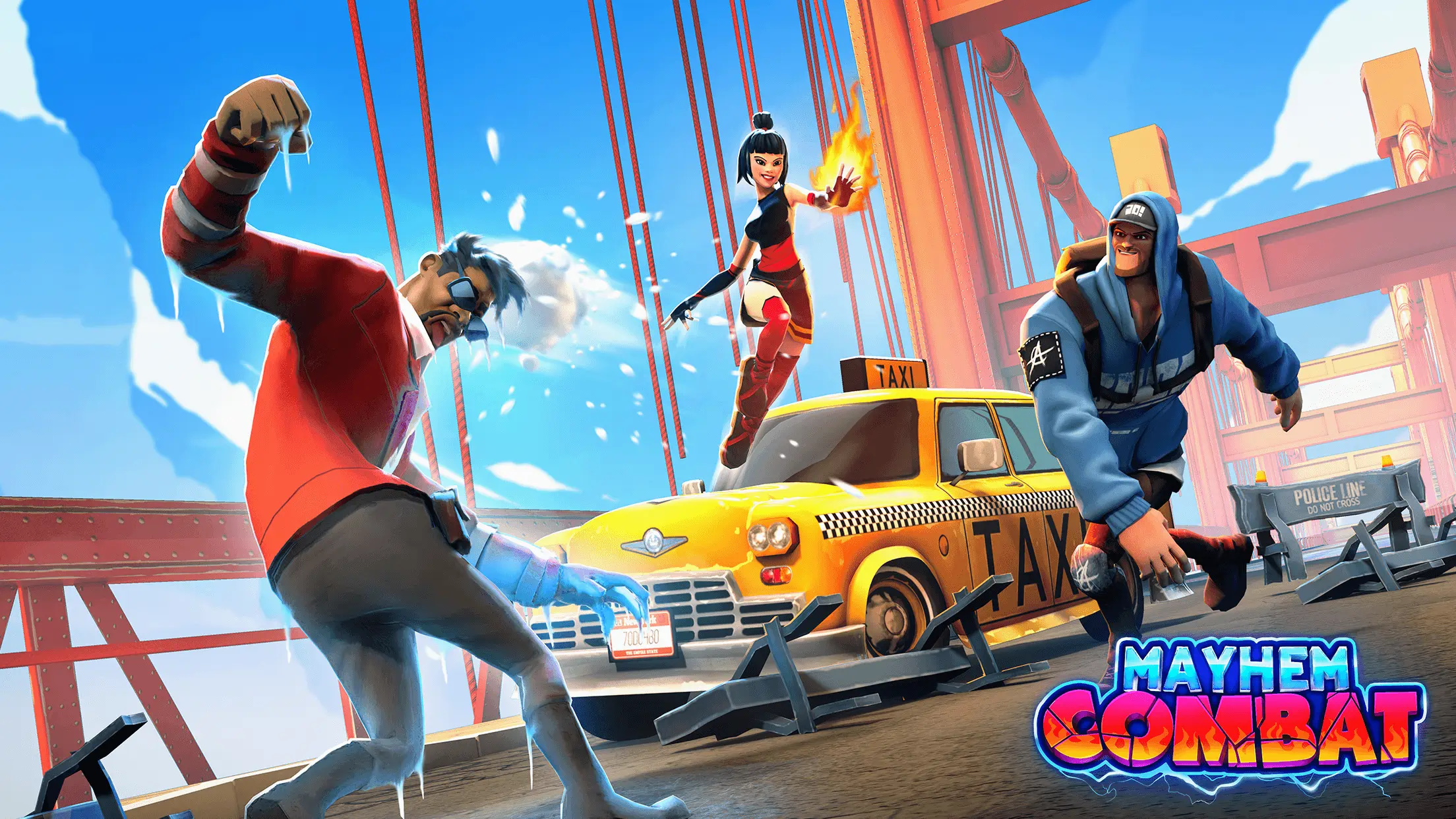
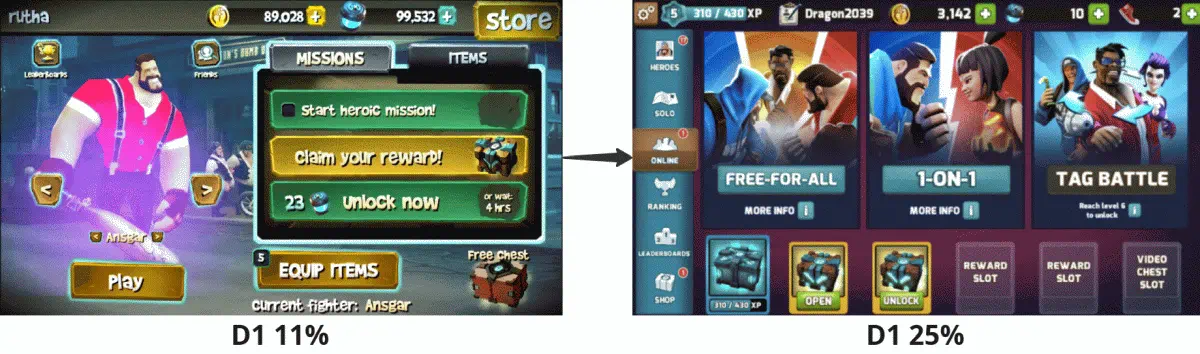
Day 1 retention increased from 11% in soft launch to 25% at worldwide launch. We shipped the title on Unreal Engine 4 in June 2018. It was the biggest production in the studio’s history, featuring a single-player campaign, four multiplayer modes, and a real-time ten-player mode.
I became the fourth Product Owner by the time the game shipped. I had initially joined the project as a Game Designer on the monetization economy.
We achieved the retention increase by rebuilding the first session. The data team measured every pass.
We cut the visible systems down to combat and progression, introducing the roster and the element system later. We rebuilt the tutorial around joining a tournament.
The team redesigned the controls and made win conditions readable on a mobile screen during combat. The studio rebranded the title from Metal Fist to Mayhem Combat to reflect the arcade brawler gameplay.
Gabriel Rutherford handled gameplay design and Bartosz Wittner managed RPG stats. Michał Kawecki and Mateusz Kulik programmed the gameplay. Łukasz Horwat rebuilt the characters and menus.
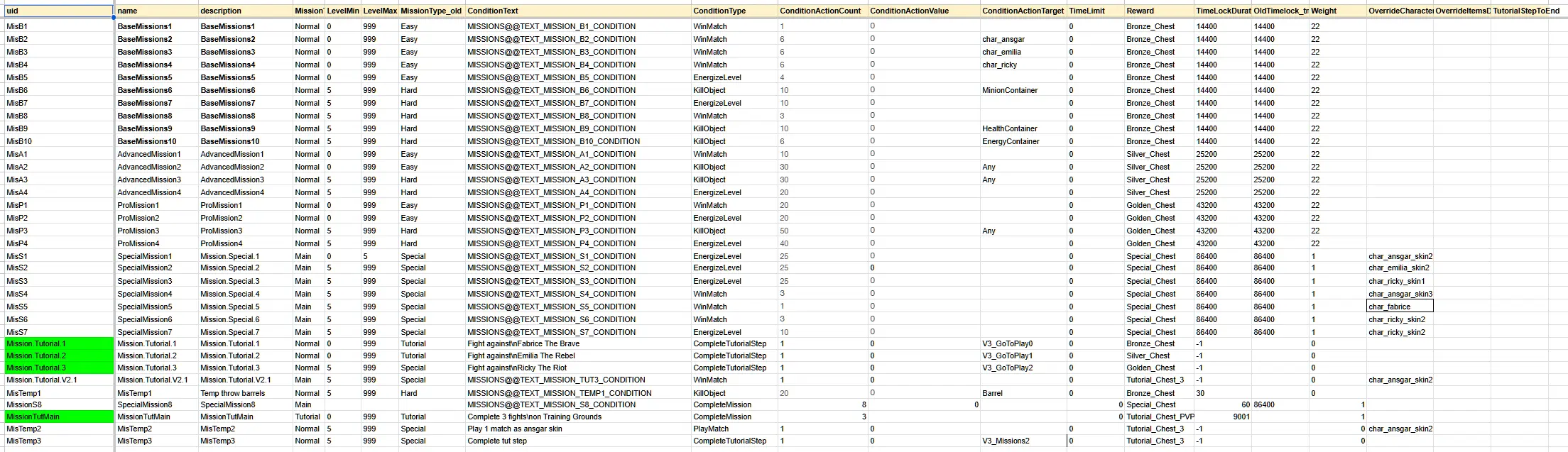
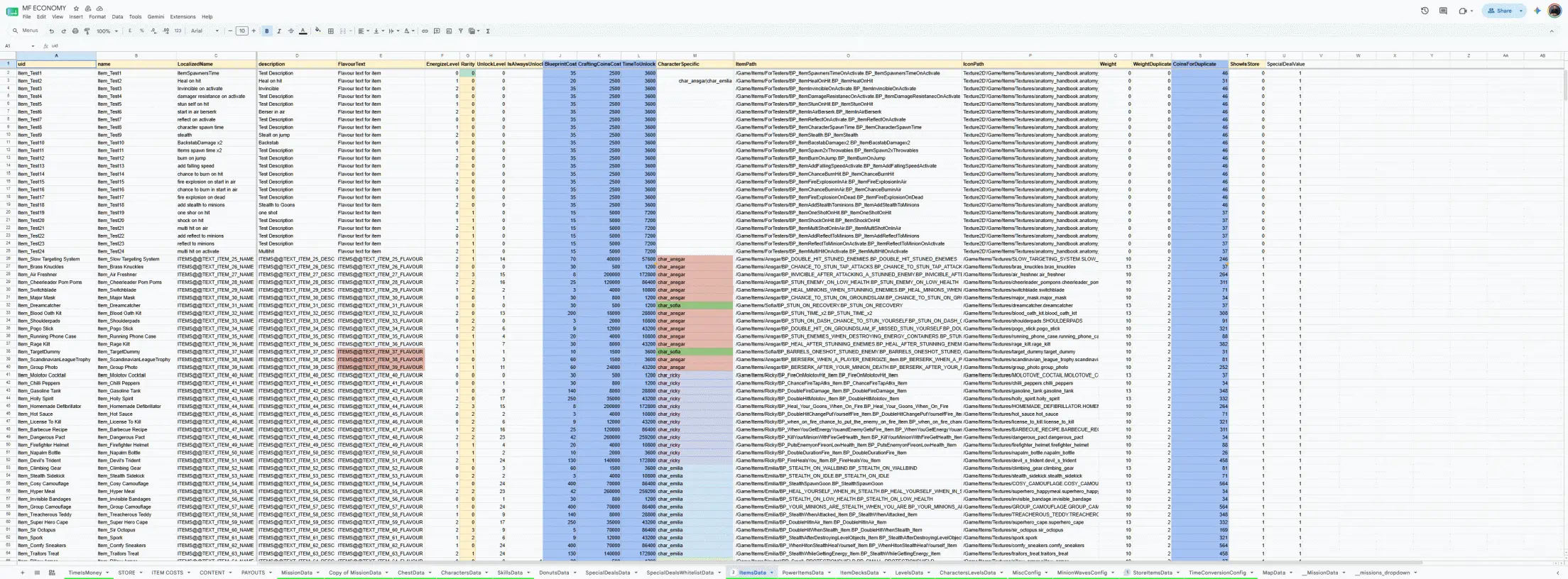
We ran multiple game balance A/B tests without submitting new builds. A custom remote config system connected directly to a spreadsheet.
I ran the CPI against LTV data after the global launch. The unit economics did not follow the improvements in retention, and the funnel data indicated the gap would not close on its own. Paid traffic priced the game out of profitability. Management accepted my recommendation to sunset the product. Cost per install remained above lifetime value across all tested acquisition channels.
Pipeline Standards
The outcomes from this production established my current development pipeline. Here’s my top 4 learnings that stayed with me over the years:
I validate acquisition costs against a rough LTV during the prototyping phase.
I test the core loop for retention before designing the meta-game and monetisation systems around it.
I lock technical boundaries during pre-production. The shift to a ten-player synchronous mode arrived three years into this development, forcing server reconfigurations after the hard launch.
I do not use visual polish as a proxy for a working product. The initial development phase here prioritised high-end graphics while the touchscreen combat scheme remained unproven.
Special Thanks
The game’s visual fidelity and character fluidity relied on the excellent talent and craft within art and animation teams. The roster included Ruslan Safarov, Abdurrakhman Zhukov, Przemek Ignasiak, Wiesław Małek, Adam Frańczak, Paweł Waszak, Tomasz Łoboda, Bartłomiej Biesiekirski, and Zbyszek Nowak.
Former Product Owner, Vivid Games
I highly recommend Matt for his exceptional dedication to game design. His focus on design excellence and willingness to go the extra mile significantly contributed to our project’s quality. Matt was not just a skilled designer but also a supportive colleague, always ready to assist his team and ensure our game met the highest standards. His passion and innovative approach to game development make him a valuable asset to any team. Matt’s contribution was instrumental in our project, and I’m confident in his ability to bring success to future endeavors.