Beat 1: Intro
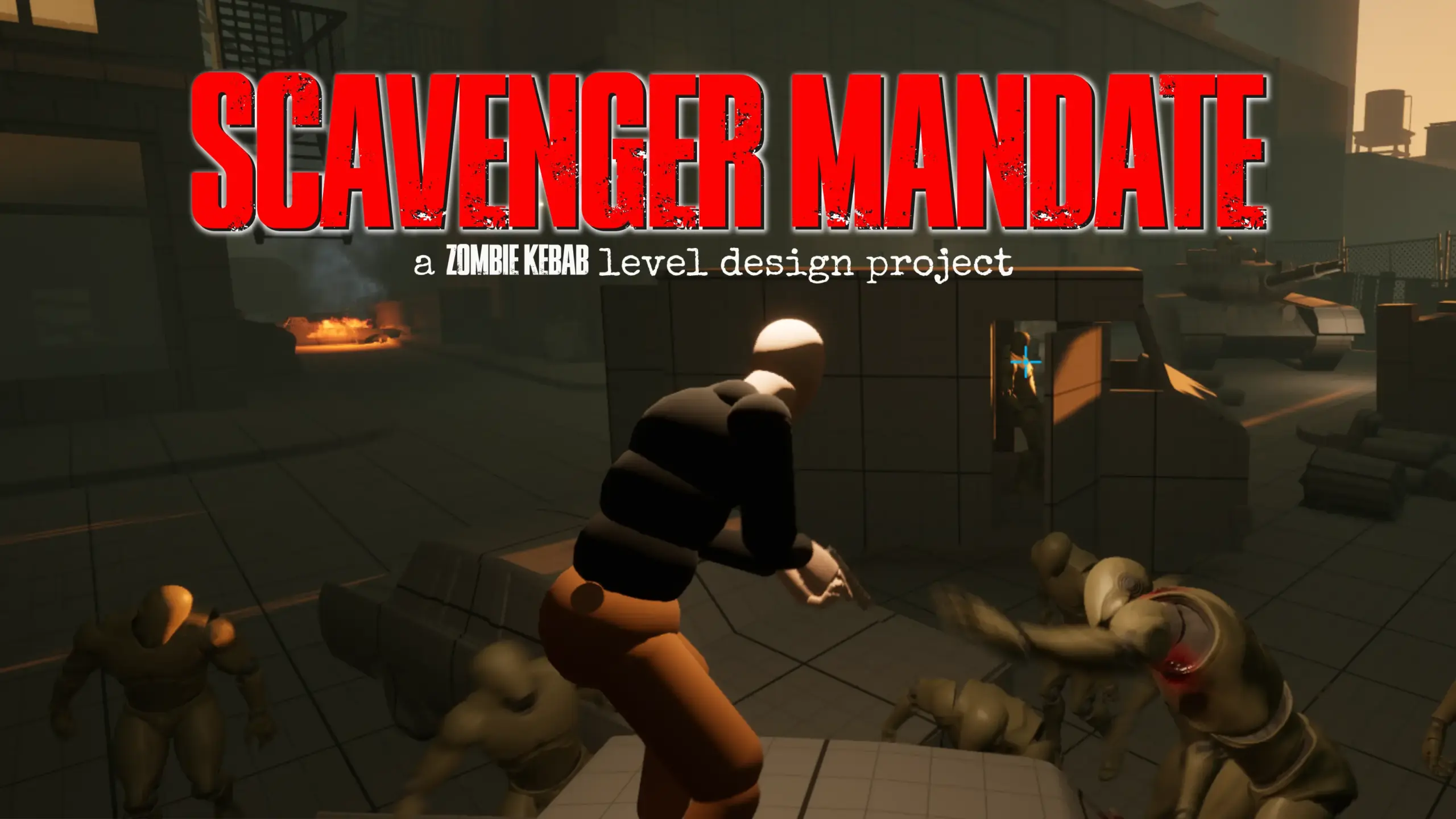
The mission opens on a one-minute film. The player rides inside the food truck slung under a helicopter, watches the city go past underneath, and takes the briefing from an officer on screen:
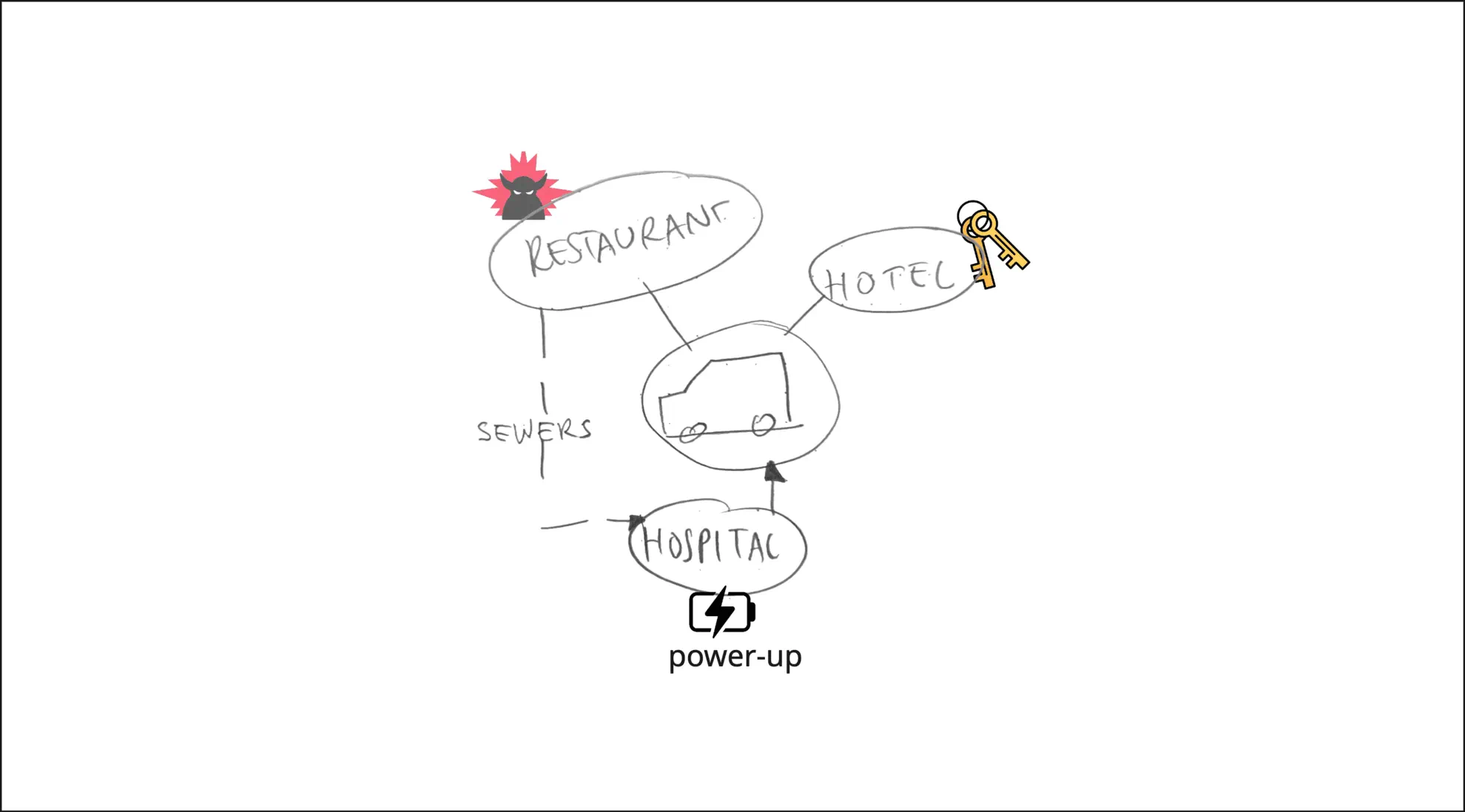
- The truck loses power the moment the helicopter releases it, so they have to find a battery.
- Nobody has come back out of this district since whatever happened at the hospital, so they are also there to find out what that was.
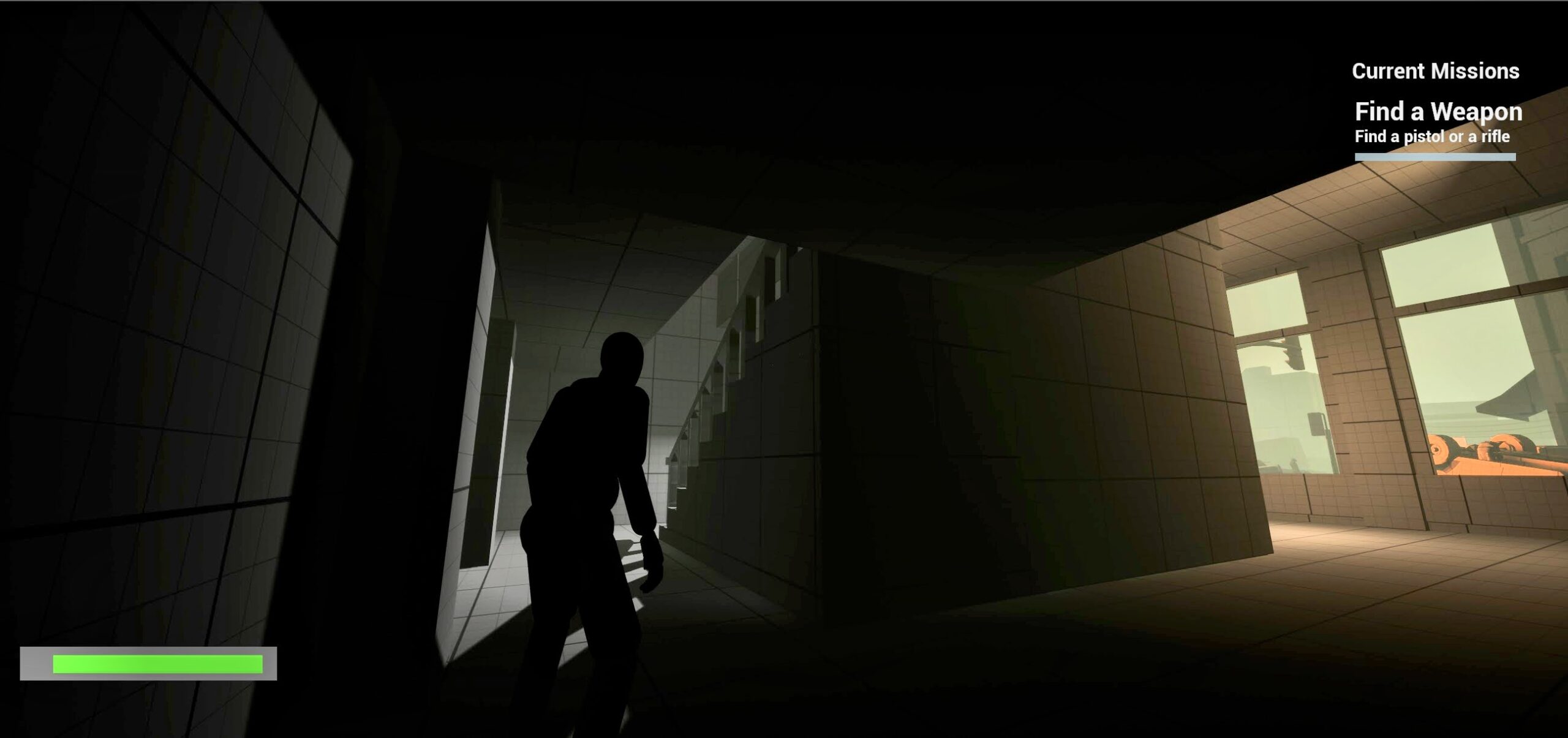
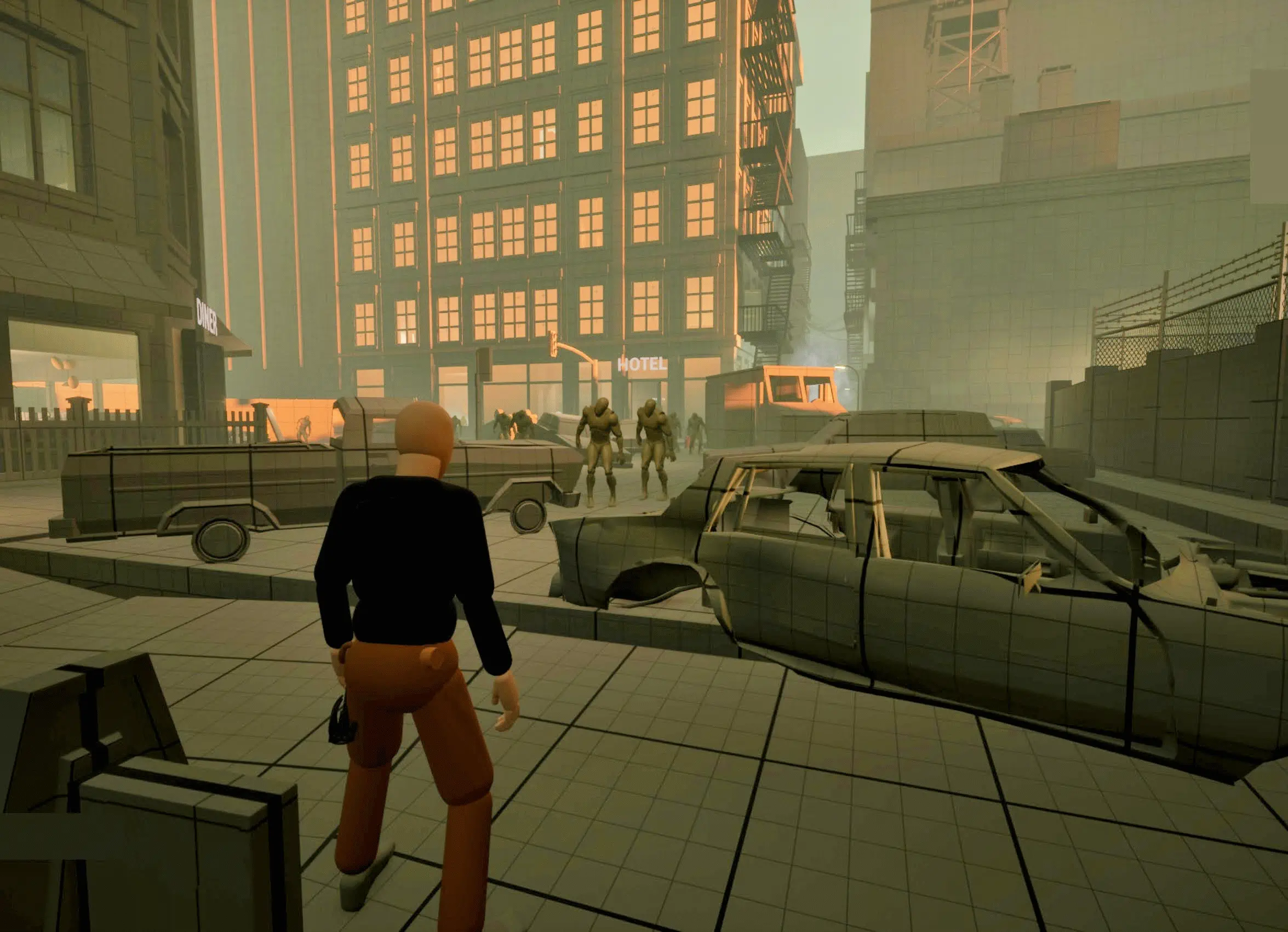
The helicopter drops the truck down, the doors open, the player steps out onto an overrun intersection with zombies already closing in, and picks up the first mission, find a weapon.
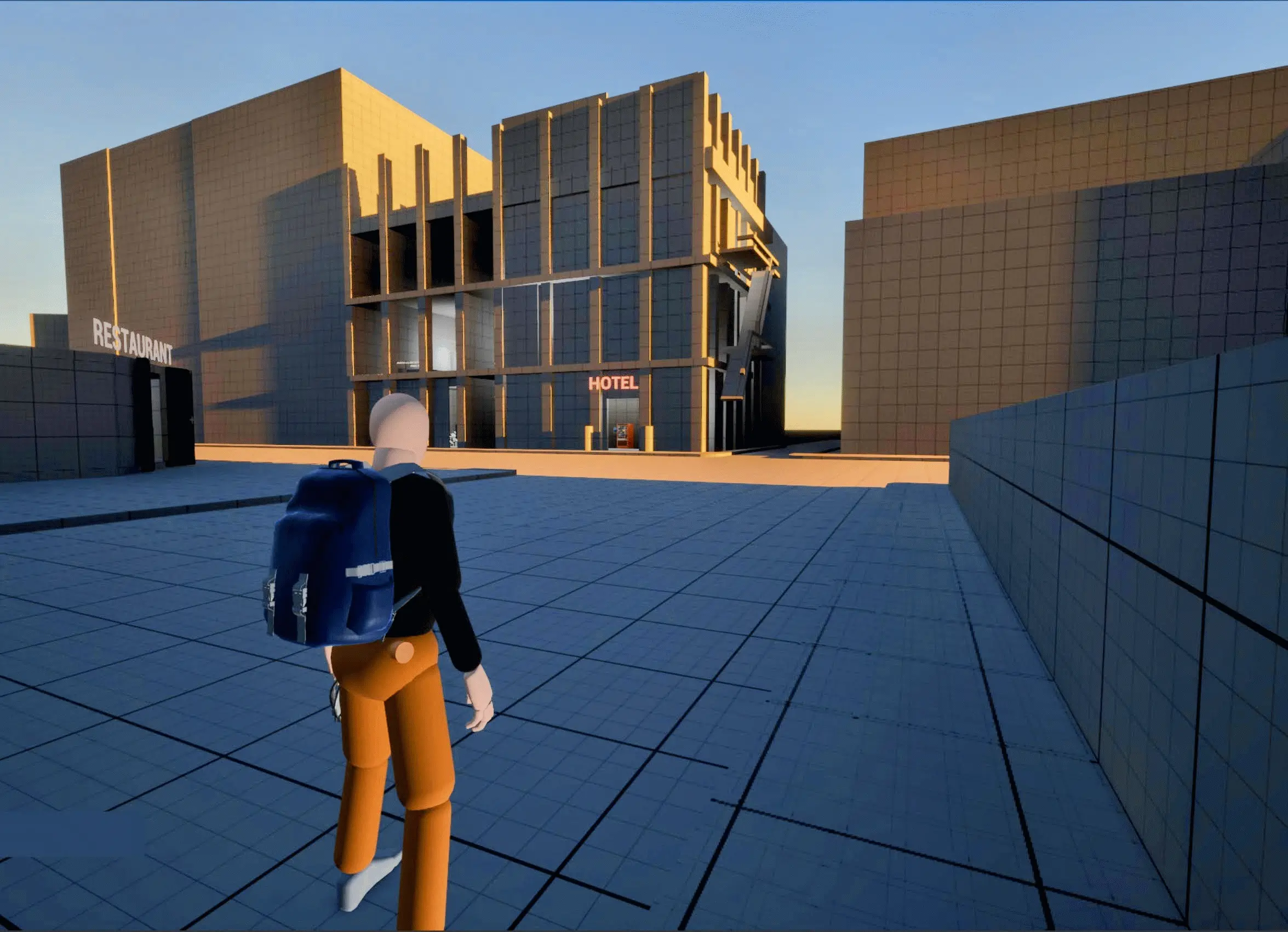
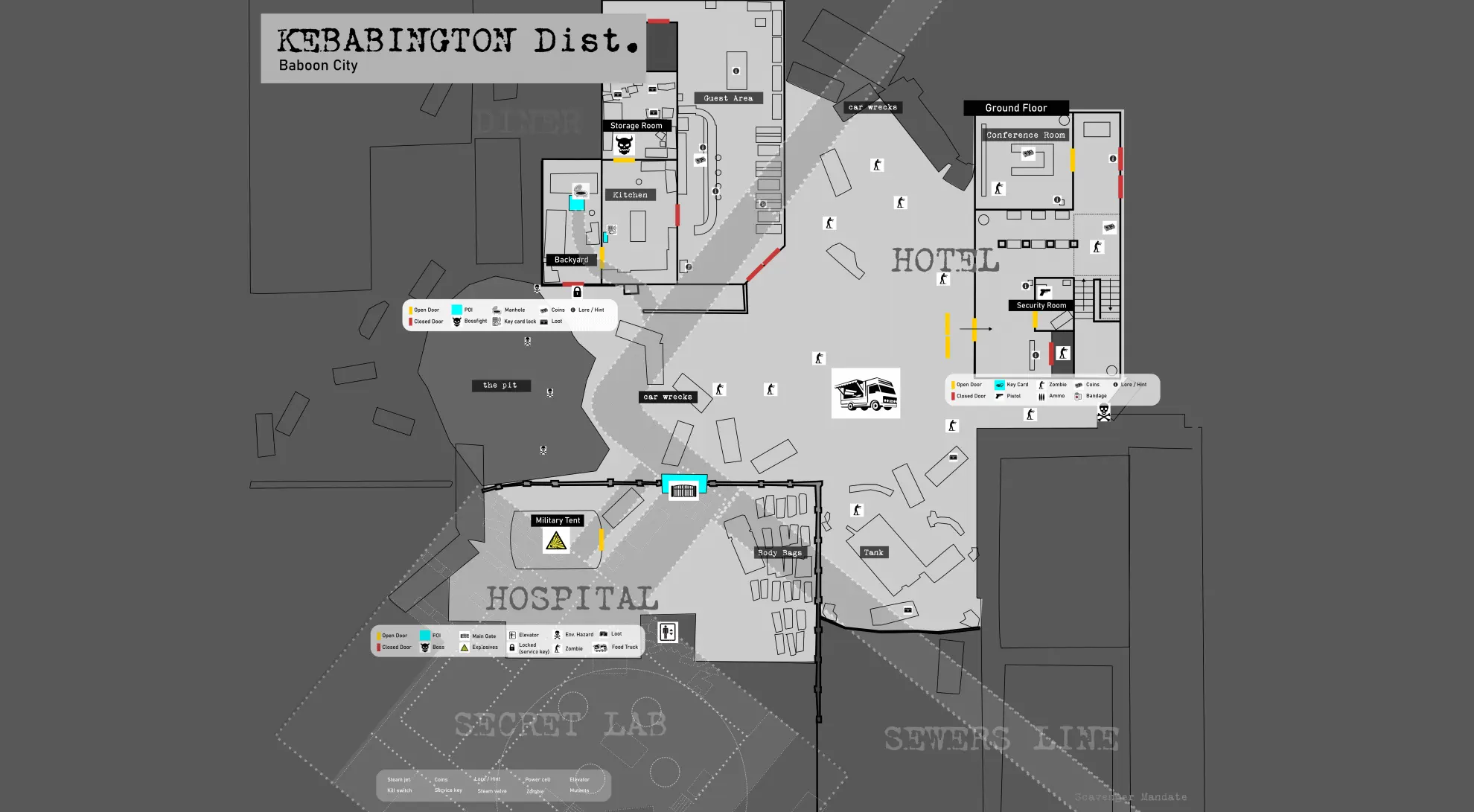
They can go in any direction from there, but the first thing they see is the entrance to the hotel.
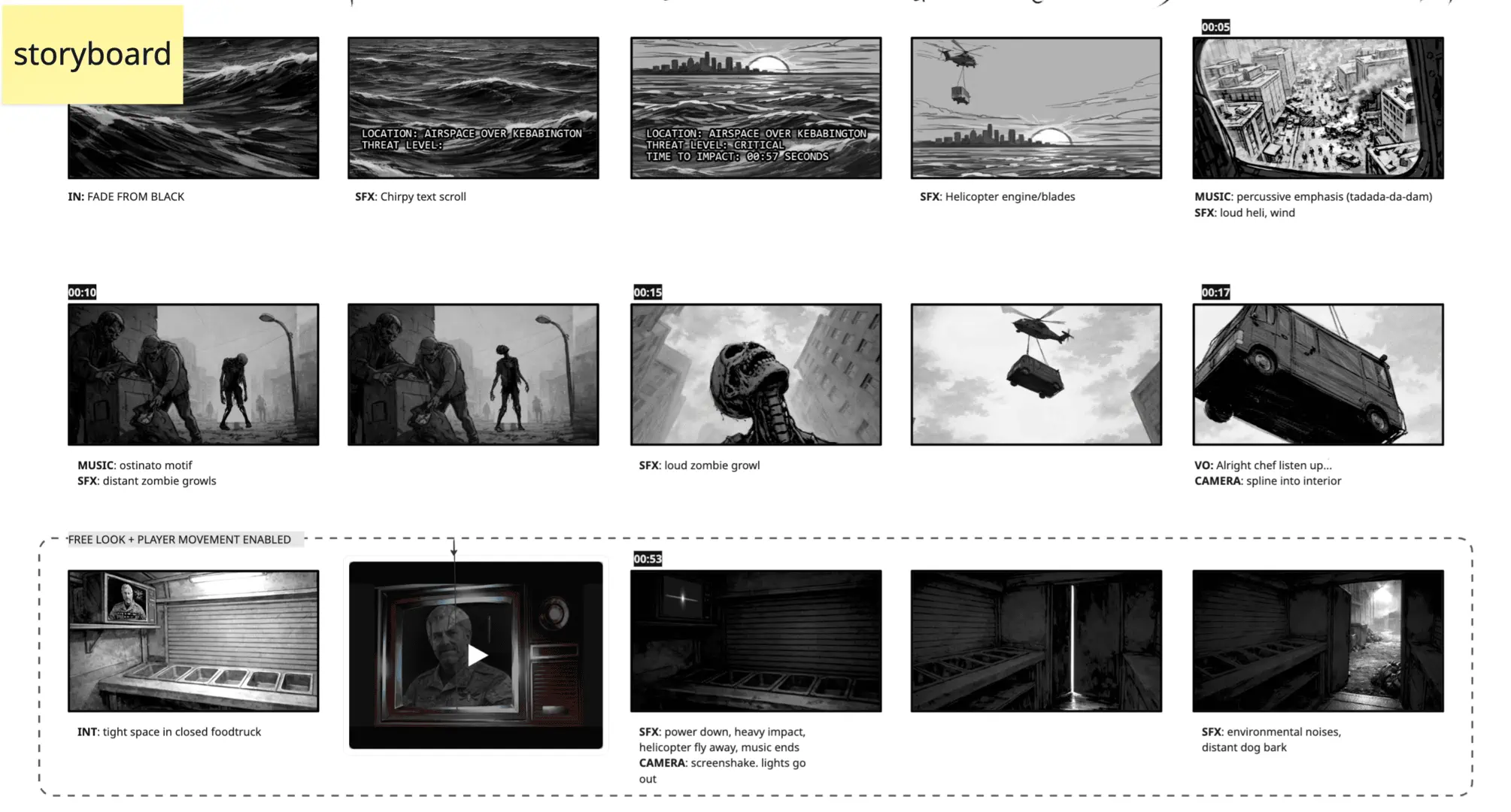 | 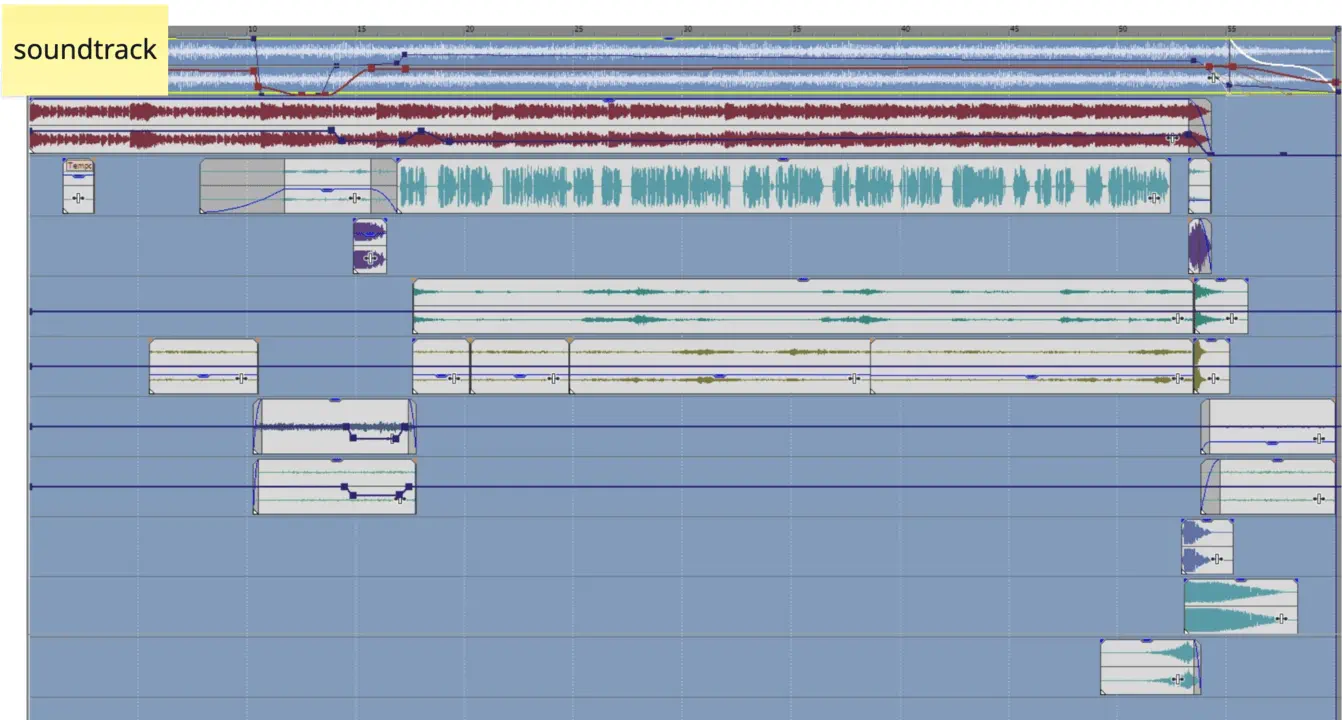 |
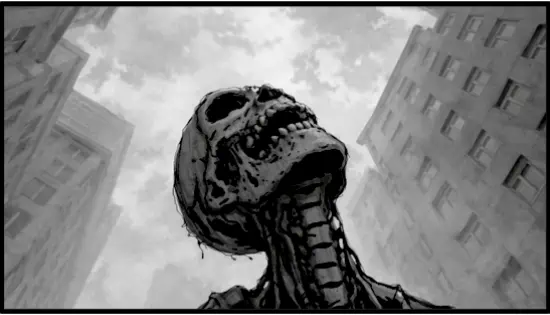
I animated the black and white panels with simple camera moves, pushes and zooms, and put the soundtrack under them. I edited it in Vegas, exported it as MP4 with its own subtitle track, and play it back through a widget in engine before control passes to the player.
Beat 2: The Hotel.
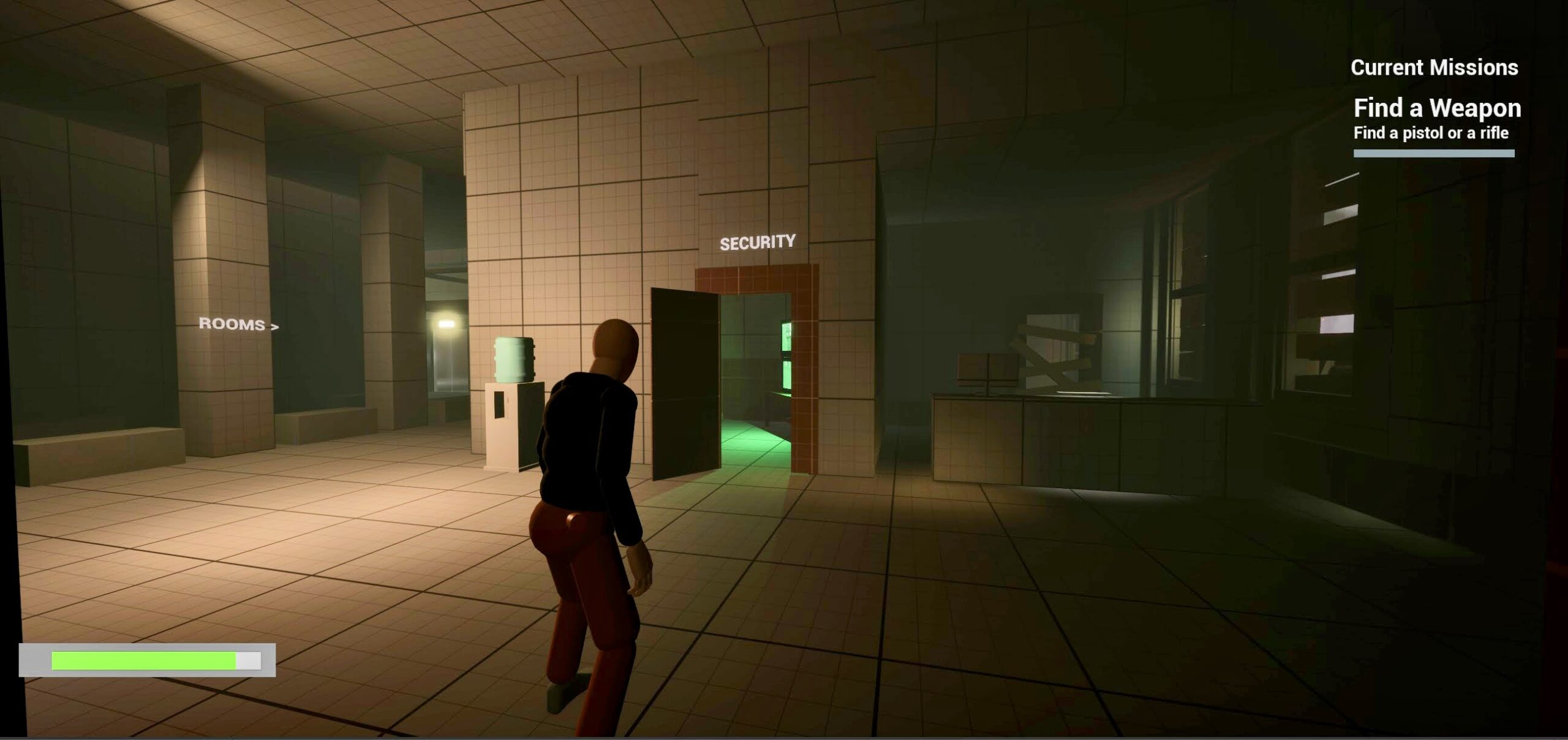
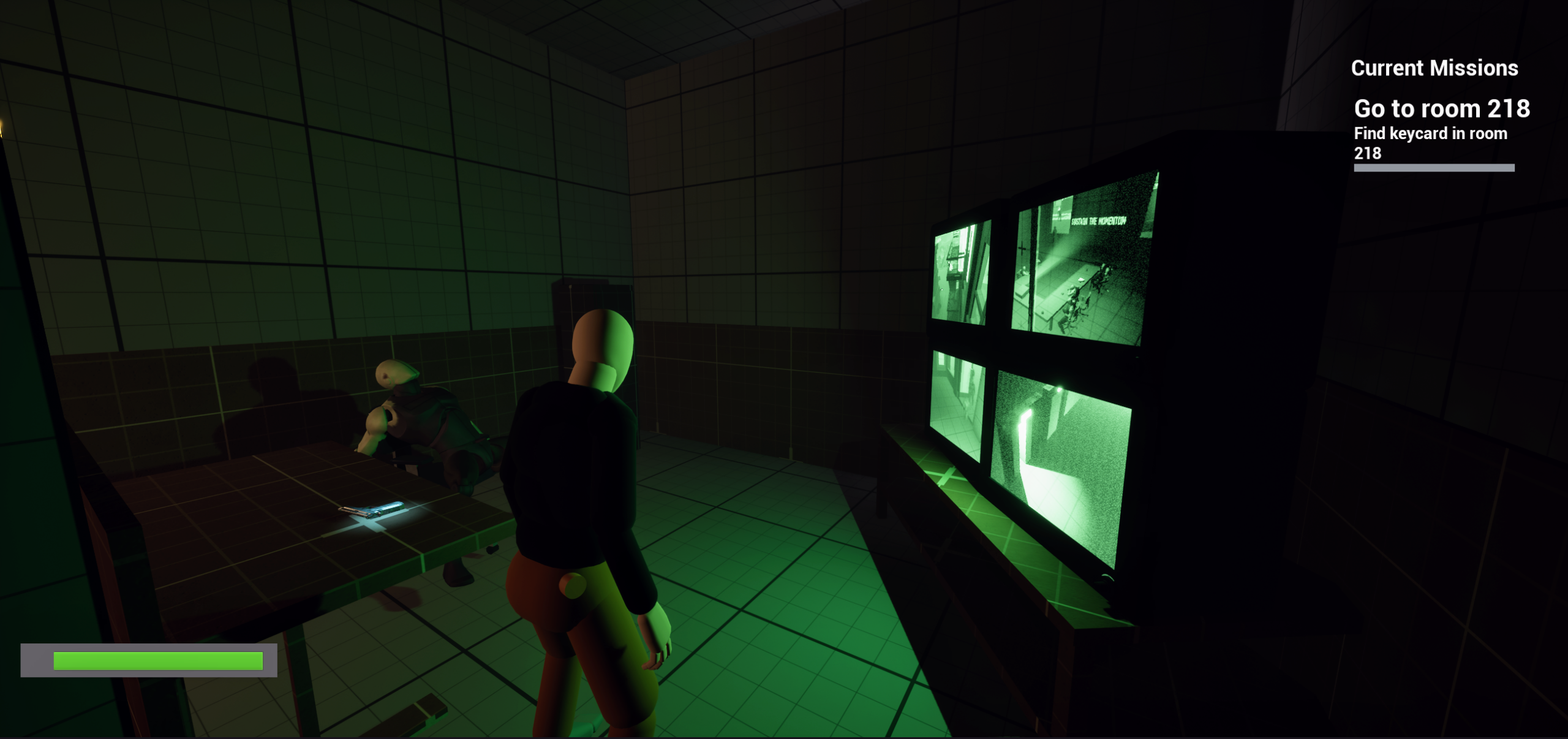
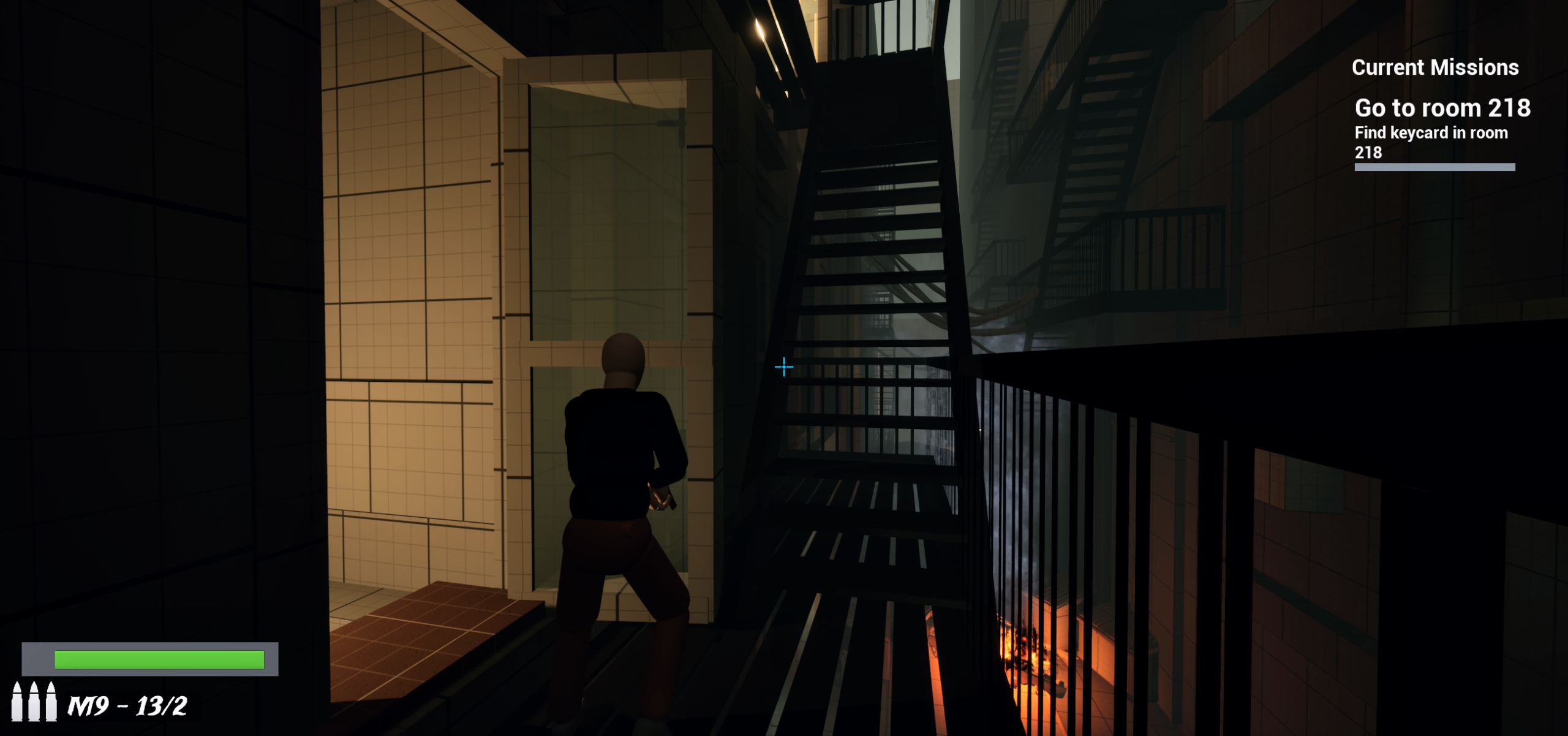
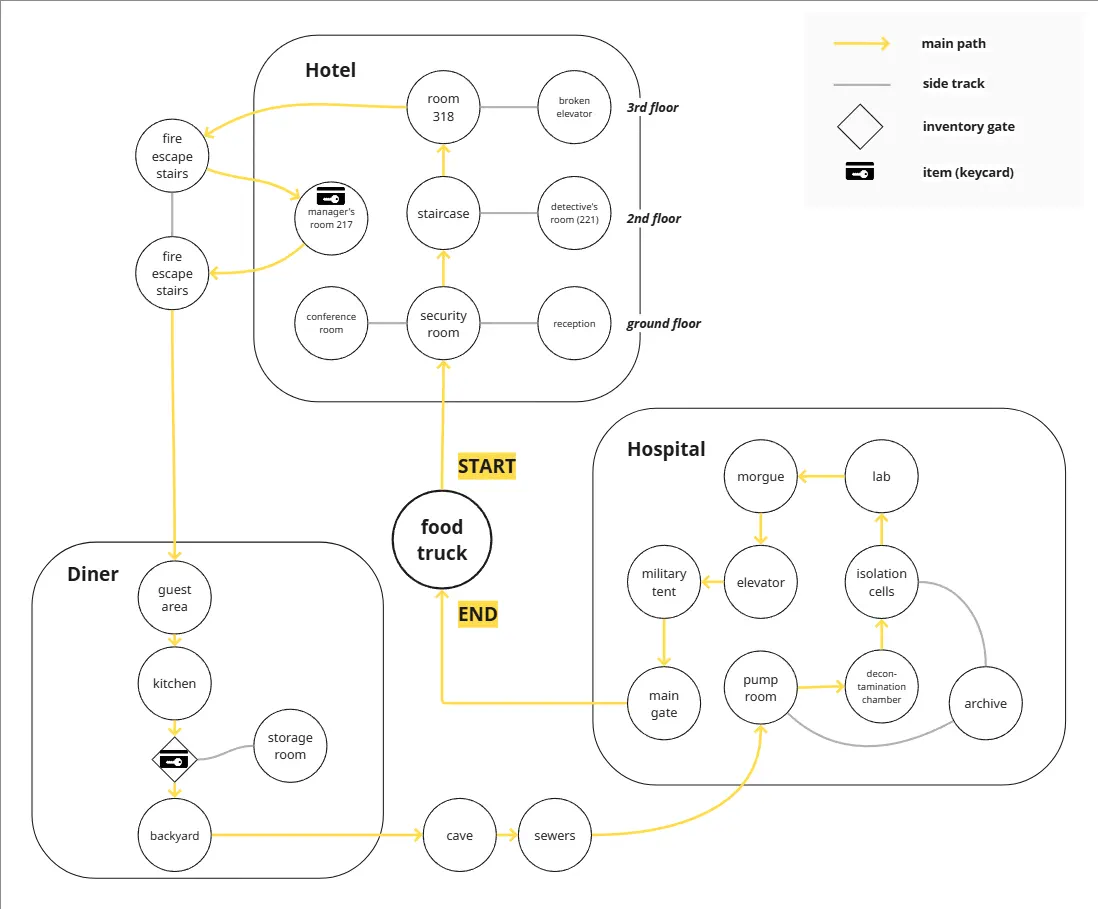
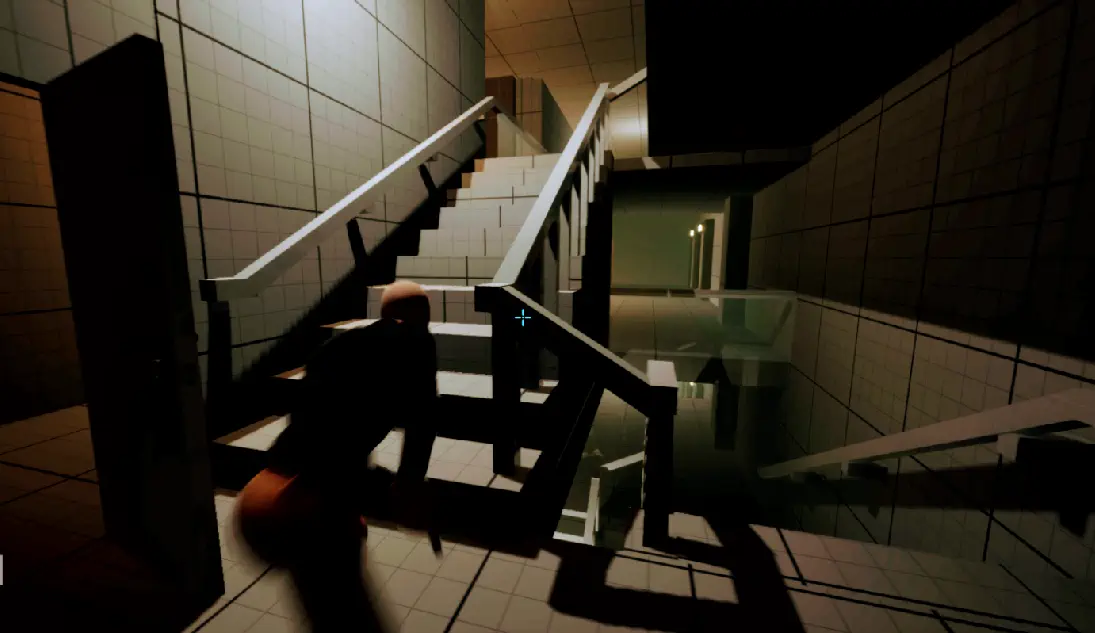
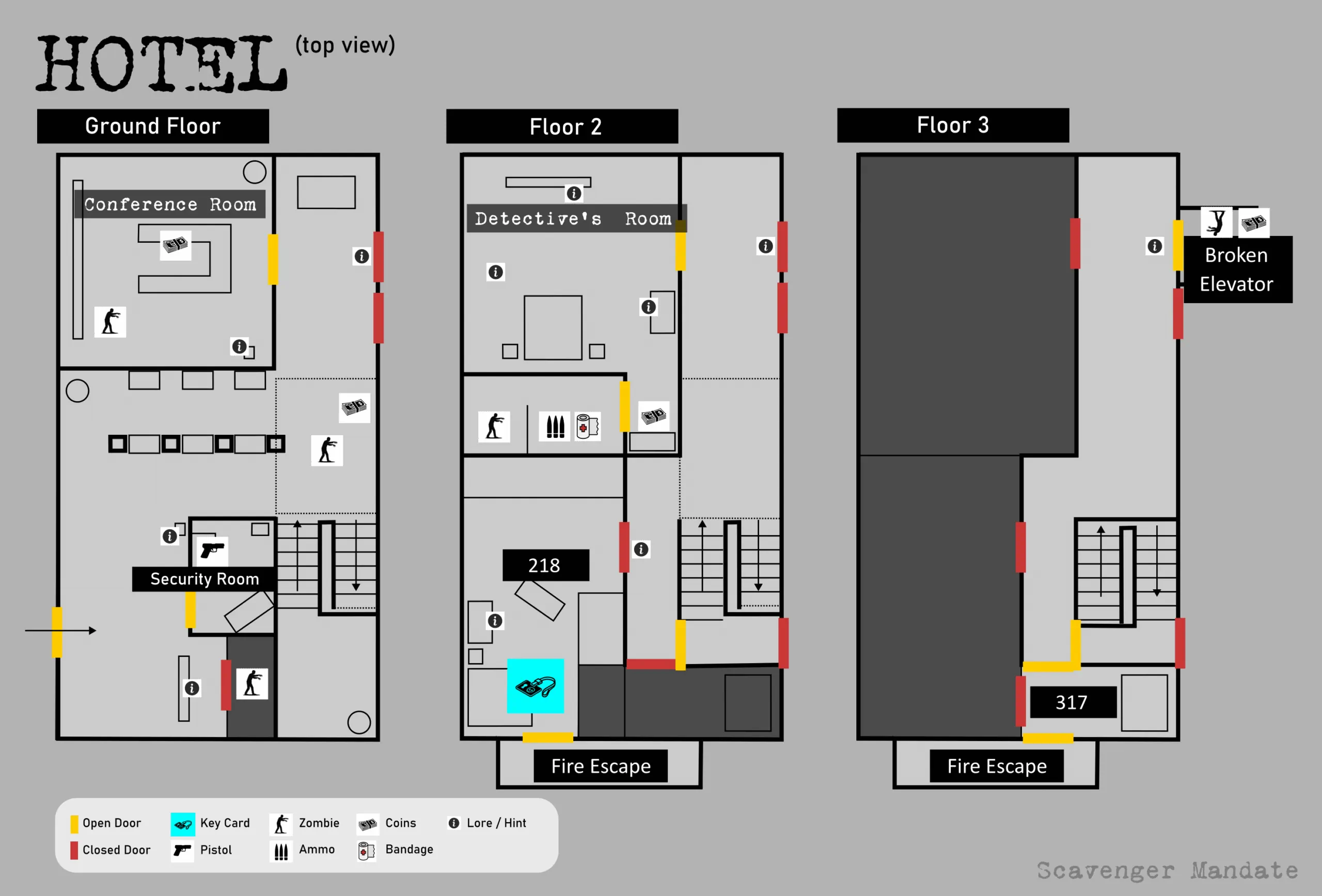
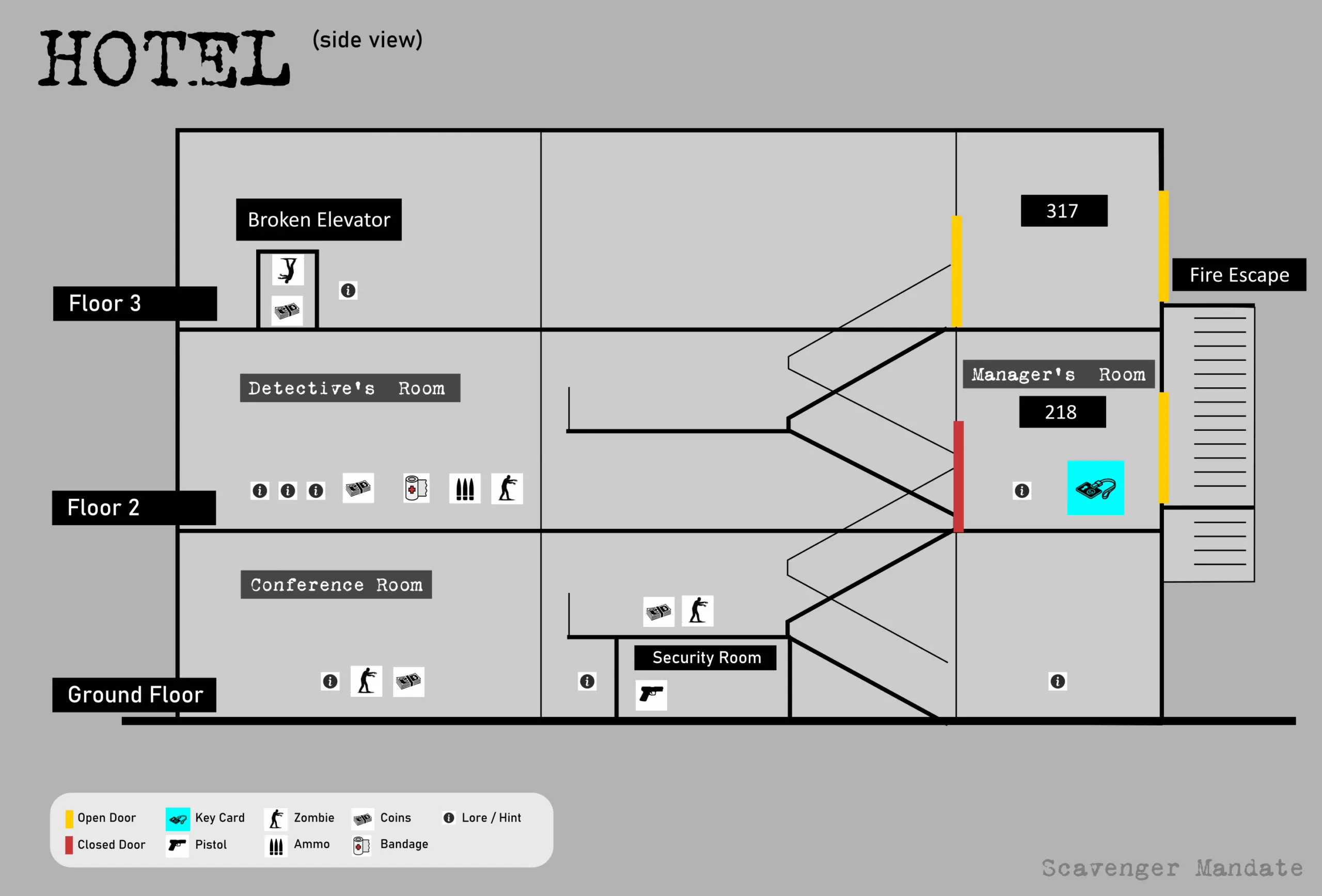
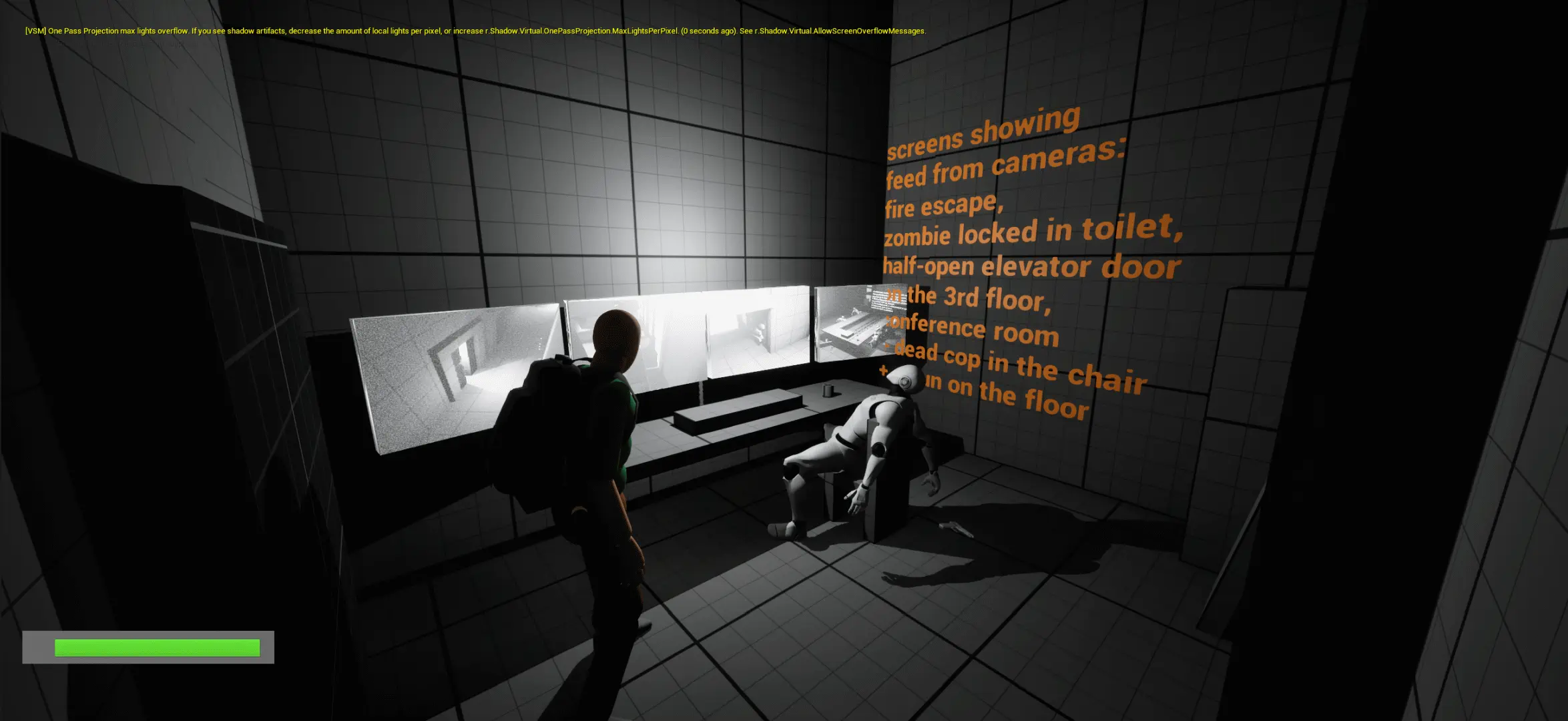
Inside the hotel the player finds a dead officer in the lit security room by the entrance, takes his pistol, and picks up the next mission, reach room 218. They climb the stairwell, work past a zombie holding the high ground above them, and find 218 locked from the inside.
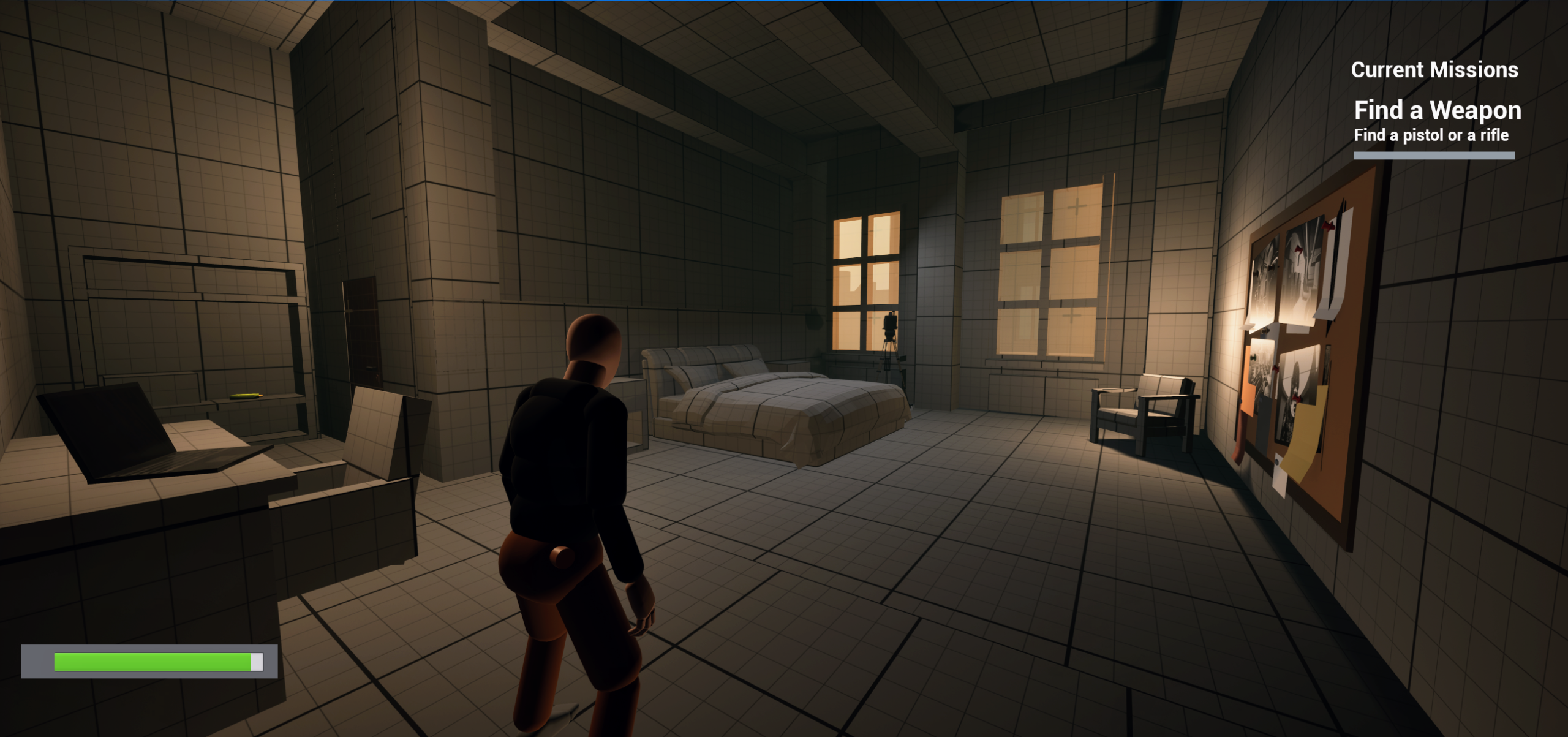
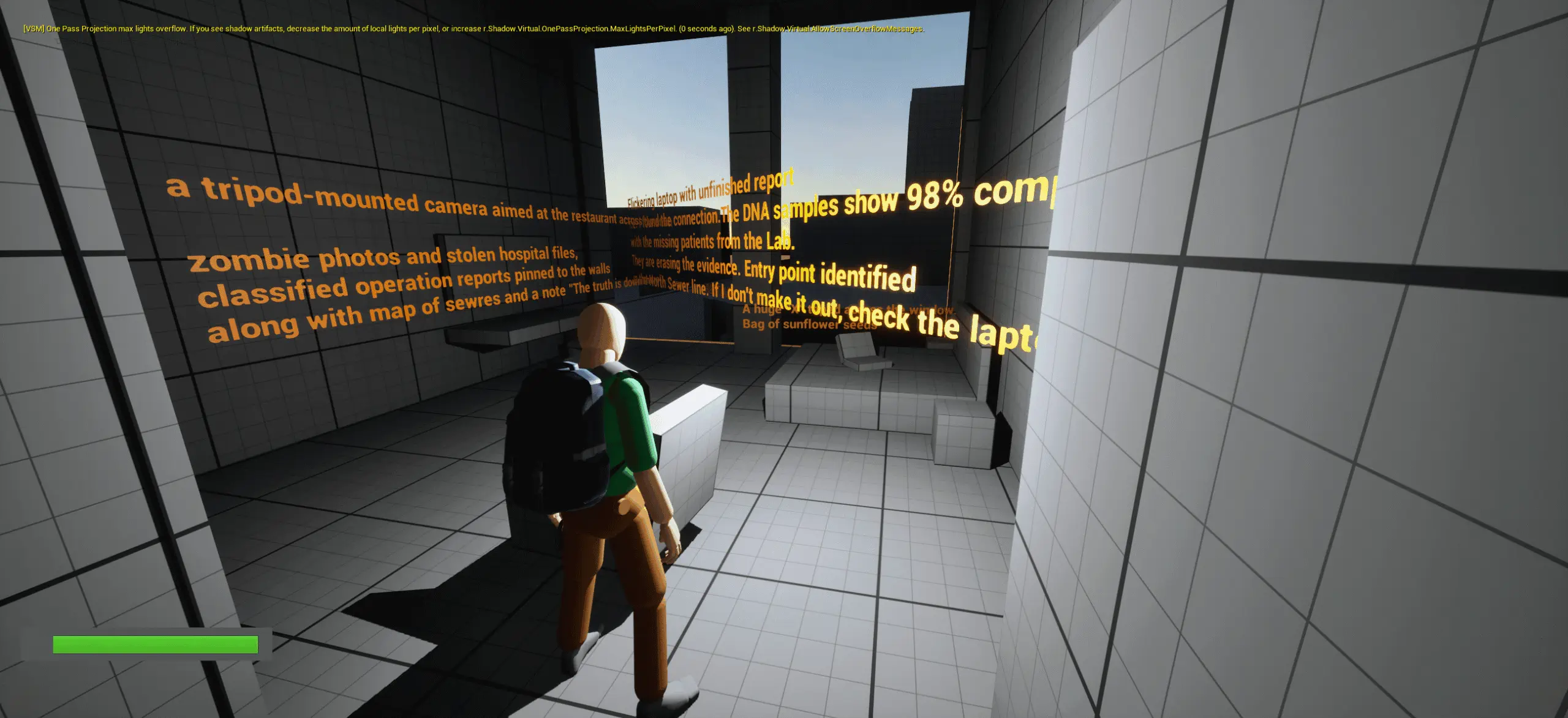
To get in they have to leave the building. They go up one more floor, climb out of the open window in room 317, ride the fire escape down, and come back in through the window of 218, where the diner keycard is already in sight.
If they step off the golden path they can also read the detective’s evidence board, or follow a flickering light down a dark corridor to the elevator.
Beat 3: Diner
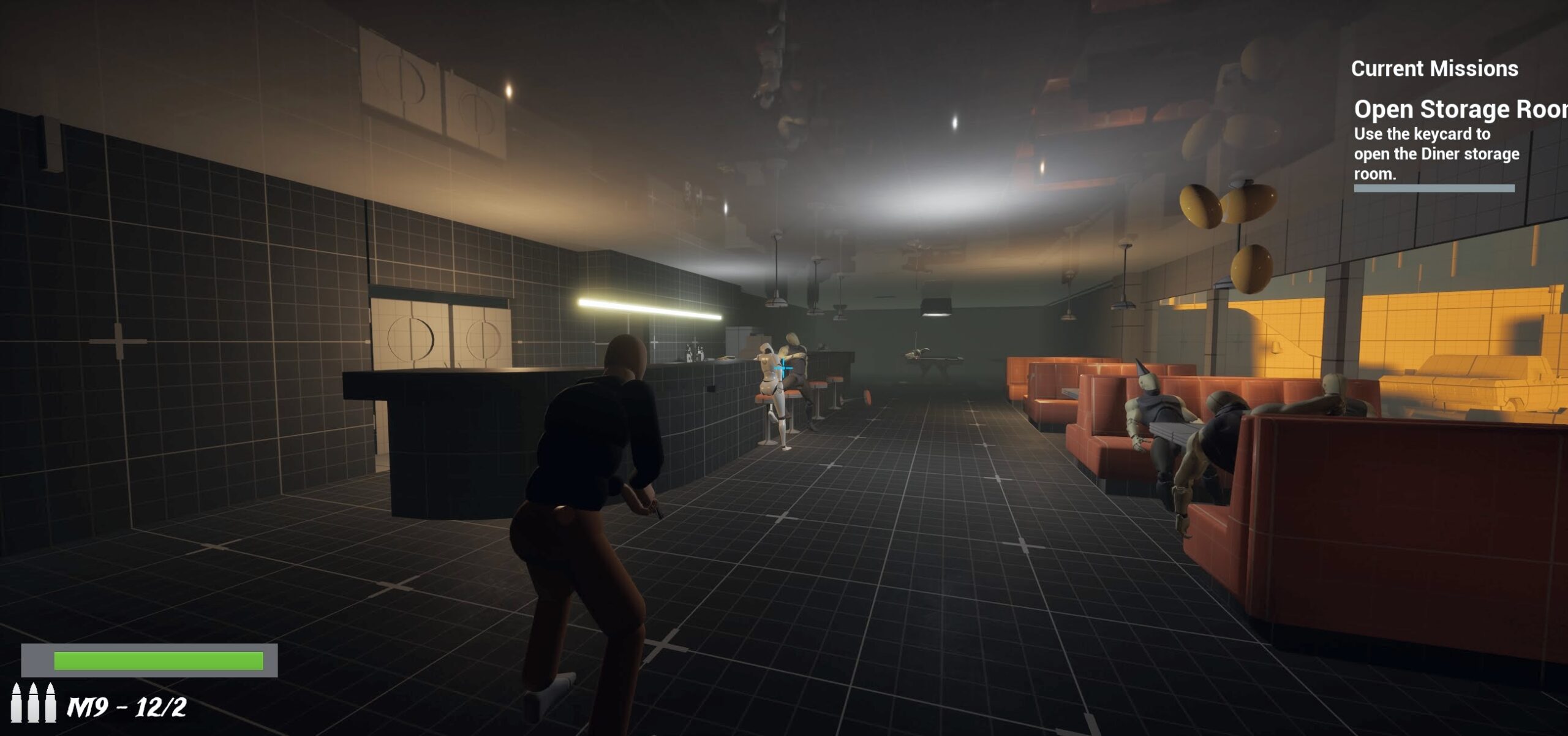
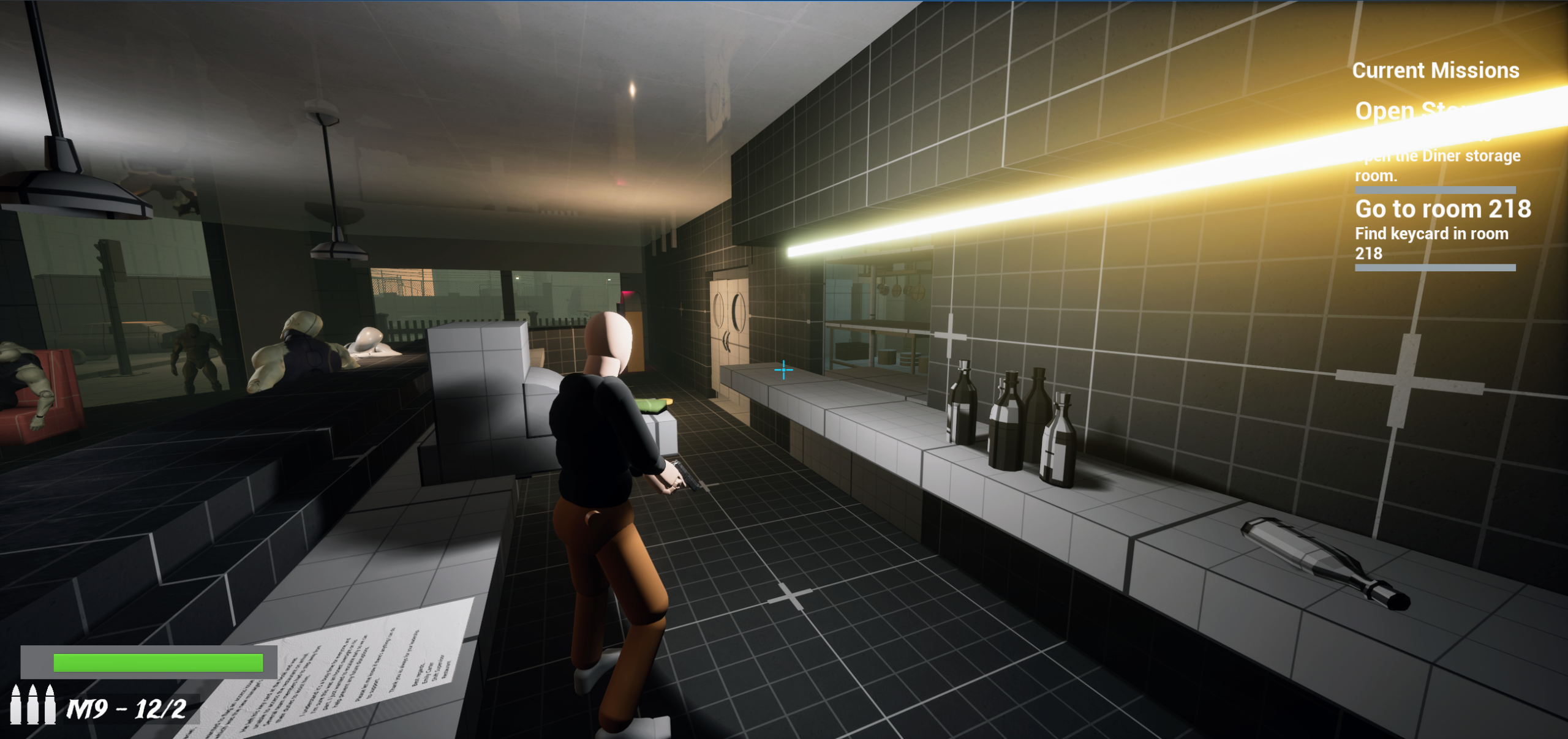
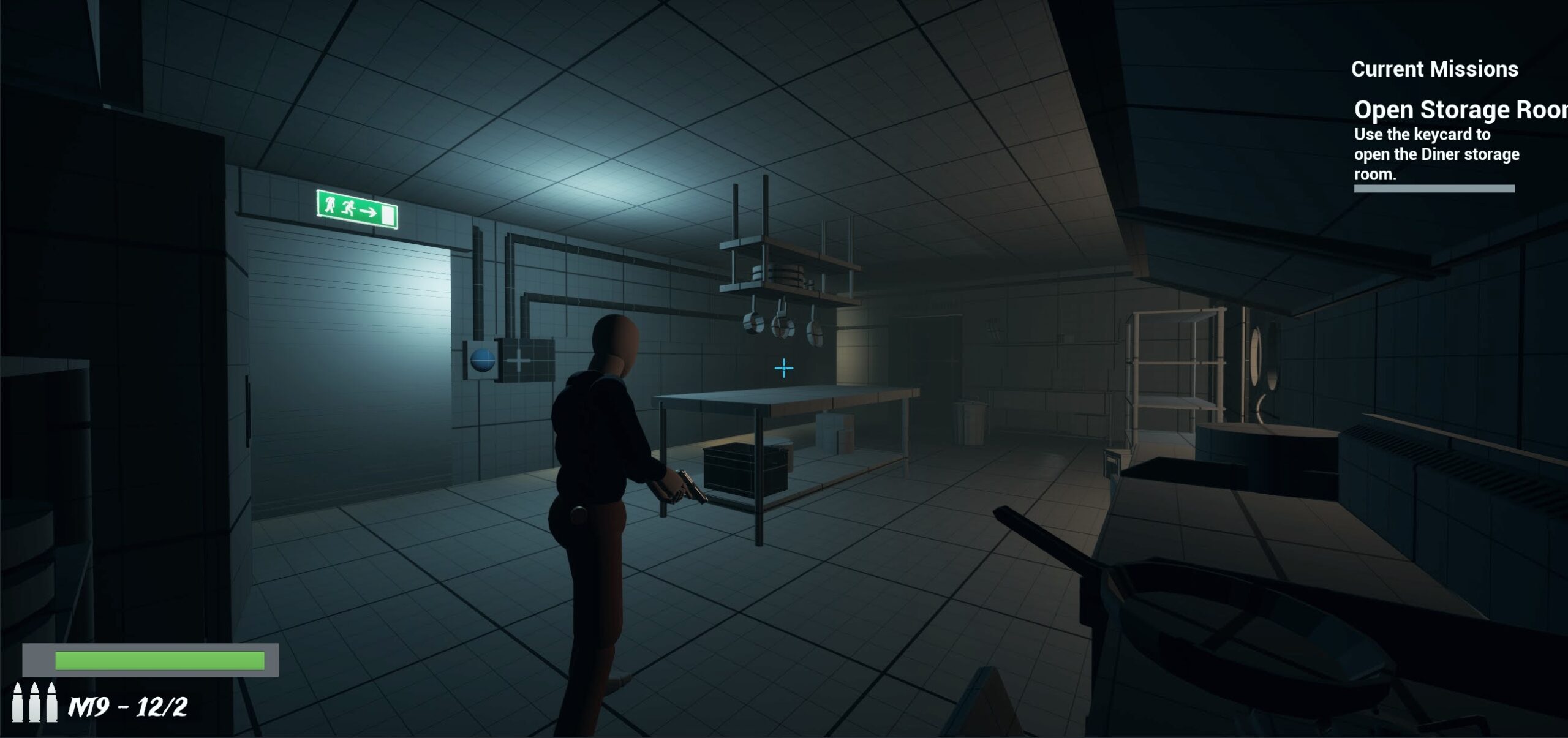
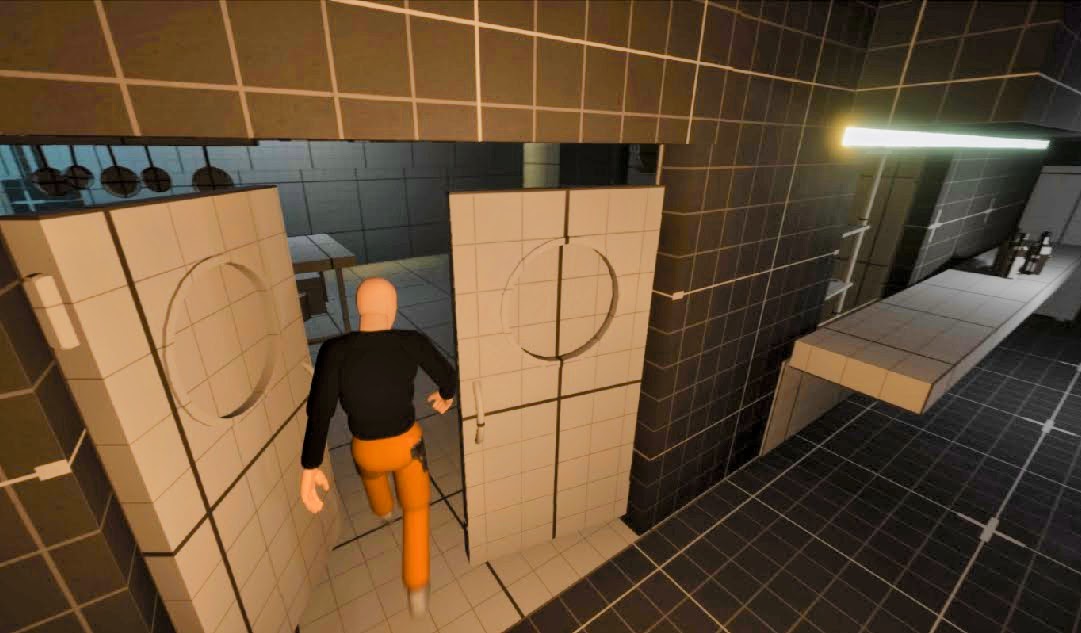
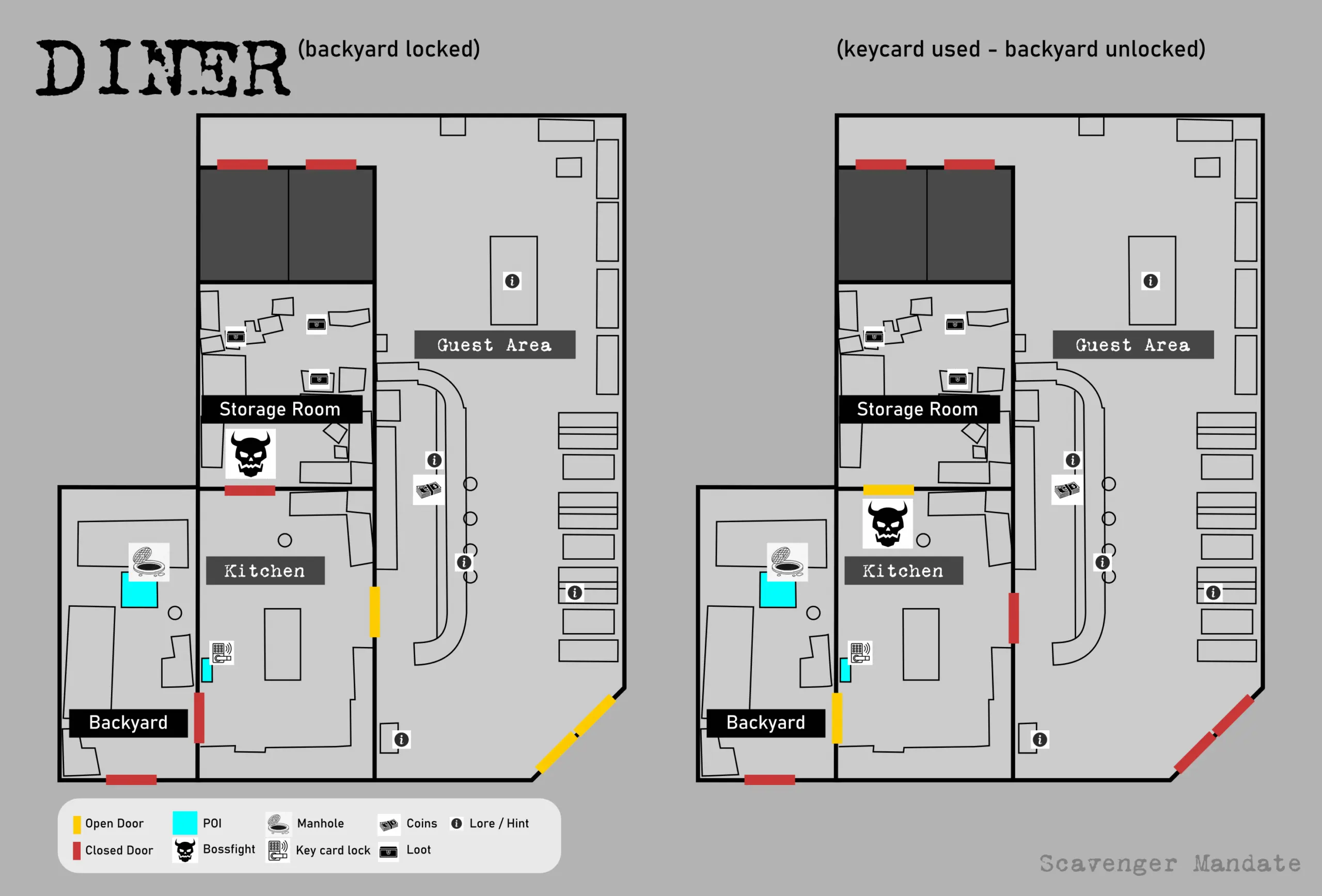
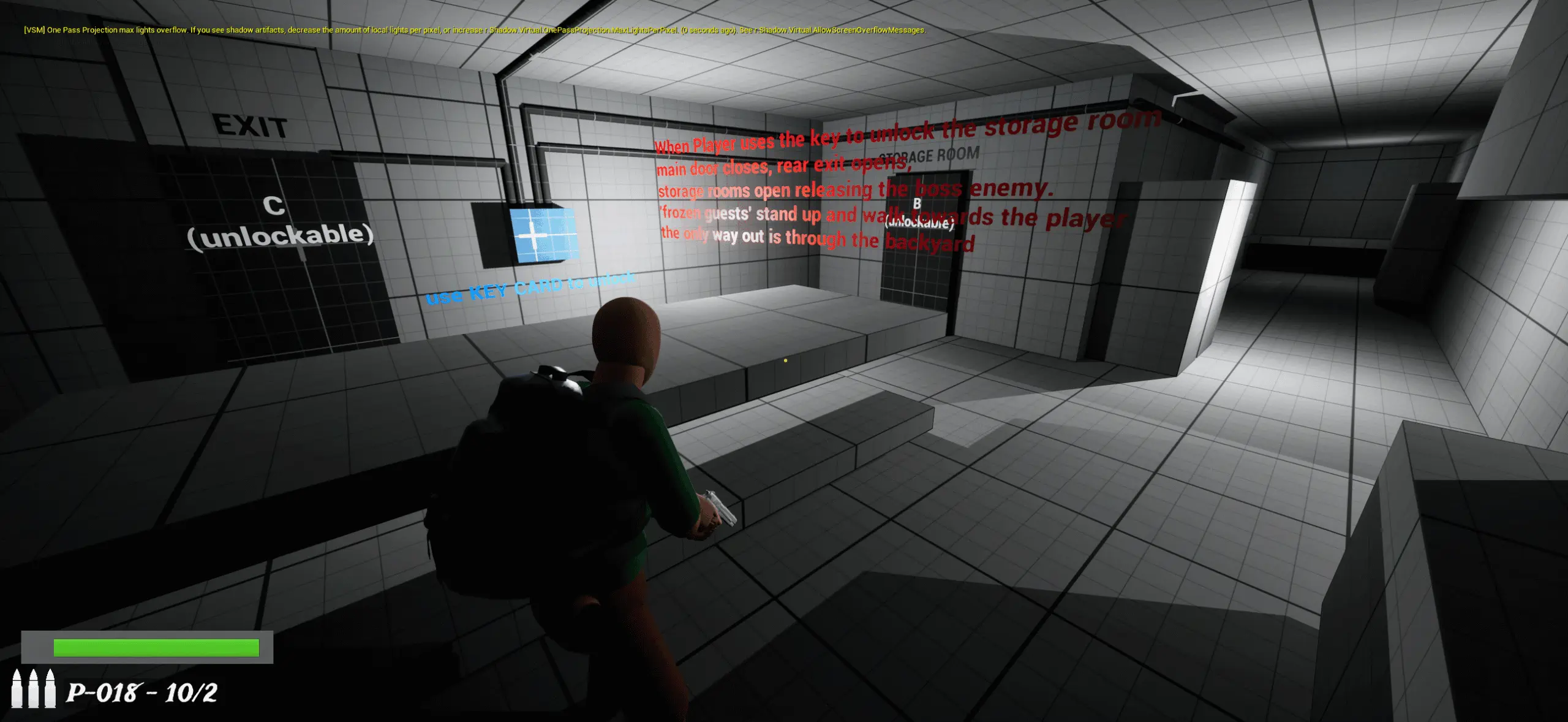
At the diner the player uses the keycard on the kitchen door and sets off the delivery procedure. The storage room rolls open, the exits to the guest area lock, and the mission changes to Run for your life. The player empties the pistol into the boss that comes out of the storage room and it keeps coming, so they run for the backyard. Out there they look for a way over the fence, find the one thing worth climbing, and climbing it drops them into a manhole.
Beat 4: Underground
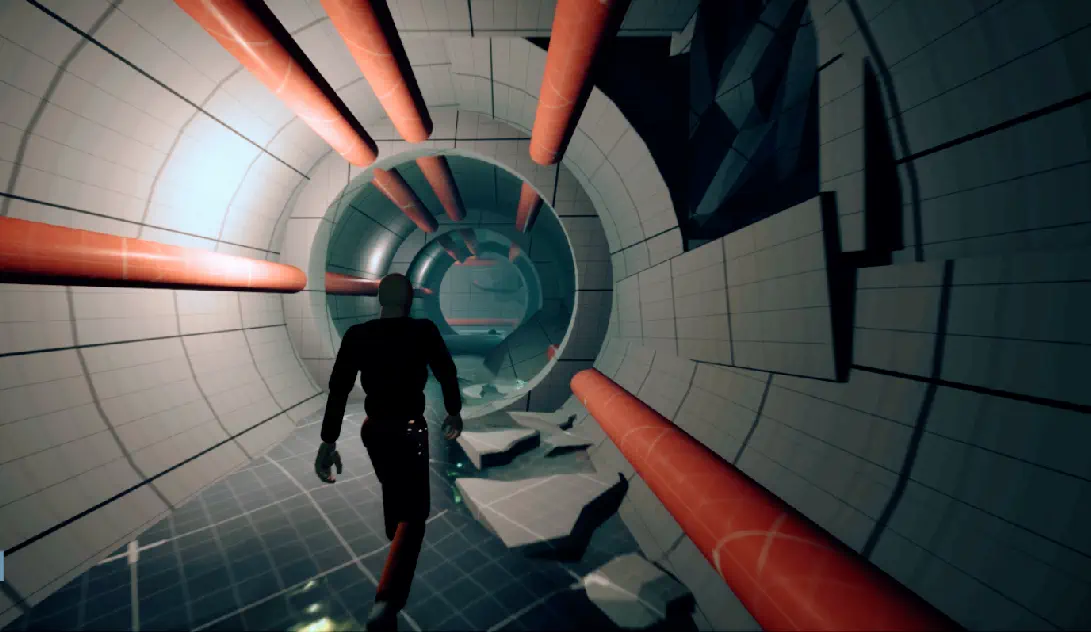
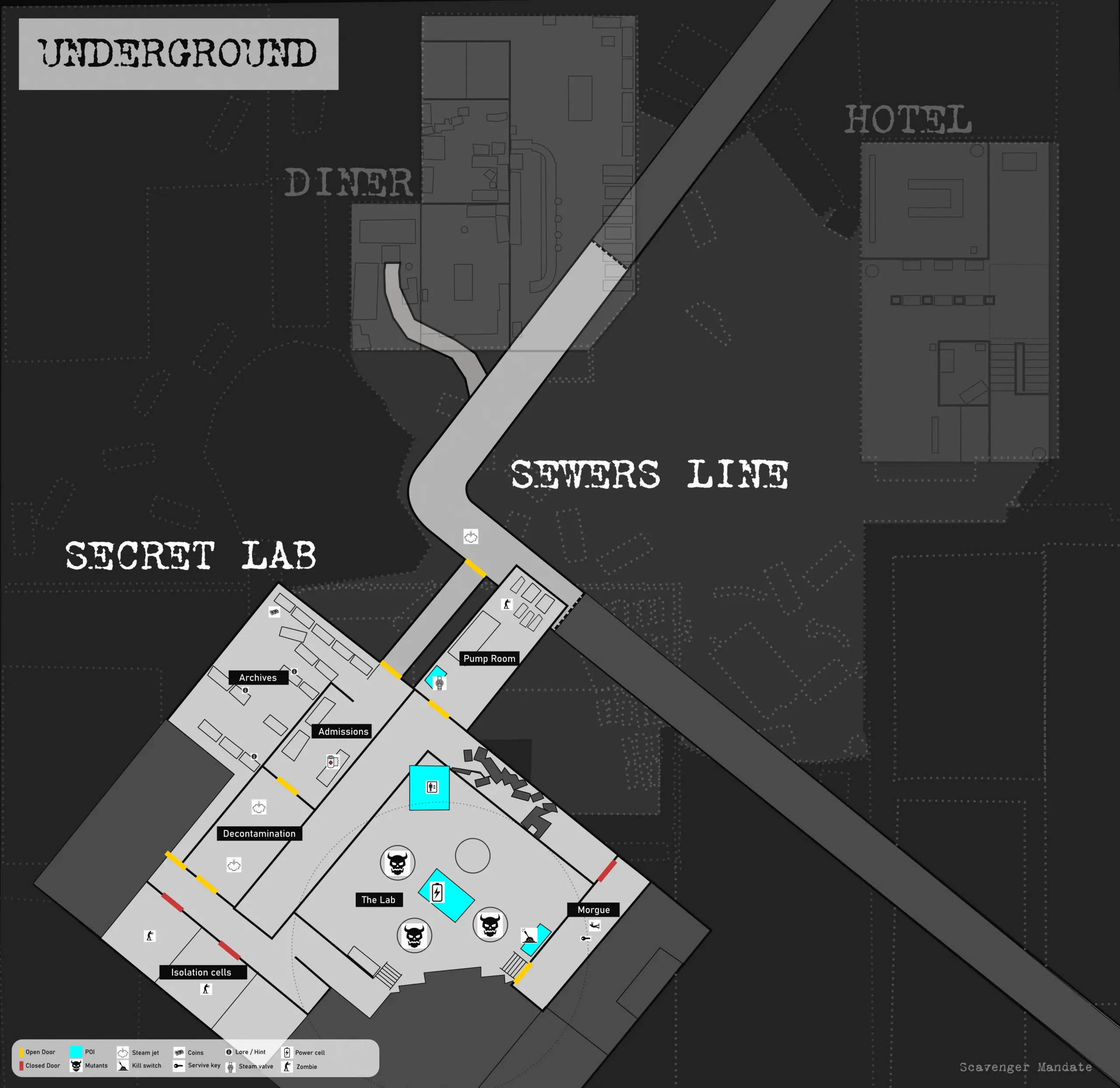
The player lands in a cave. A light shows at the far end, and the way out goes down and into a large sewer pipe.
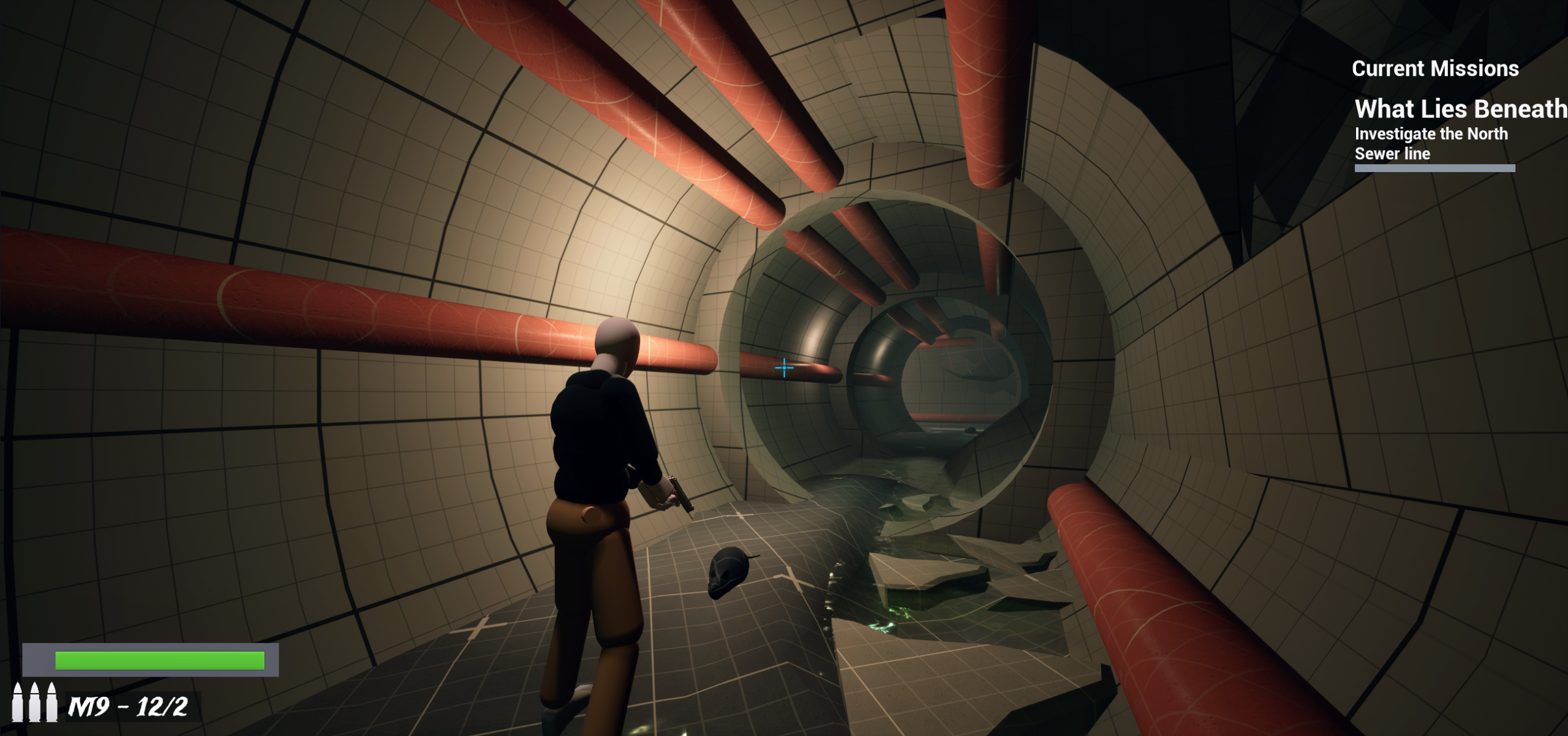
The tunnels are cold and empty, with water underfoot. Rats run around down there. They do no damage, and the player can shoot them for fun. Further down the tunnel they meet the steam for the first time. a jet firing on a cycle, so they wait for the gap and walk through.
At the end of the line an old service ladder goes up into the hospital basement.
The player climbs into the hospital basement and heads for the lab in the middle, exploring the admission rooms on the way.
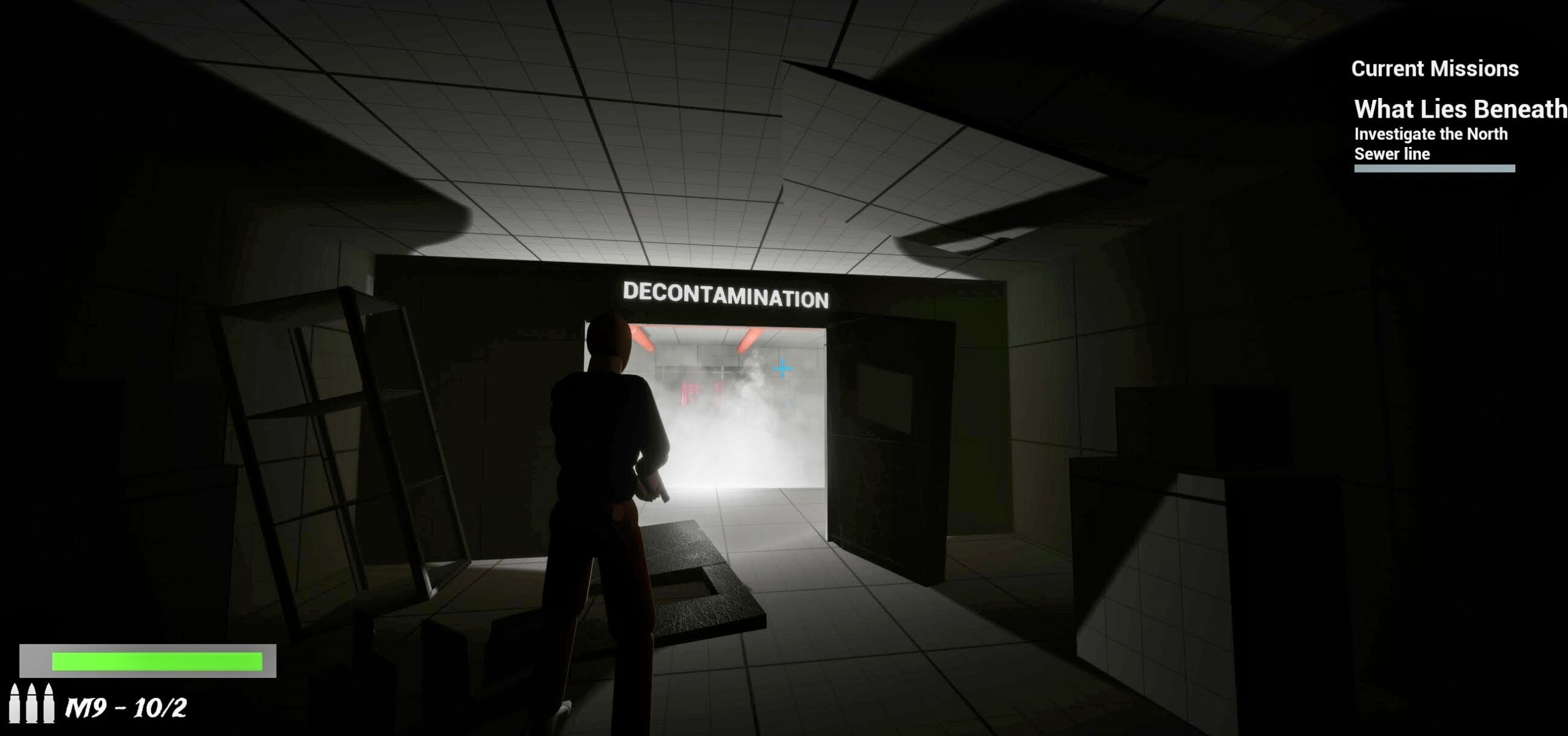
At the decontamination room the steam stops them, so they either find the valve in the pump room and shut it off, or crawl around it through the archive.
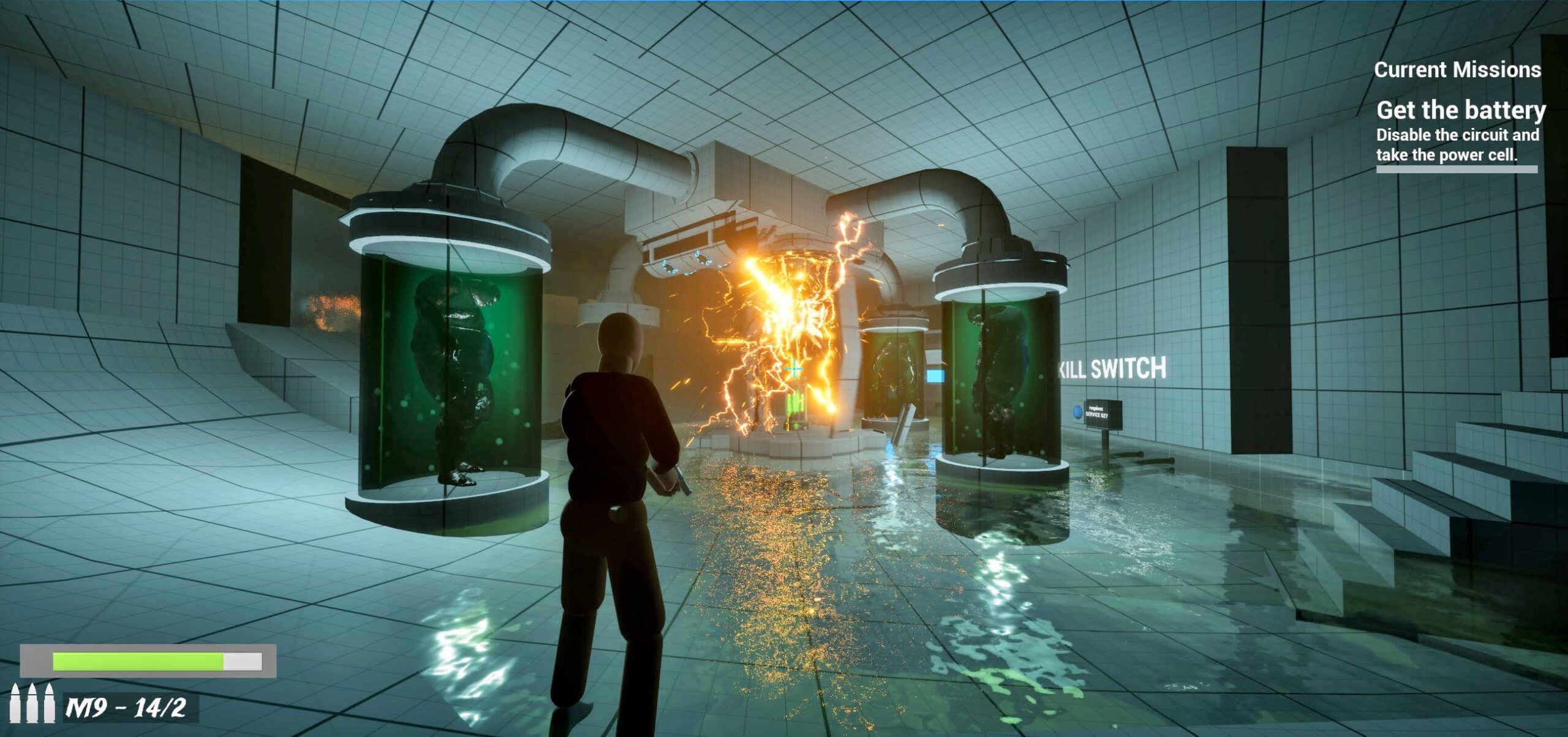
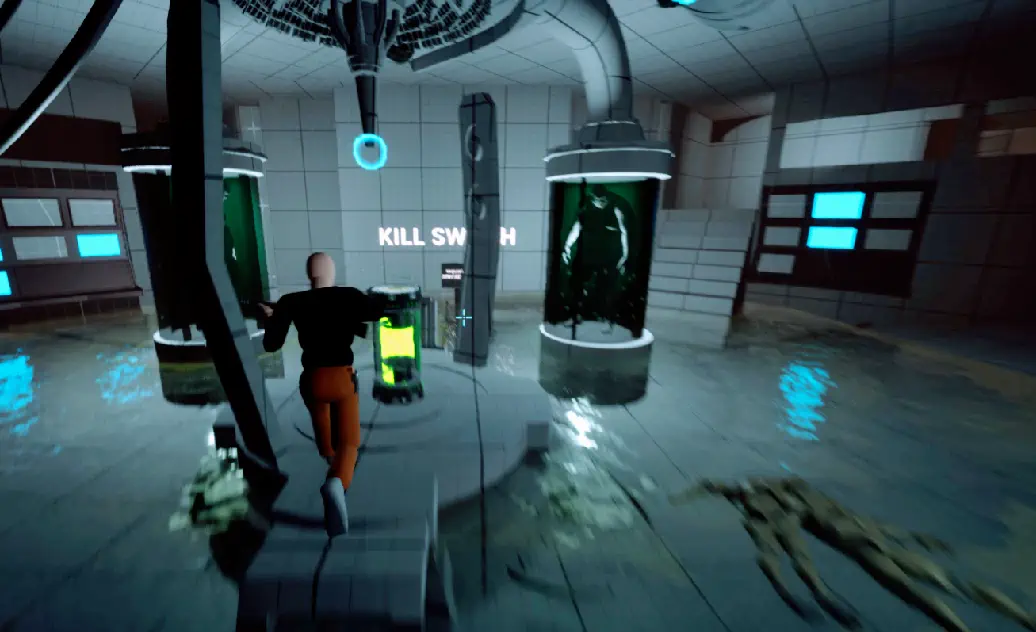
In the lab they find tanks with monsters inside and the battery in the centre. To cut the power they need the key off the dead guard in the morgue, and the moment they use it, security comes out of the elevator and they have to fight for the ride up.
Beat 5: Hospital
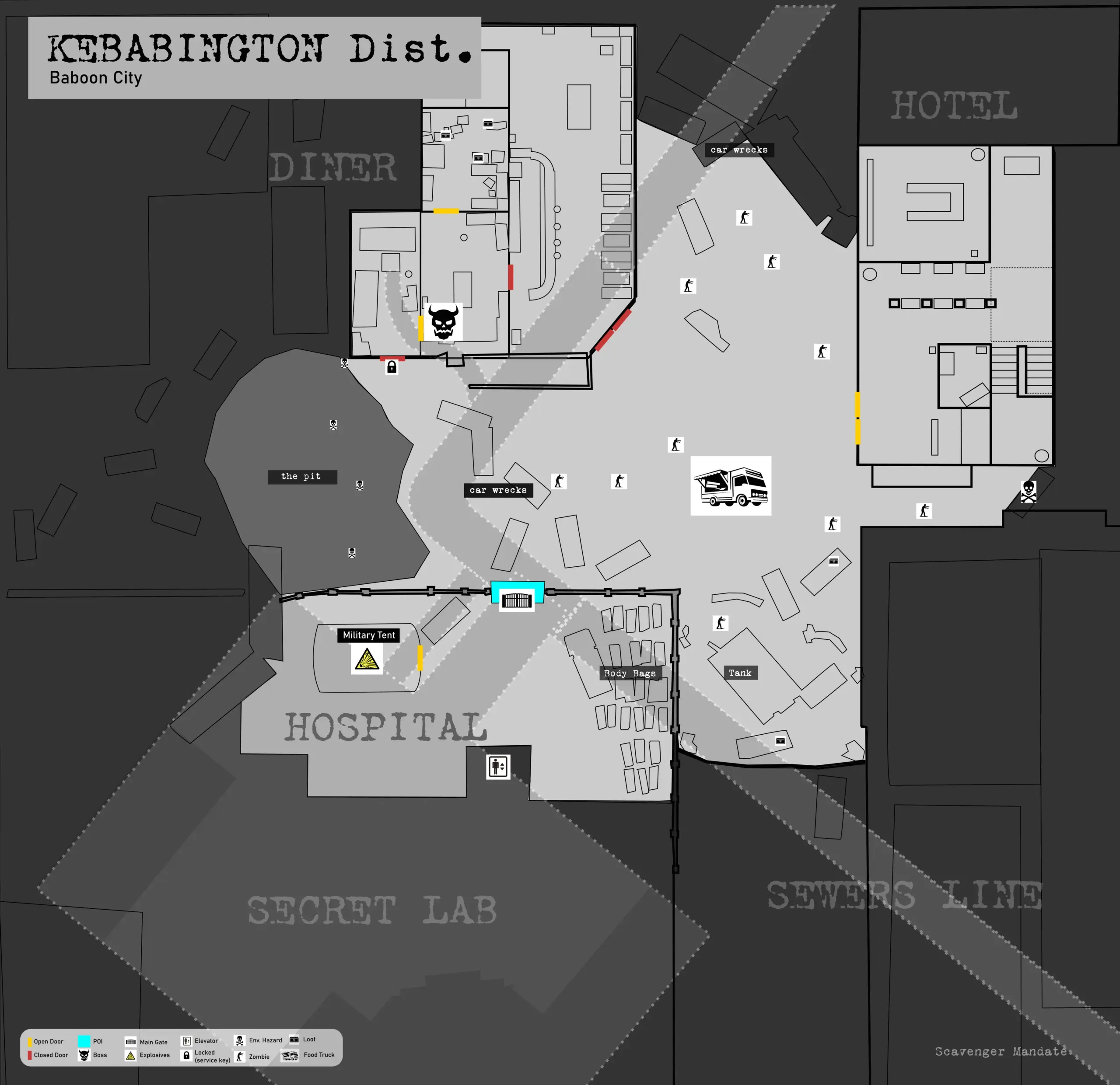
They surface in a walled yard with no way in from the street, so they need to use explosives left in the military tent to get out. The player takes whatever else they want from the tent, spends their coins at the vending machine beside it, and blows the main gate open.
From there they can carry the battery to the truck and end the mission, or go back to the diner first and take on the boss.
 Instructor feedback:
“Your level flow is especially strong. The loop of explore, fail or escape, power up, and return for a stronger second attempt is a very effective structure.”

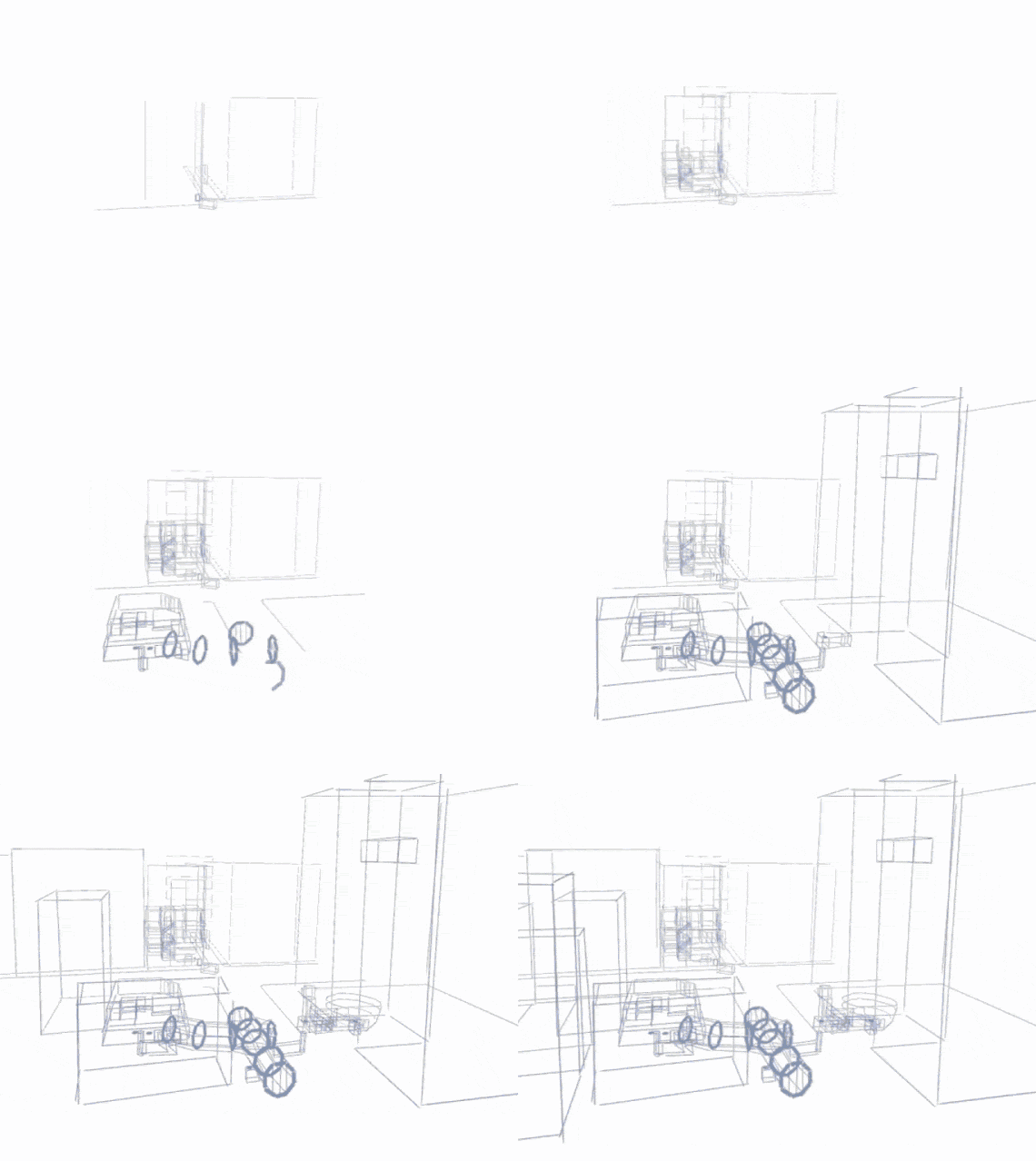
VR Sketch:
 Reality Check:
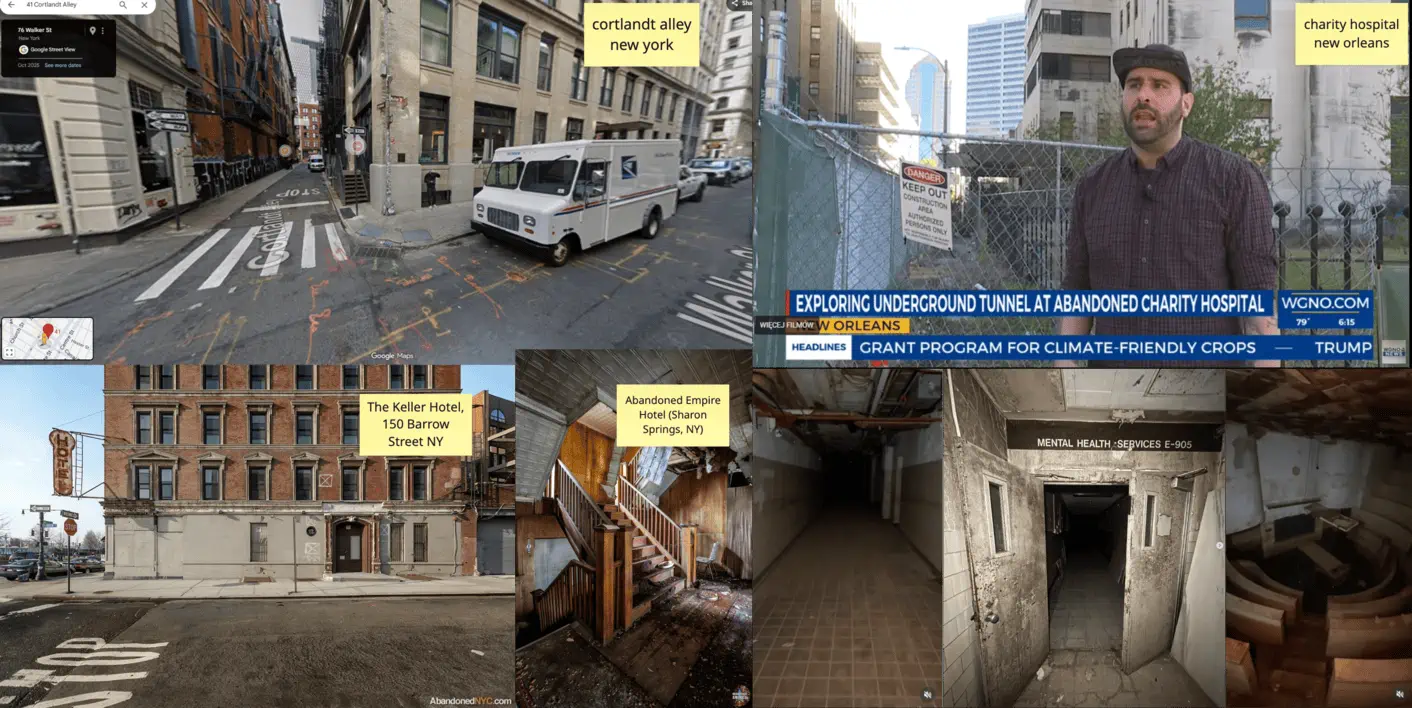
 Playtesting quickly proved that “realistic” doesn’t always mean “playable.” I still had to go in and double the size of several places later on.
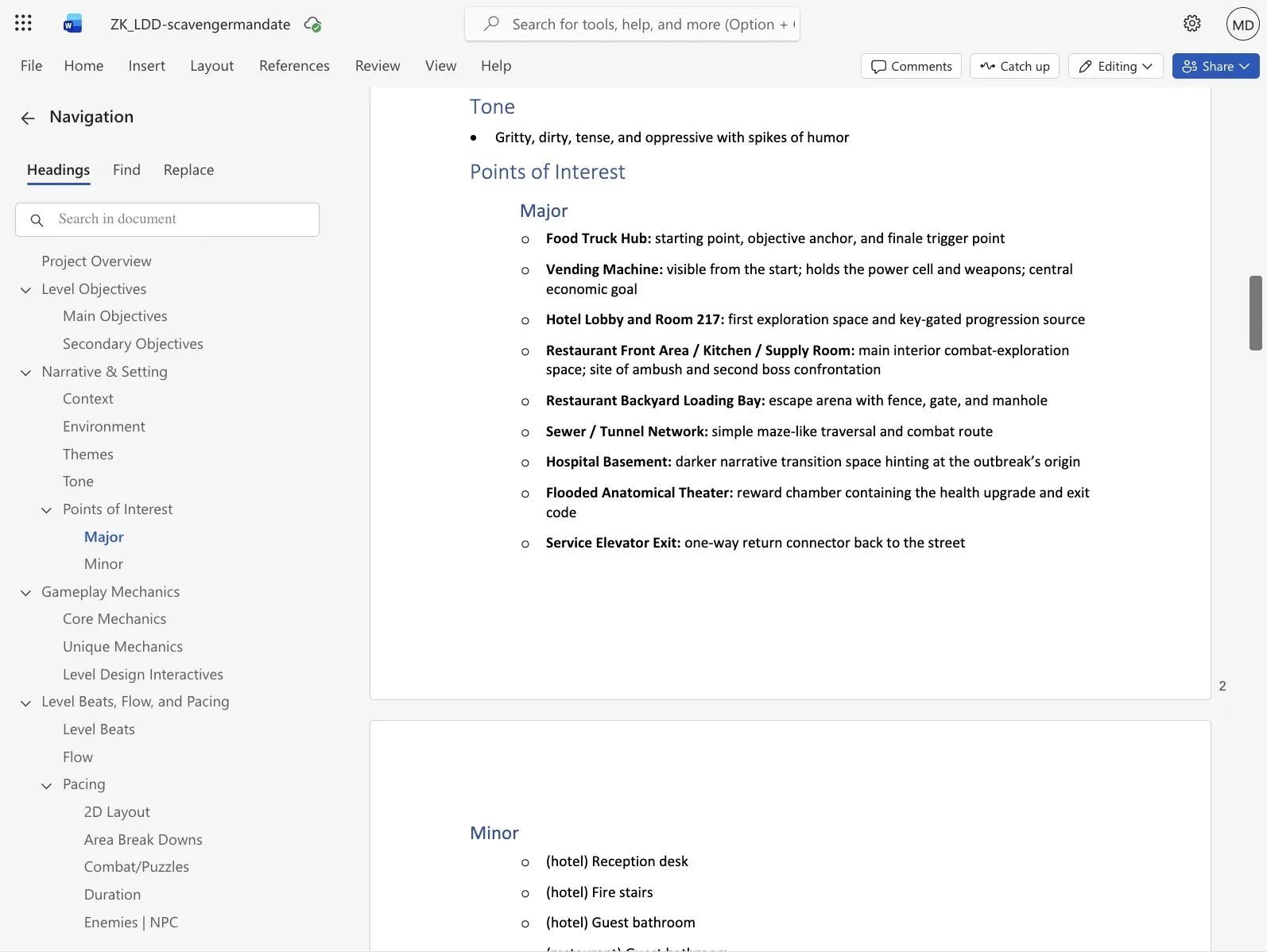
Level Design Document (LDD):
My LDD covers the design goals, objectives, setting, points of interest, mechanics, and the beats with their flow and pacing. Creating it was necessary to get the raw vision out of my head and set a clear target.
Reality Check:
The feedback praised the structure and clarity but flagged the scope as too ambitious forcing bold cuts early on.
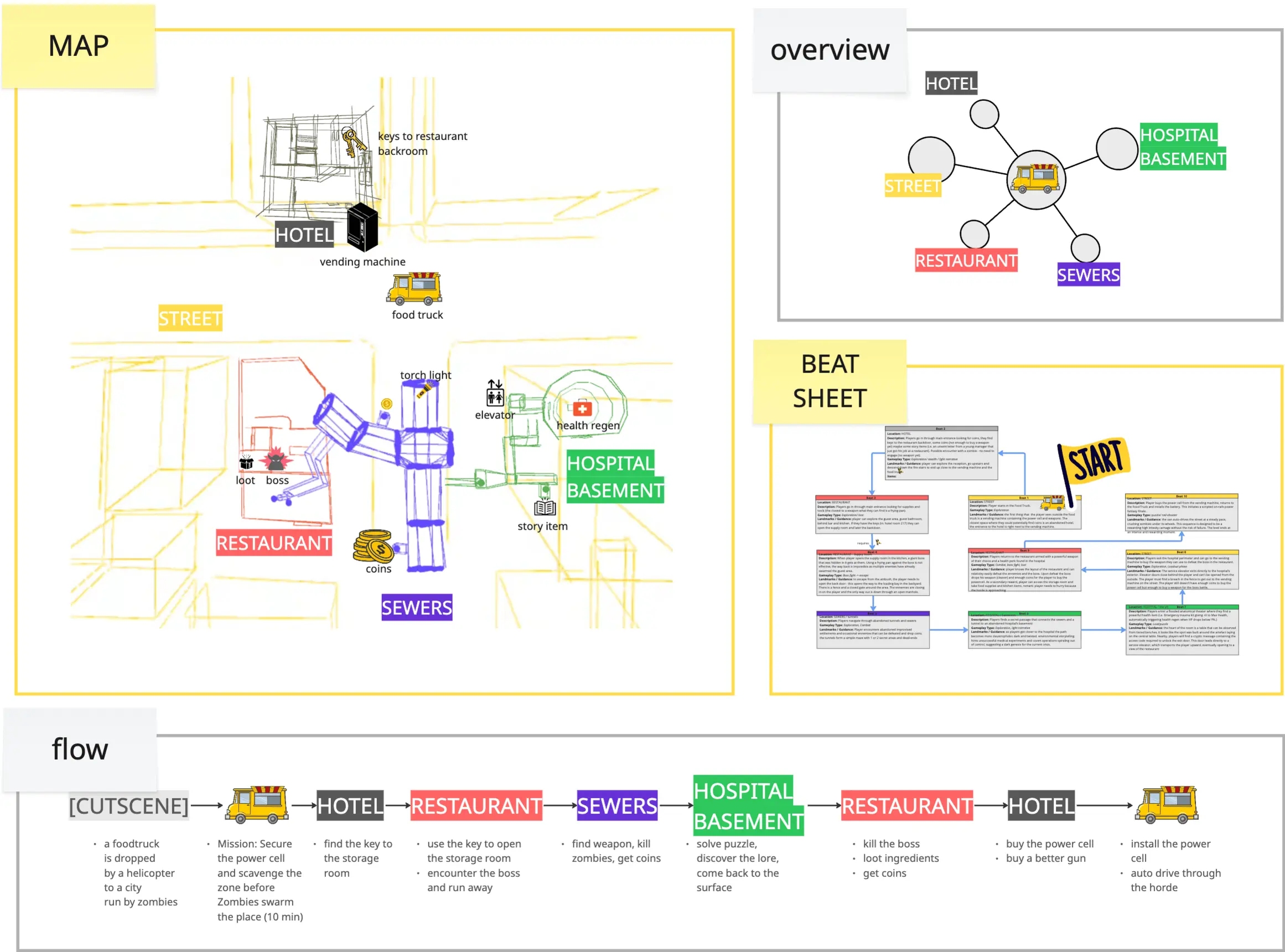
Beat Sheet:
I described all beats using the same four fields: location, description, gameplay type, and landmarks and guidance. Filling them in forced me to say what the player does in each space and what leads them there, before I built any of it.
Reality Check:
Paper pacing did not survive contact with the engine, eventually I added more varied combat, put in environmental puzzles, and reversed the order of several key events.
Rough Block Out
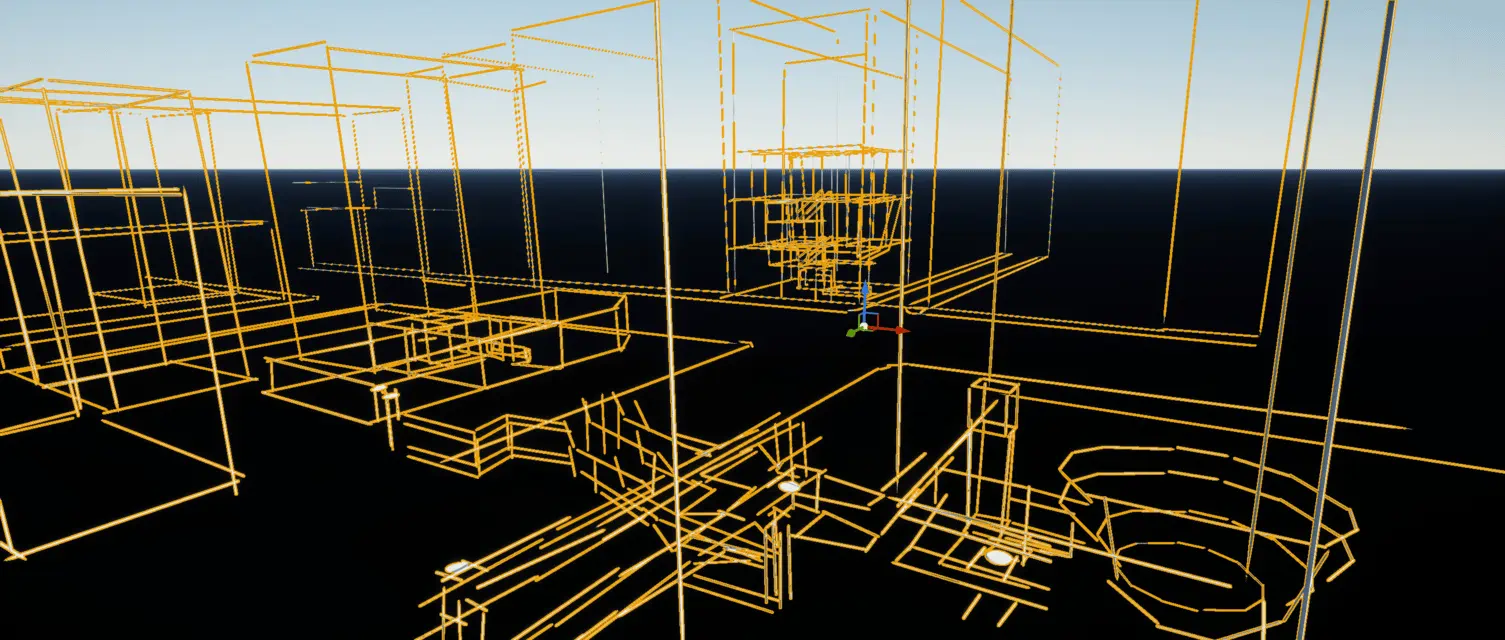
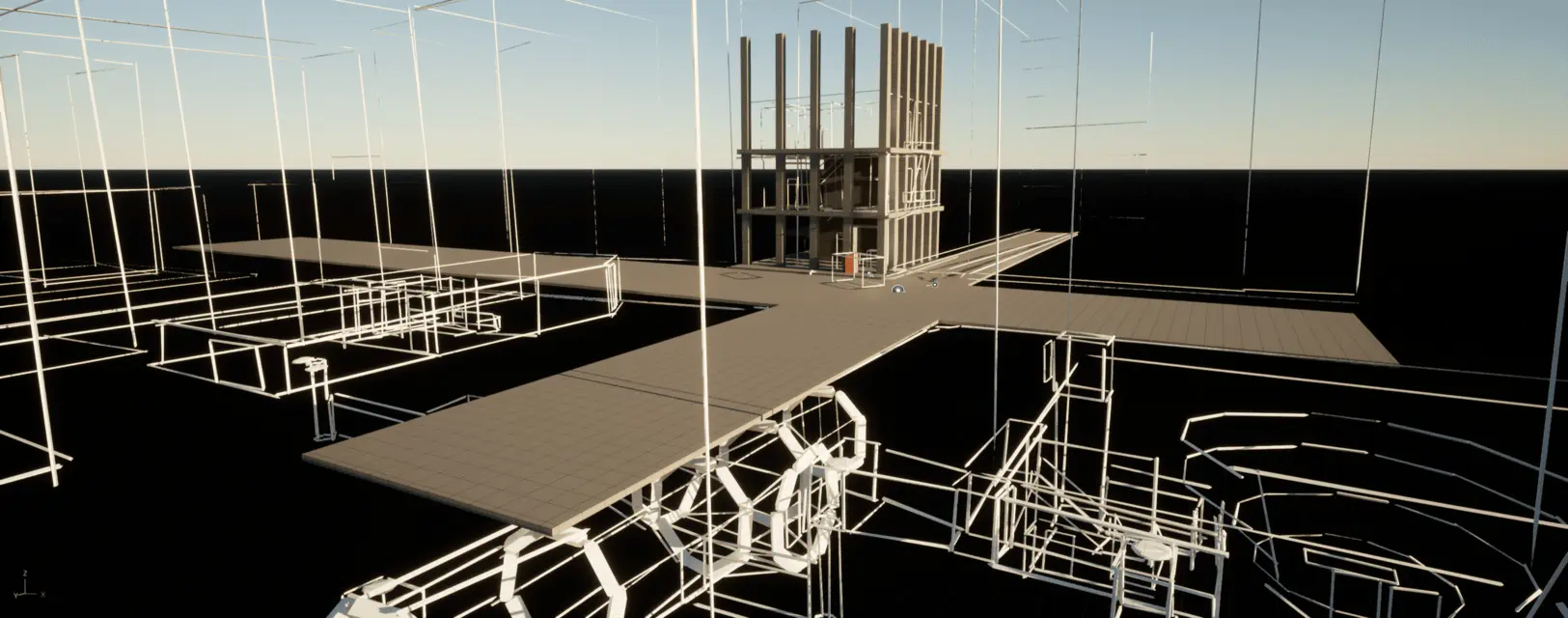
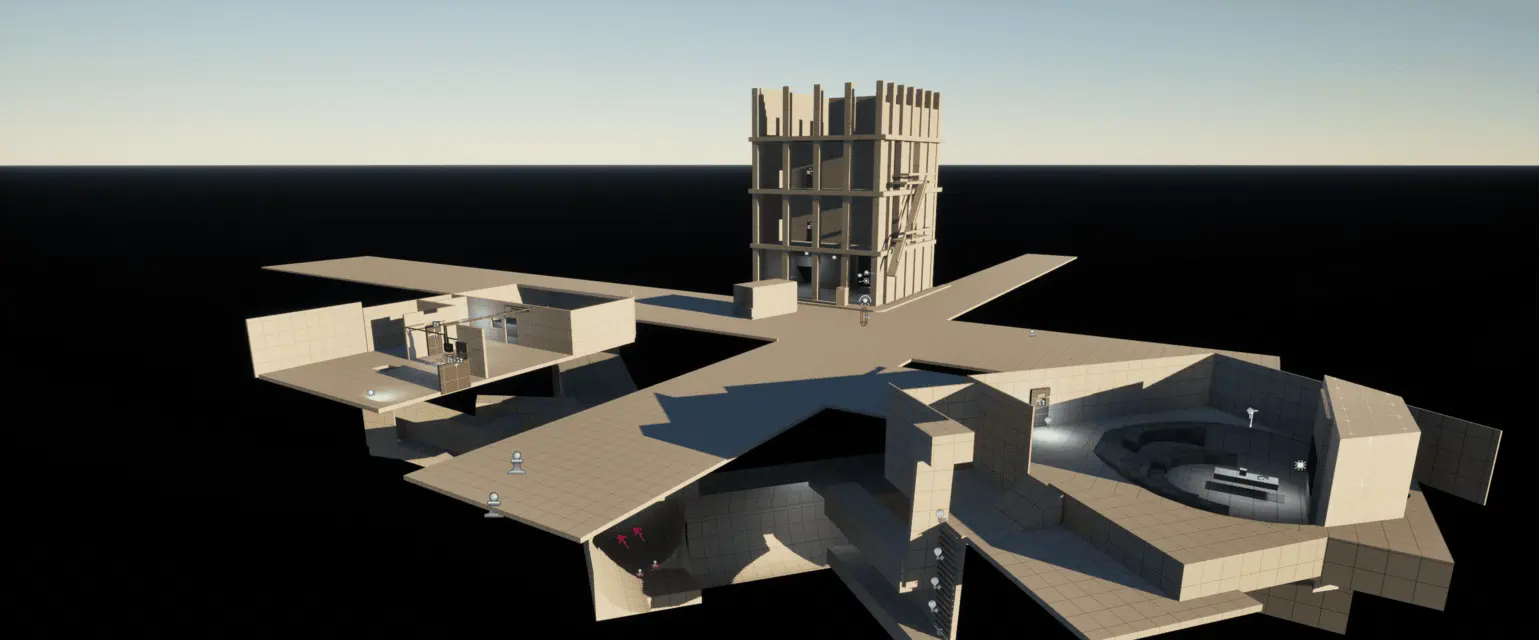
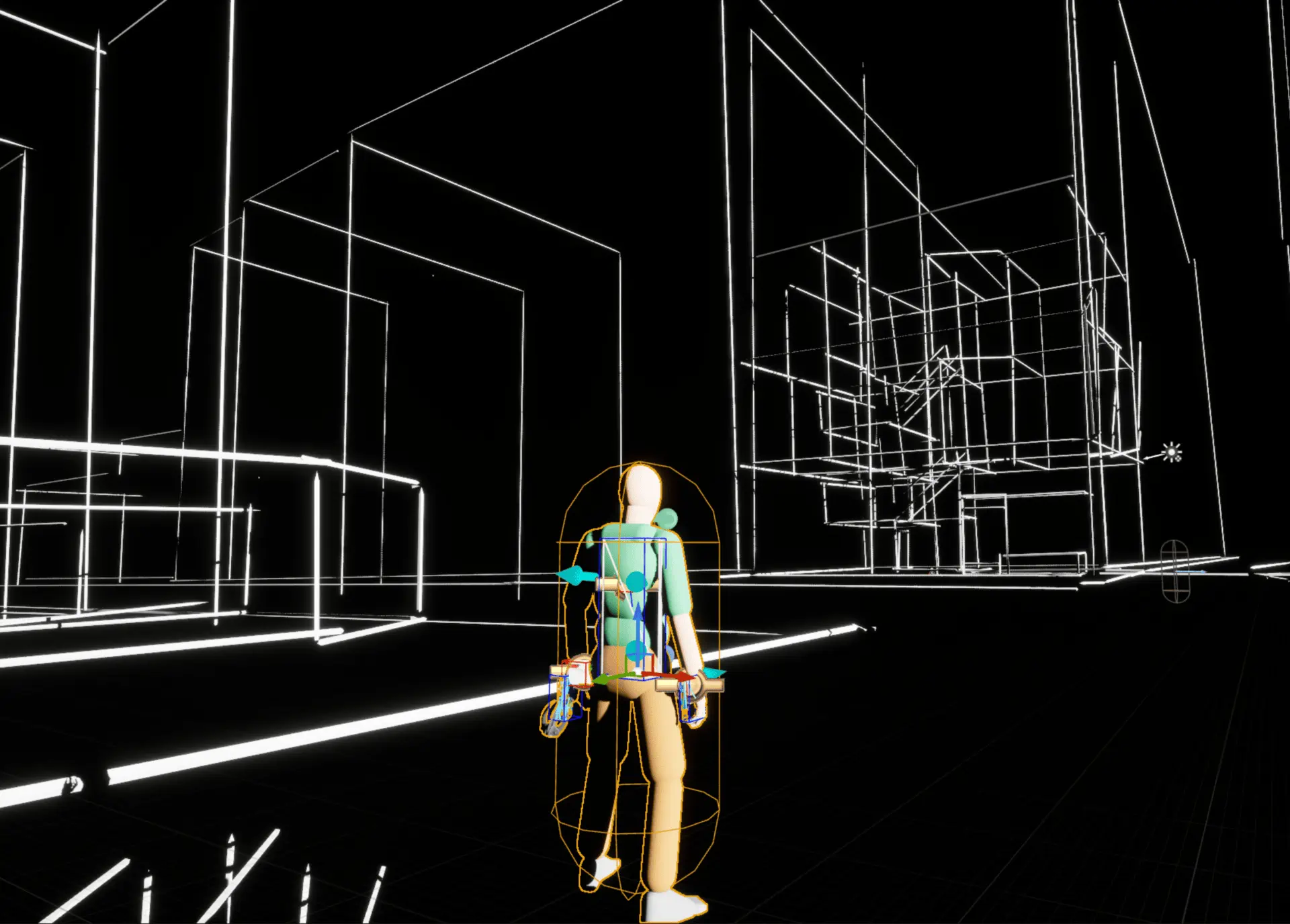
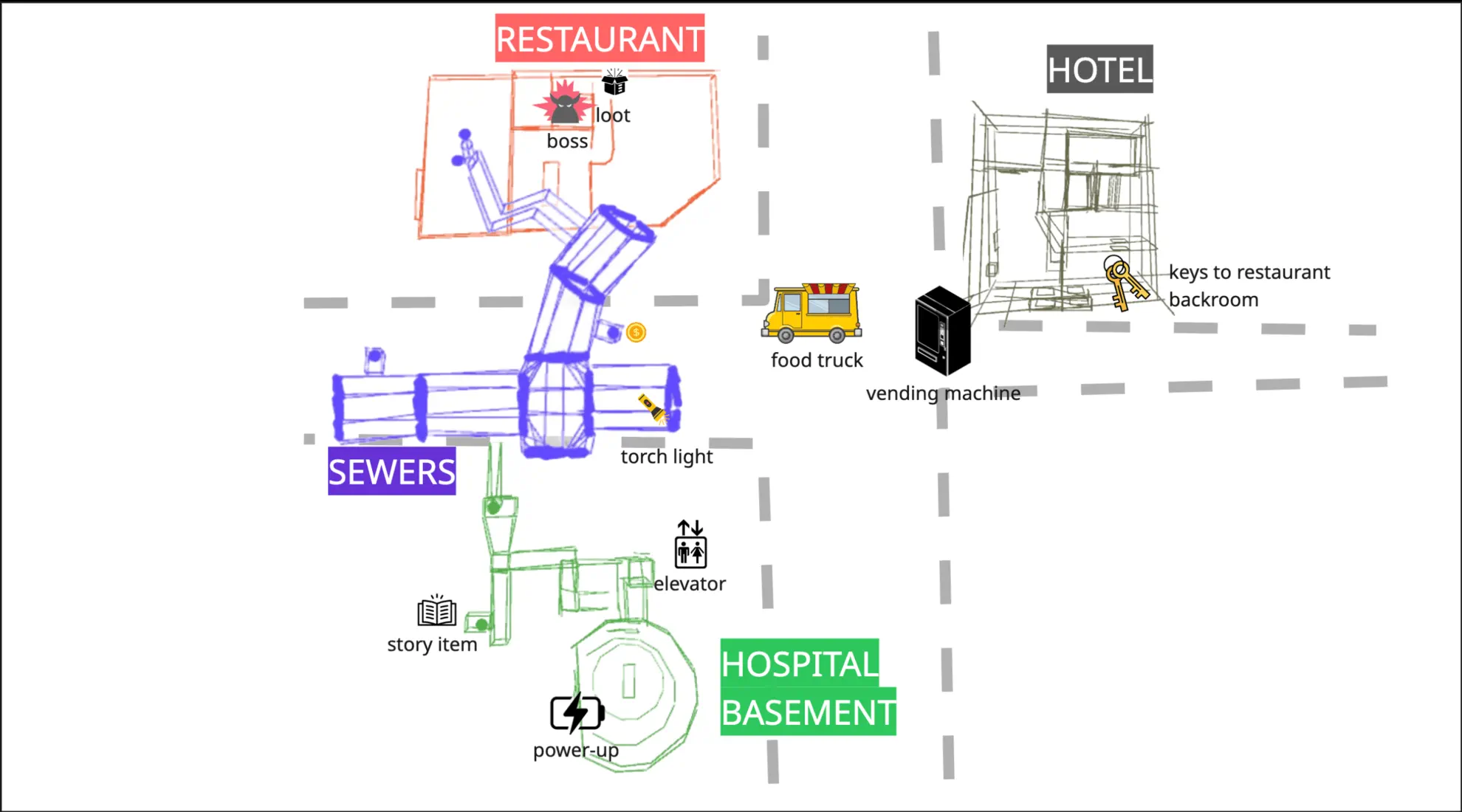
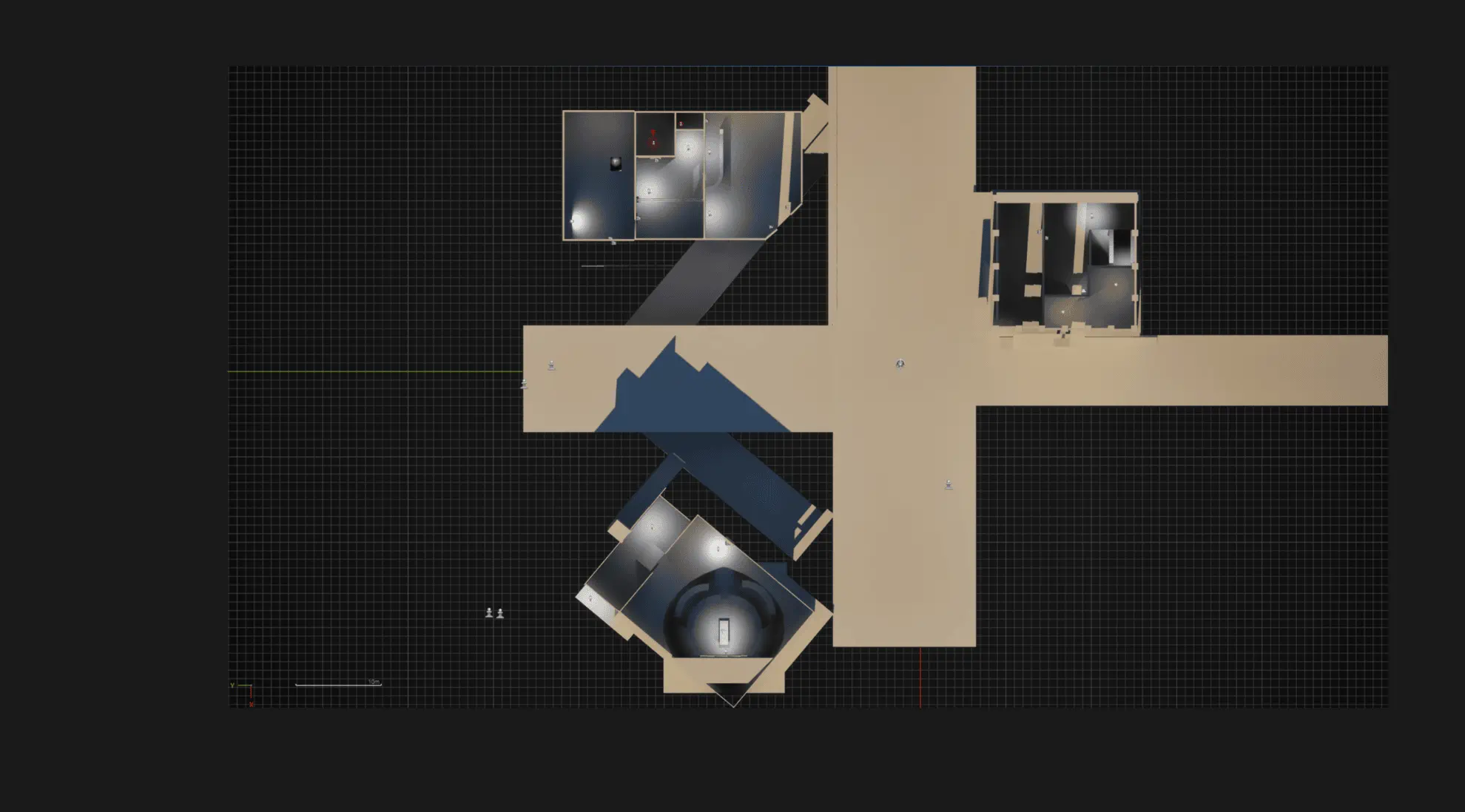
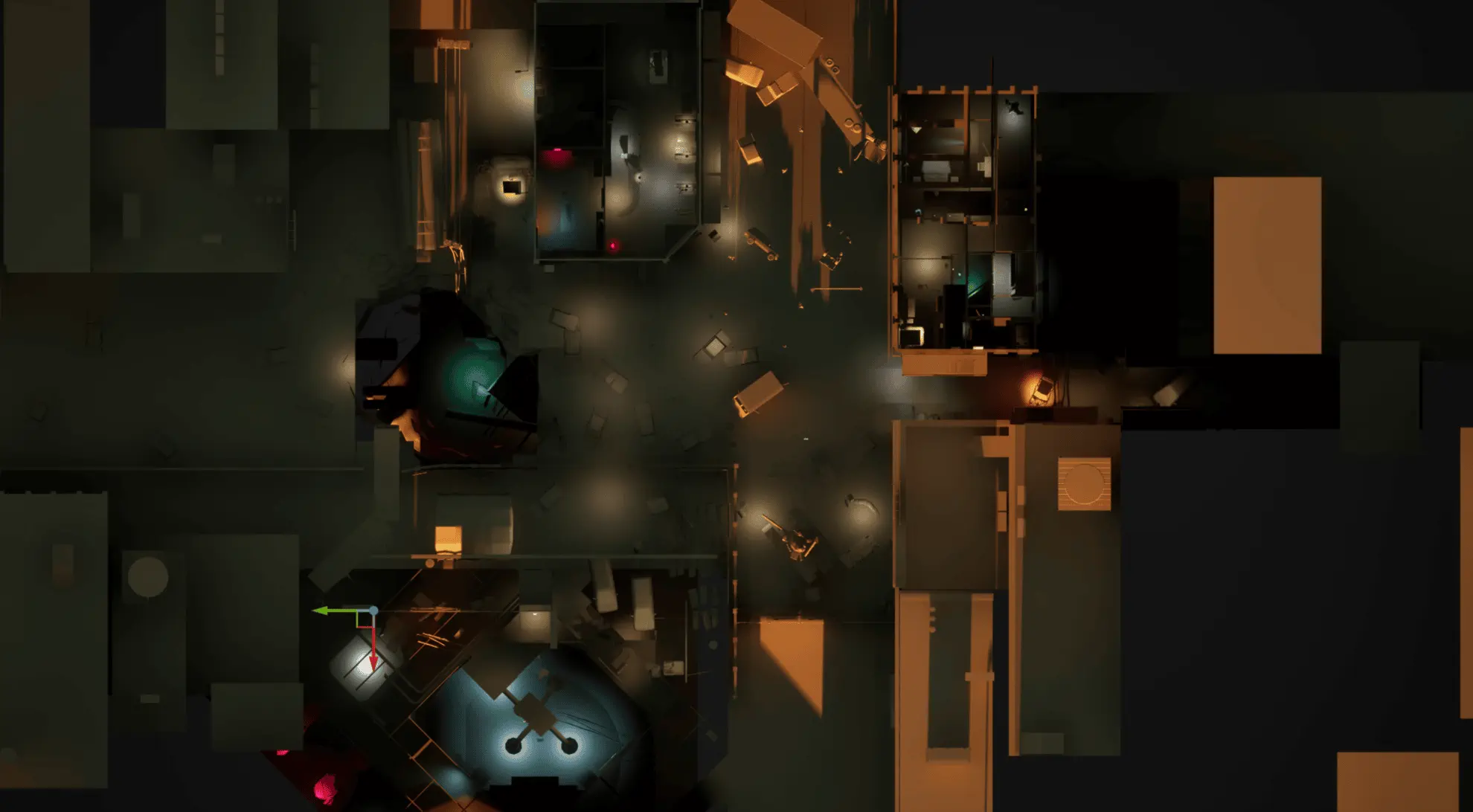
Results: I took the Tilt Brush sketch into Unreal and had the whole route walkable, with basic lighting and text boxes marking the flow.
Goal: One walkable route from the food truck to the hospital and back, crossable in under ten minutes
Instructor feedback:
“There are a lot of systems, locations, and beats working together, so as you move into blockout, it will be important to prioritize what is essential to the experience and what can be simplified if needed.”
Playtest feedback: “Maybe simplify the maze, but give gun and put combat.”
Implementation:
- Underground: the tunnels ran long and worked only as a maze, so I cut them down rather than leave players lost in dark, tight corridors.
- Sewers: I added a combat encounter there, so the player can practise fighting before facing the boss again.
- Hospital: I removed the spare elevators and corridors, because I would rather use the minutes on action than on pathfinding dark corridors.
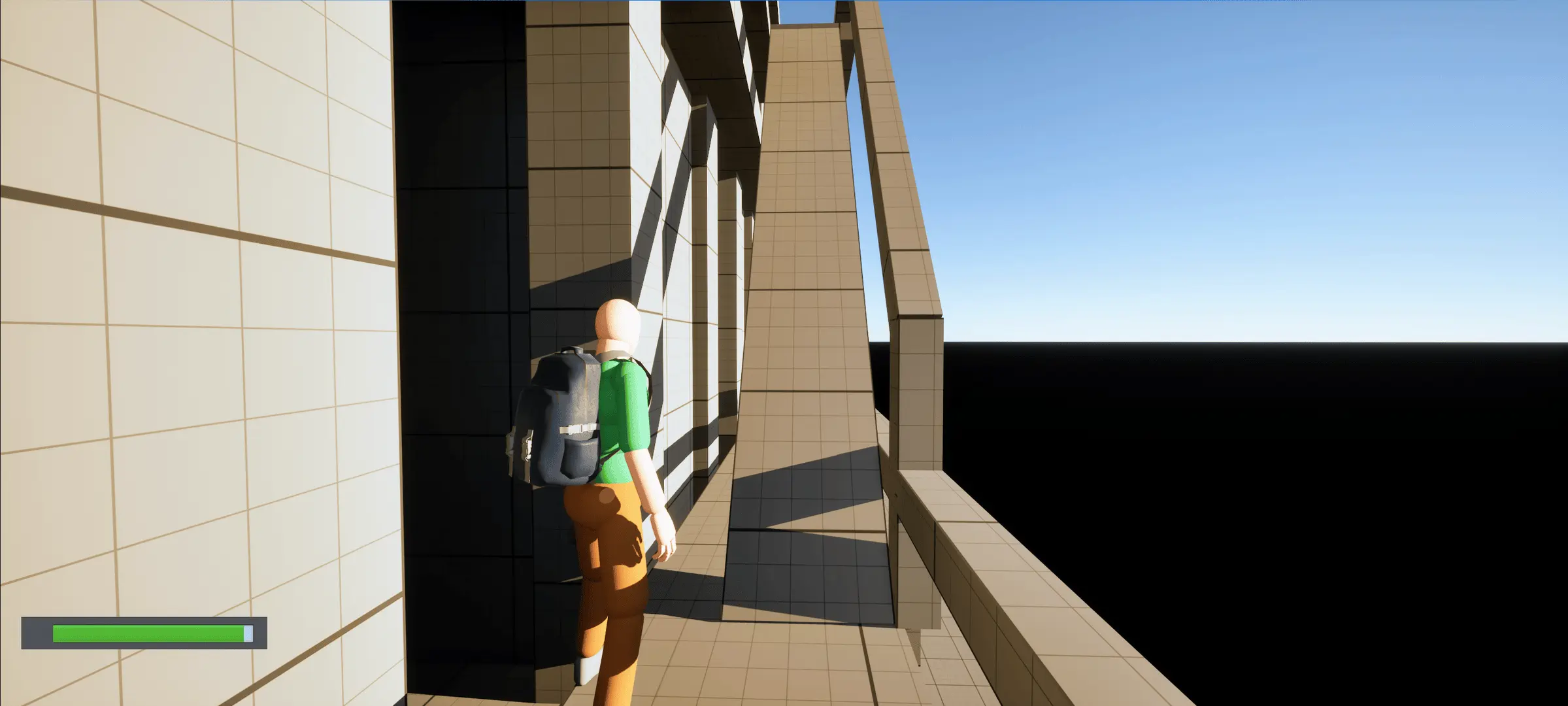
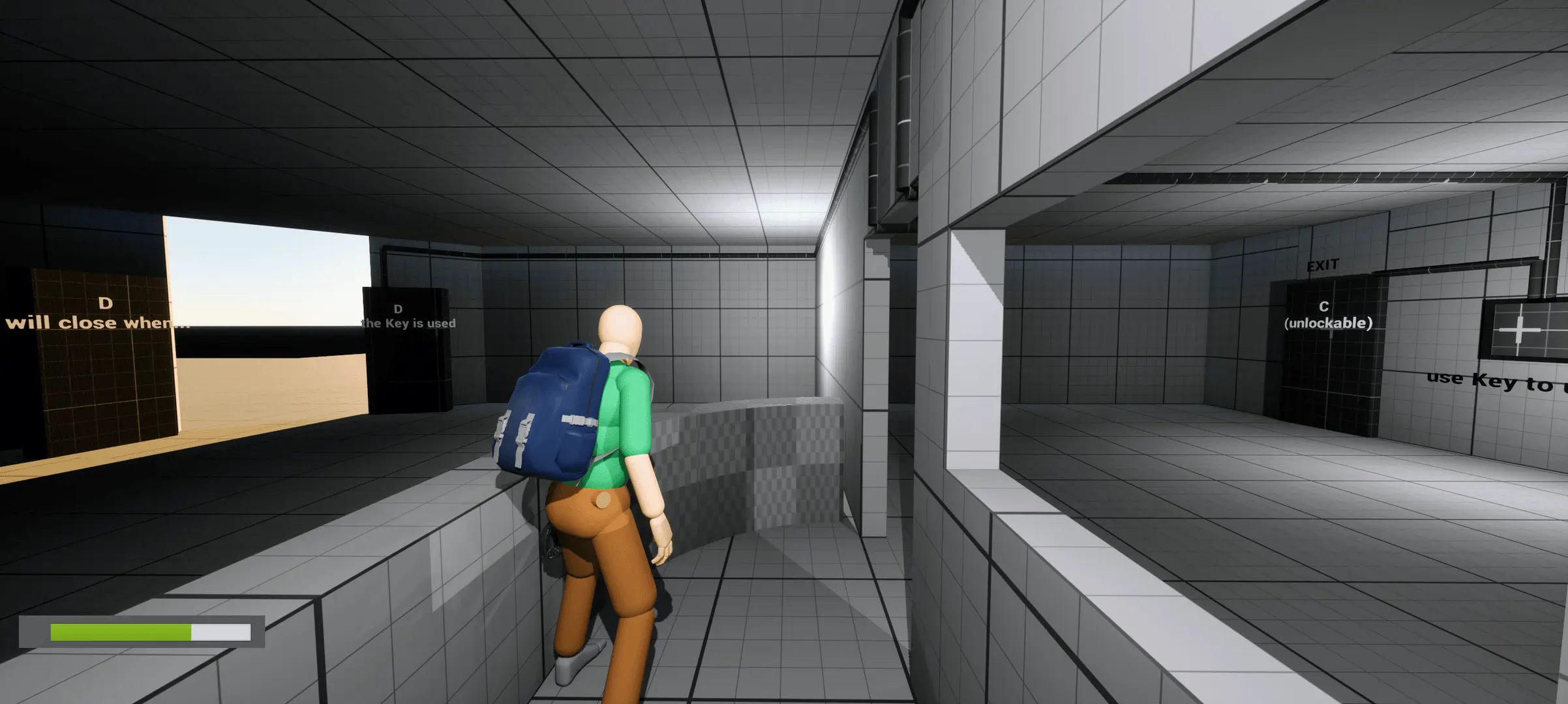
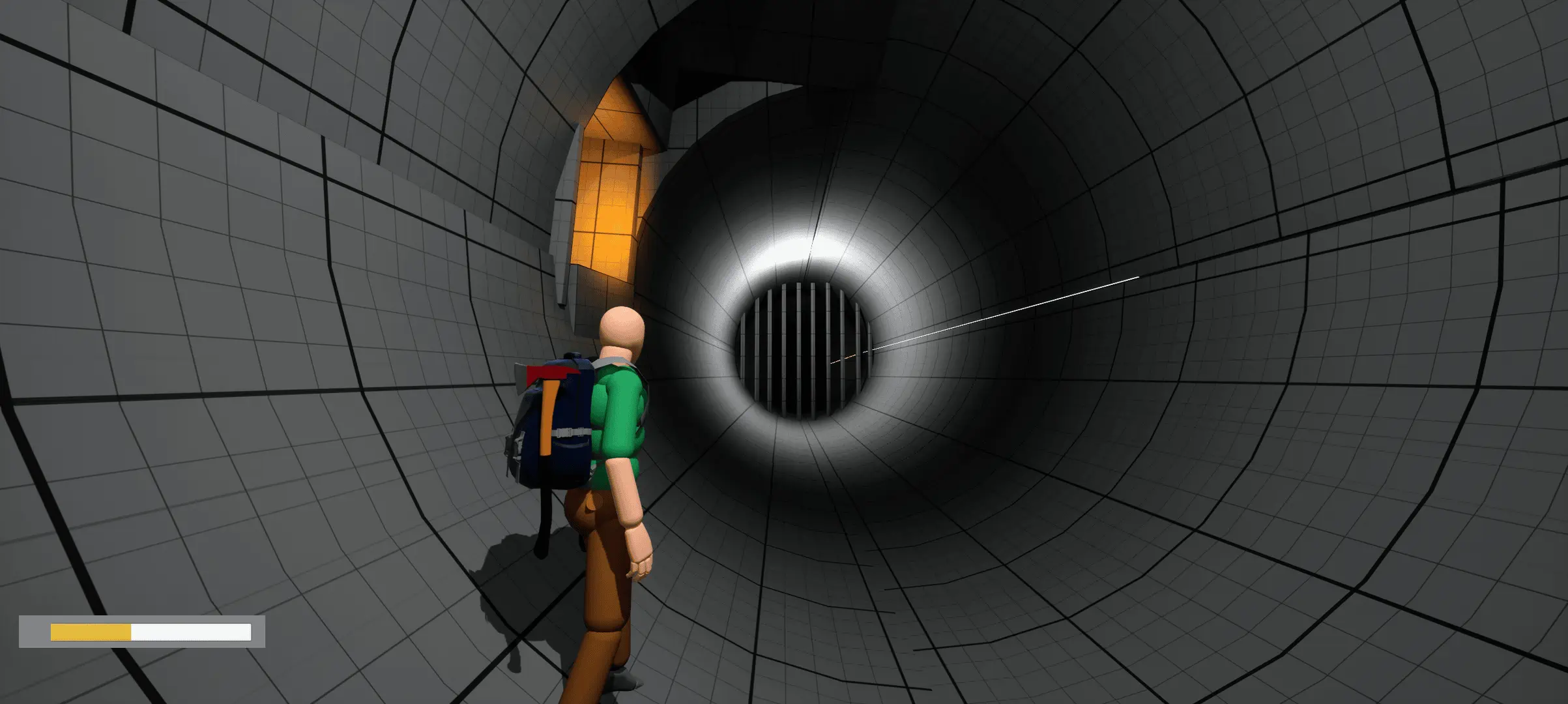
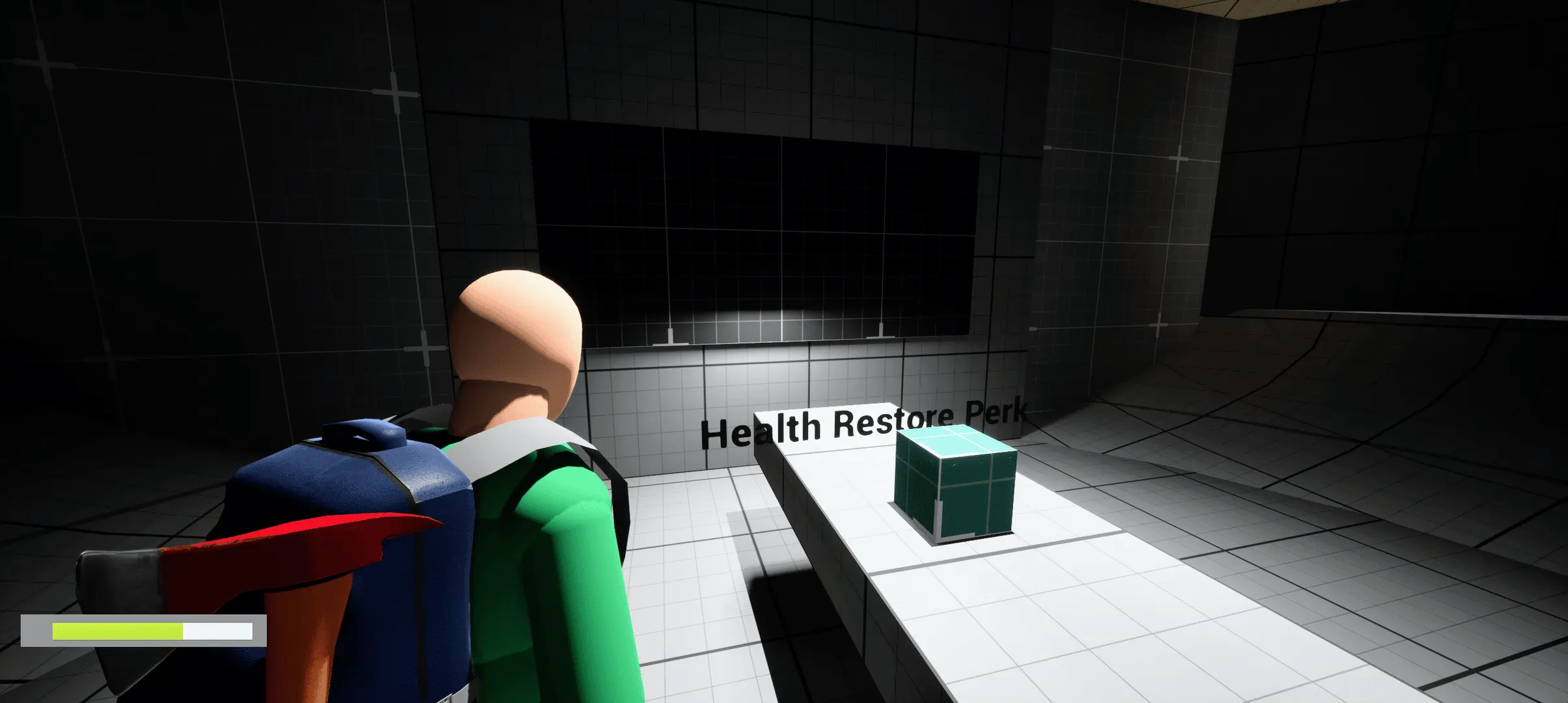
First Playable
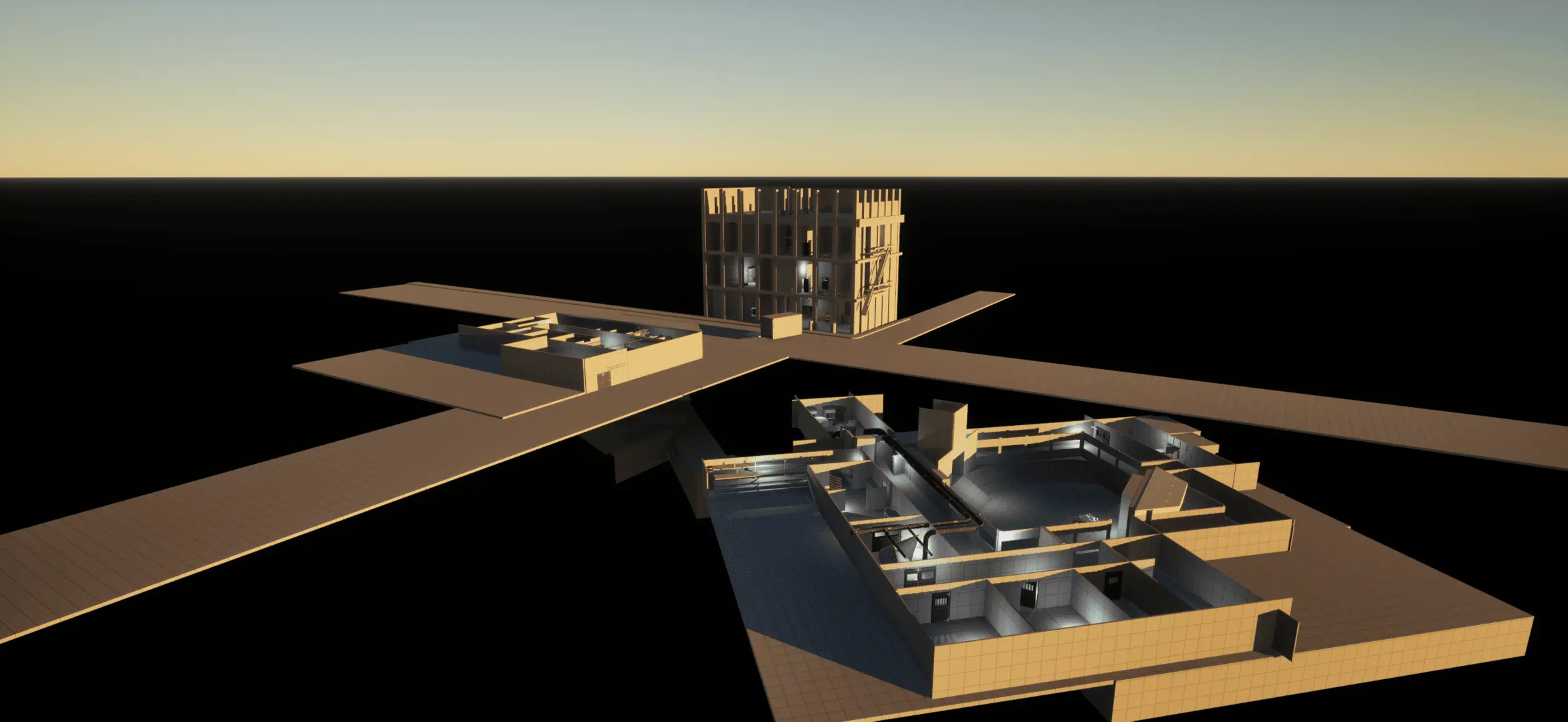
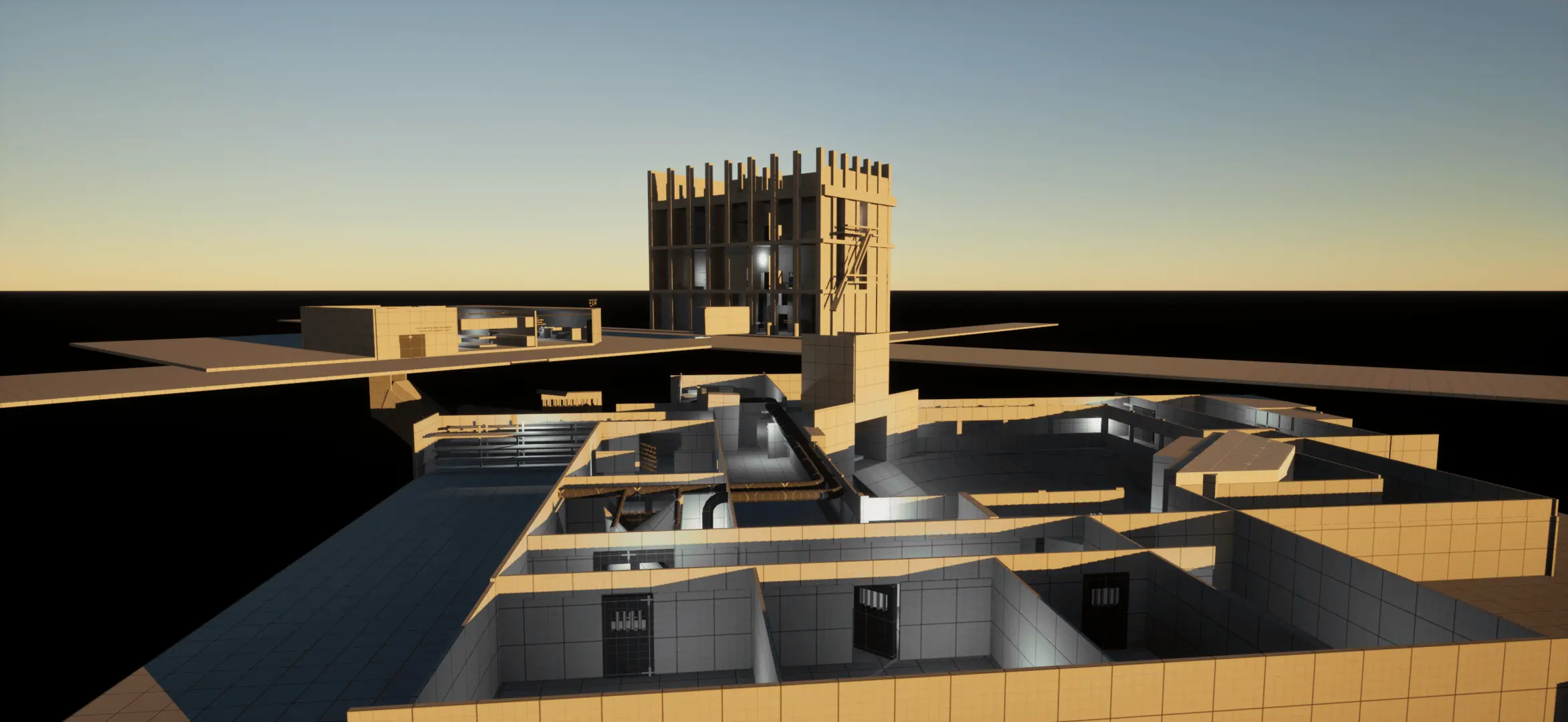
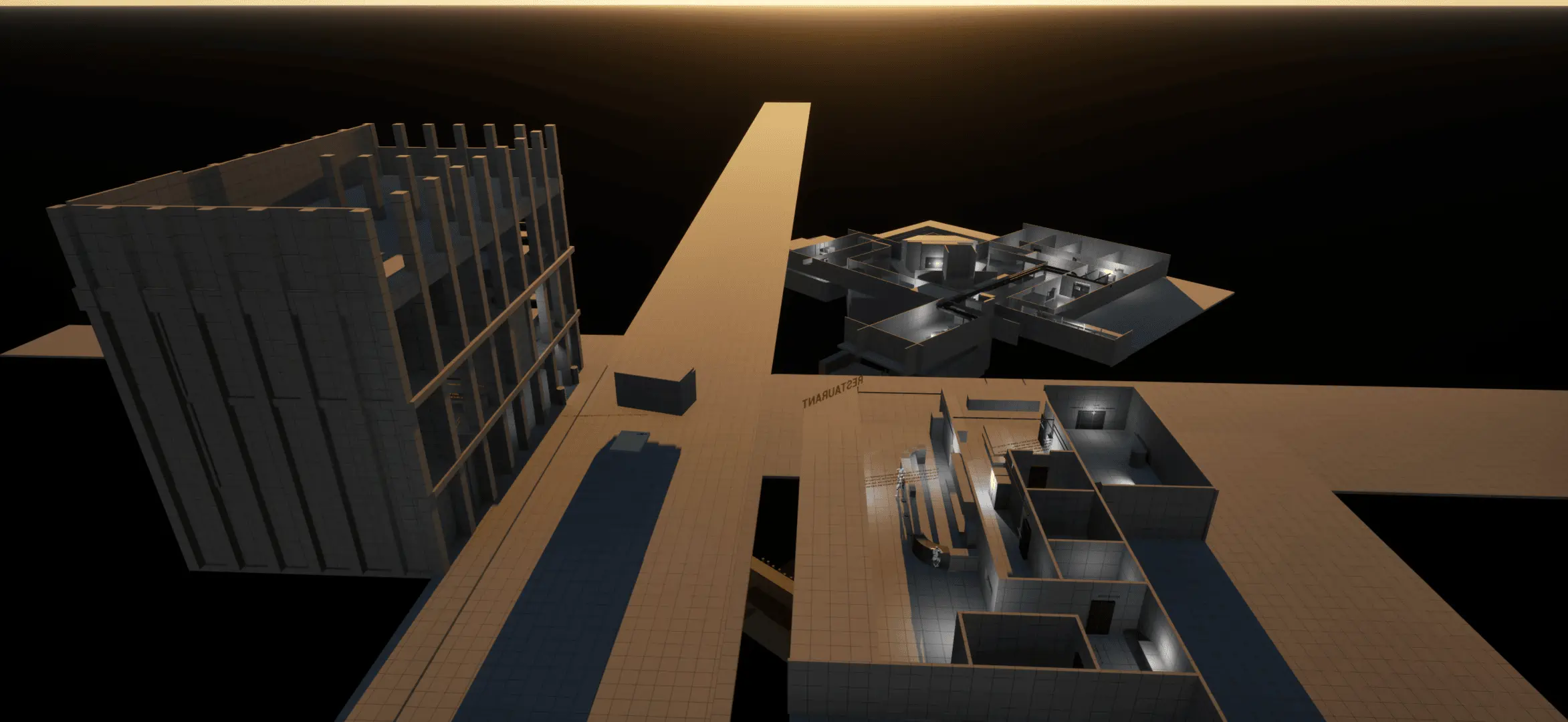
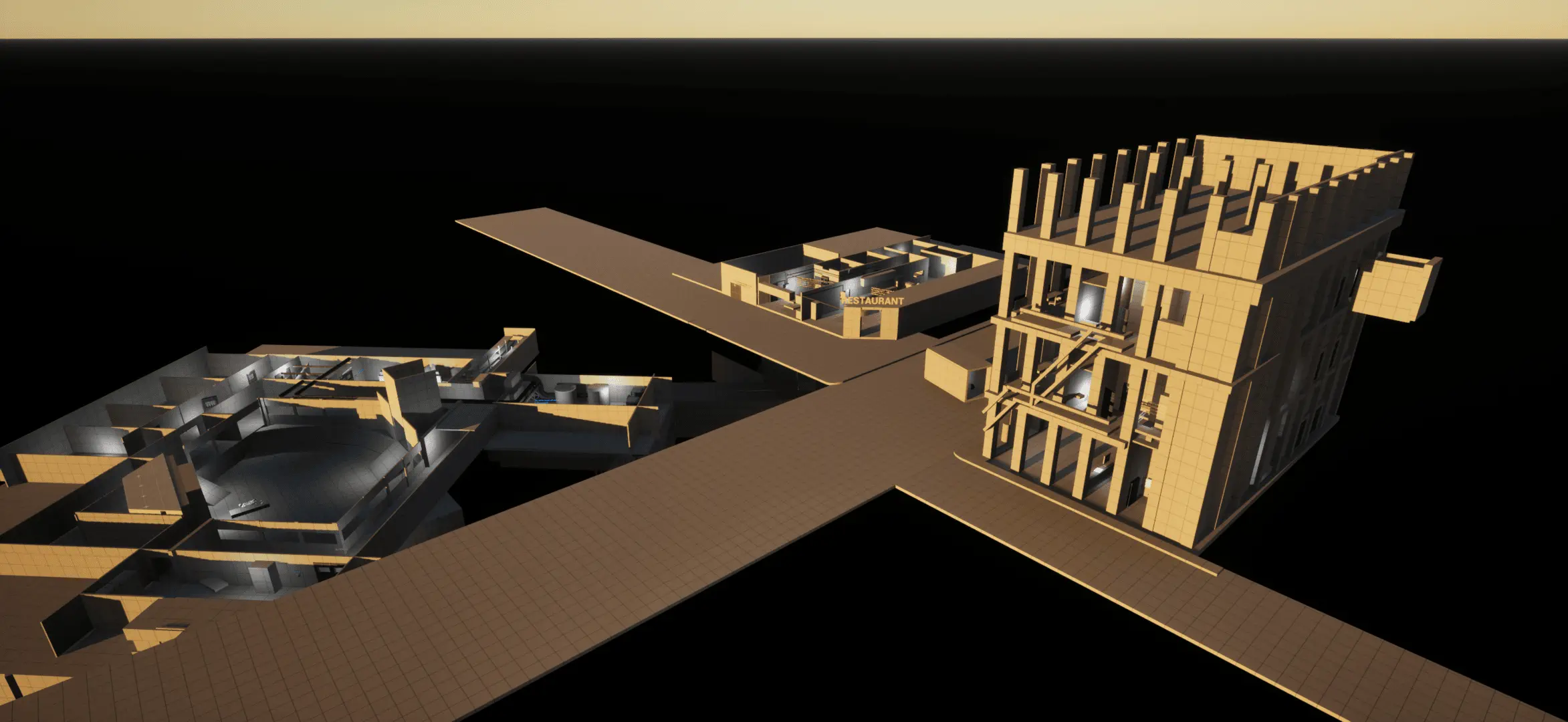
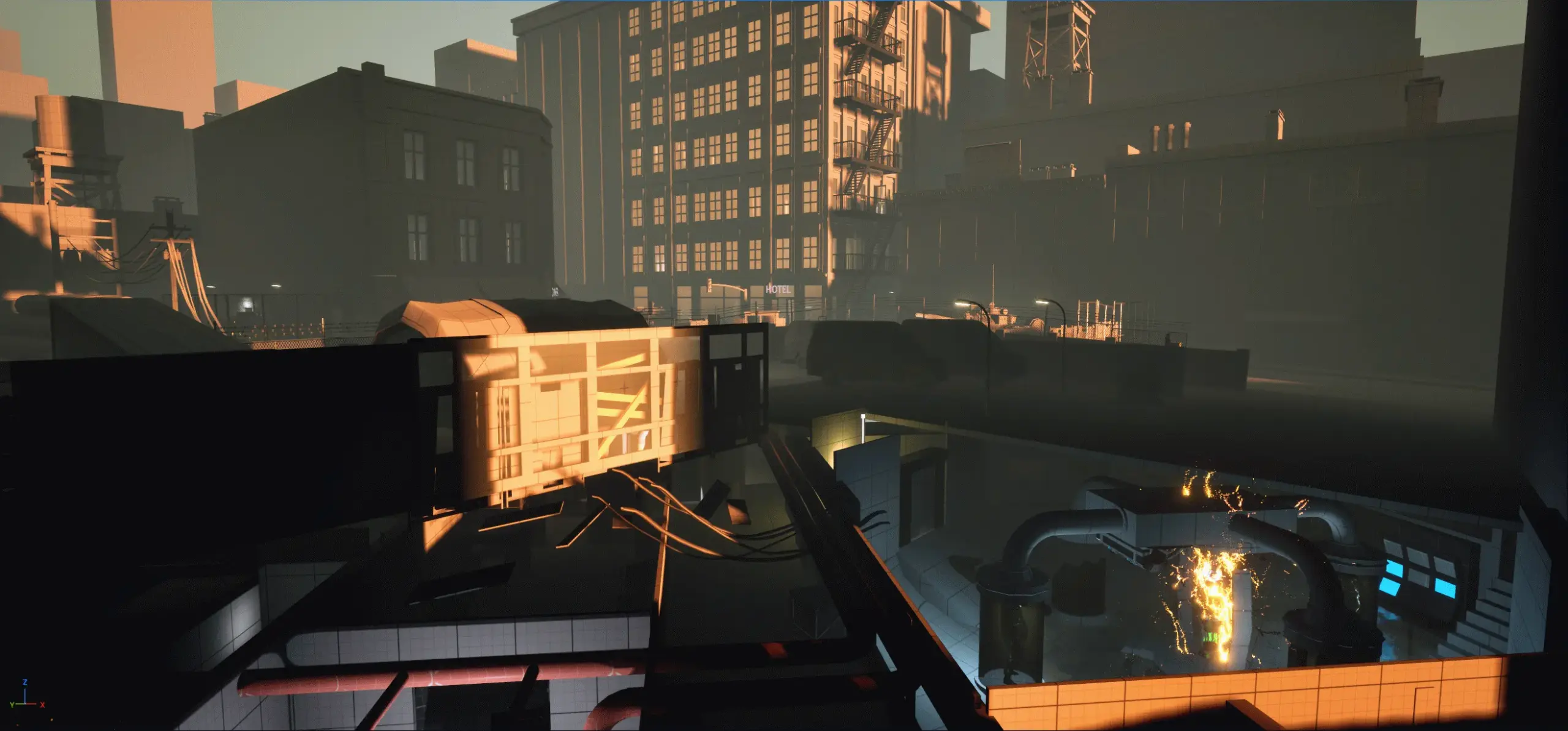
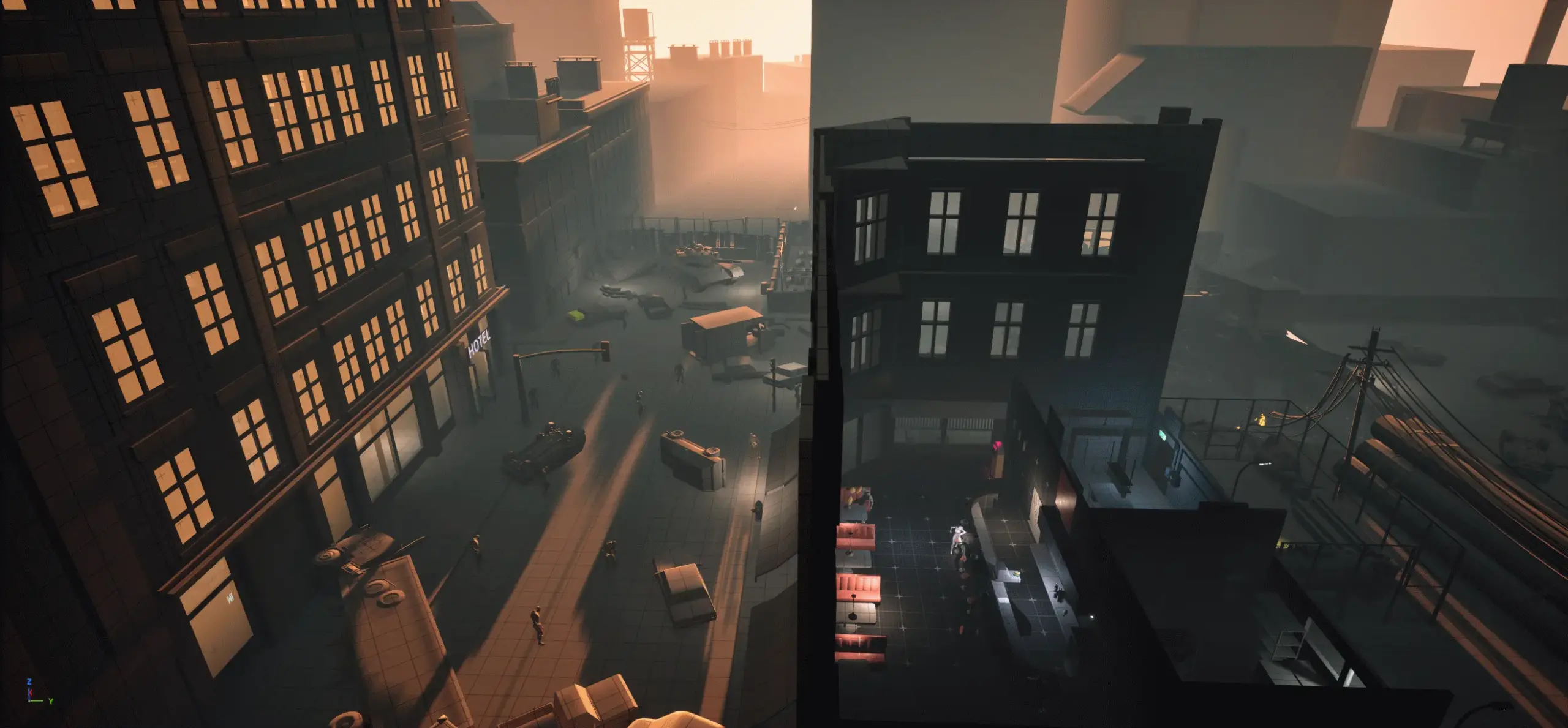
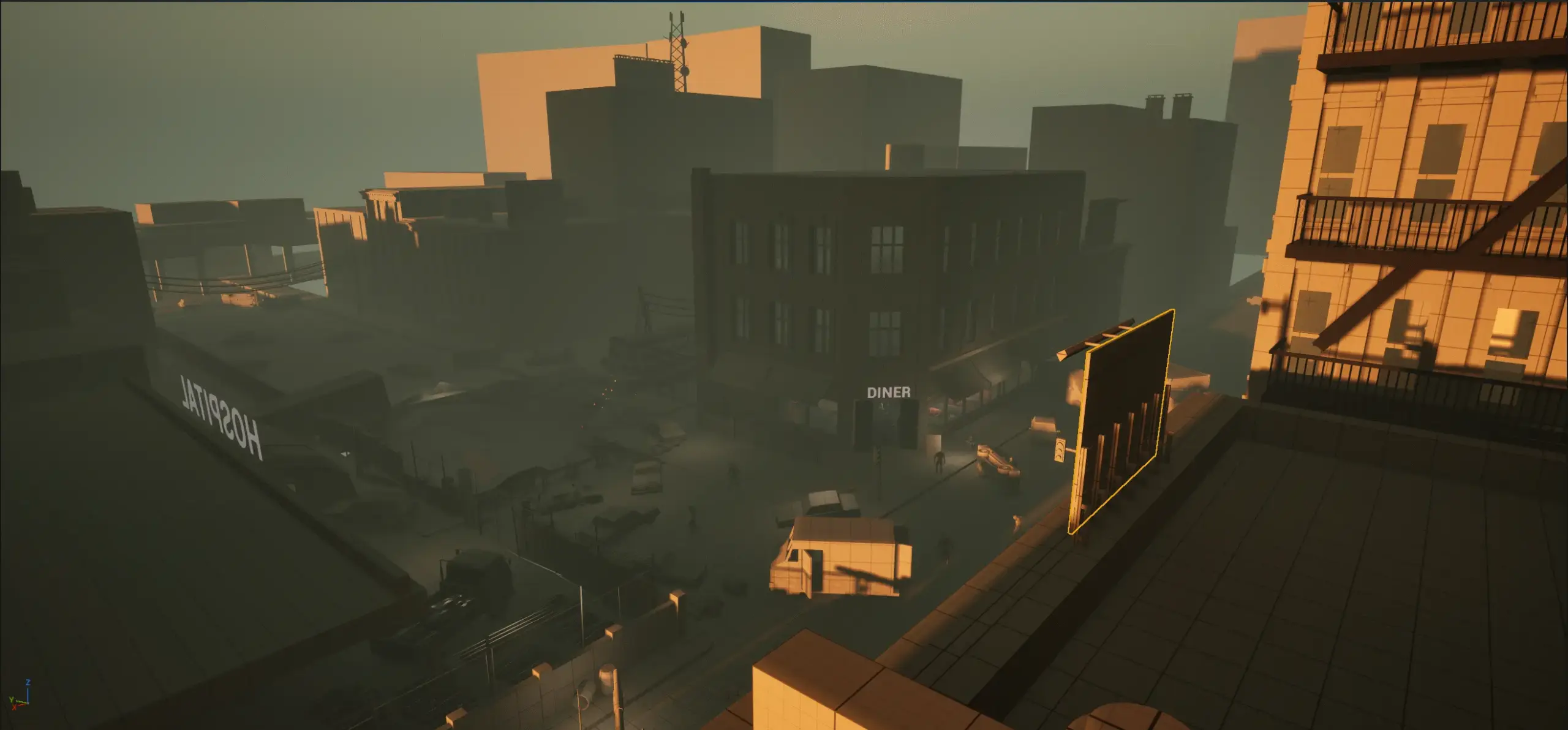
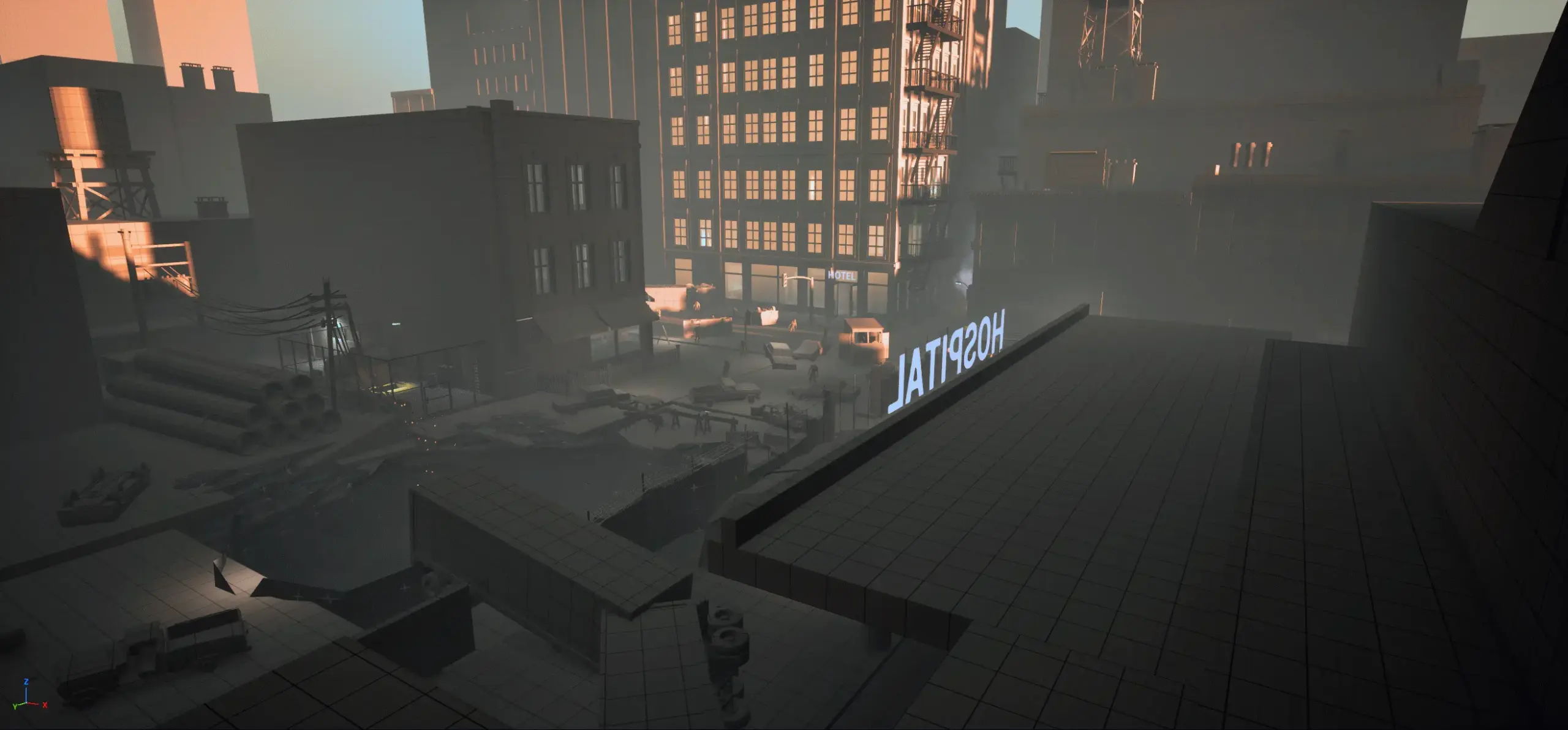
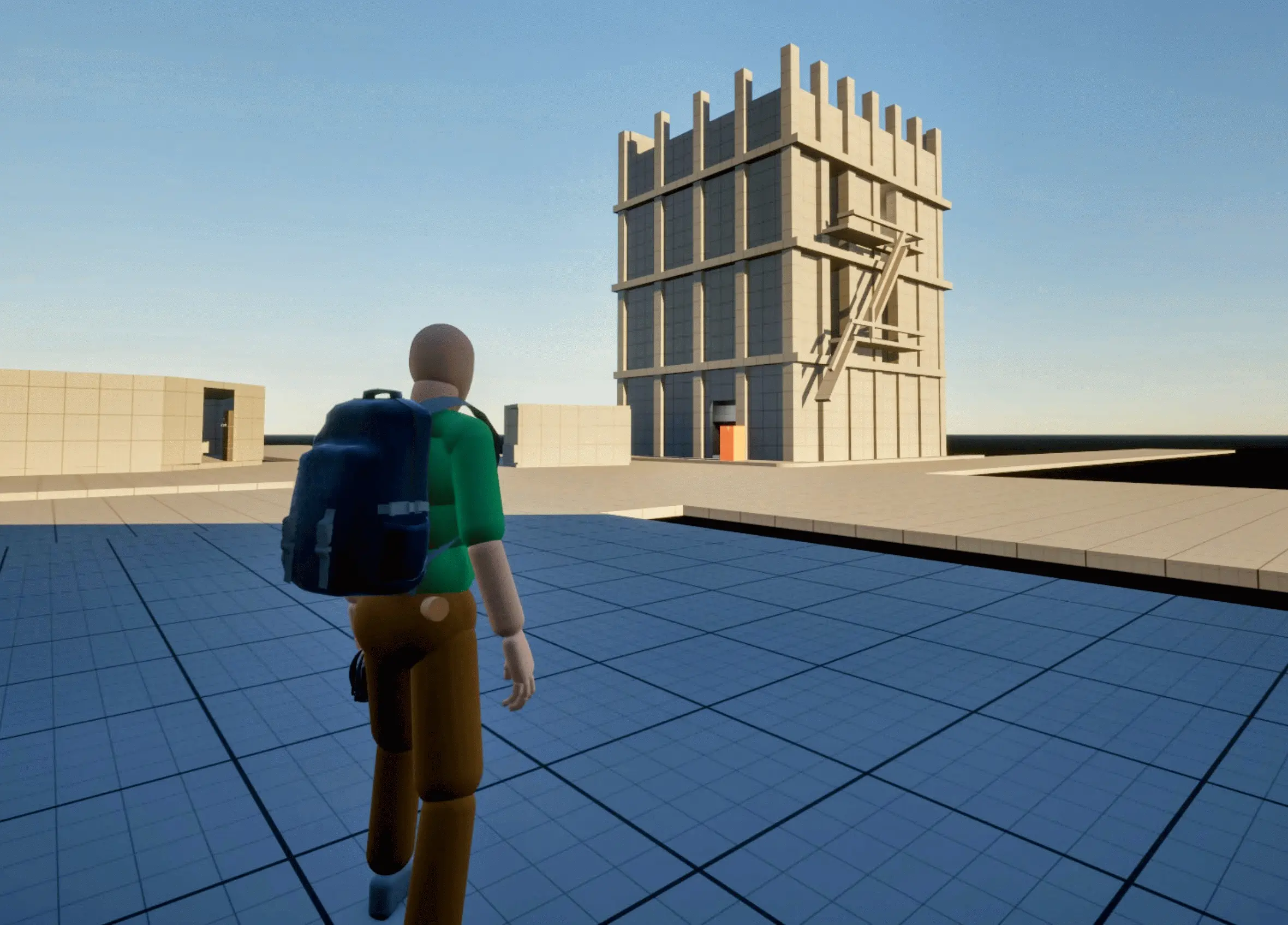
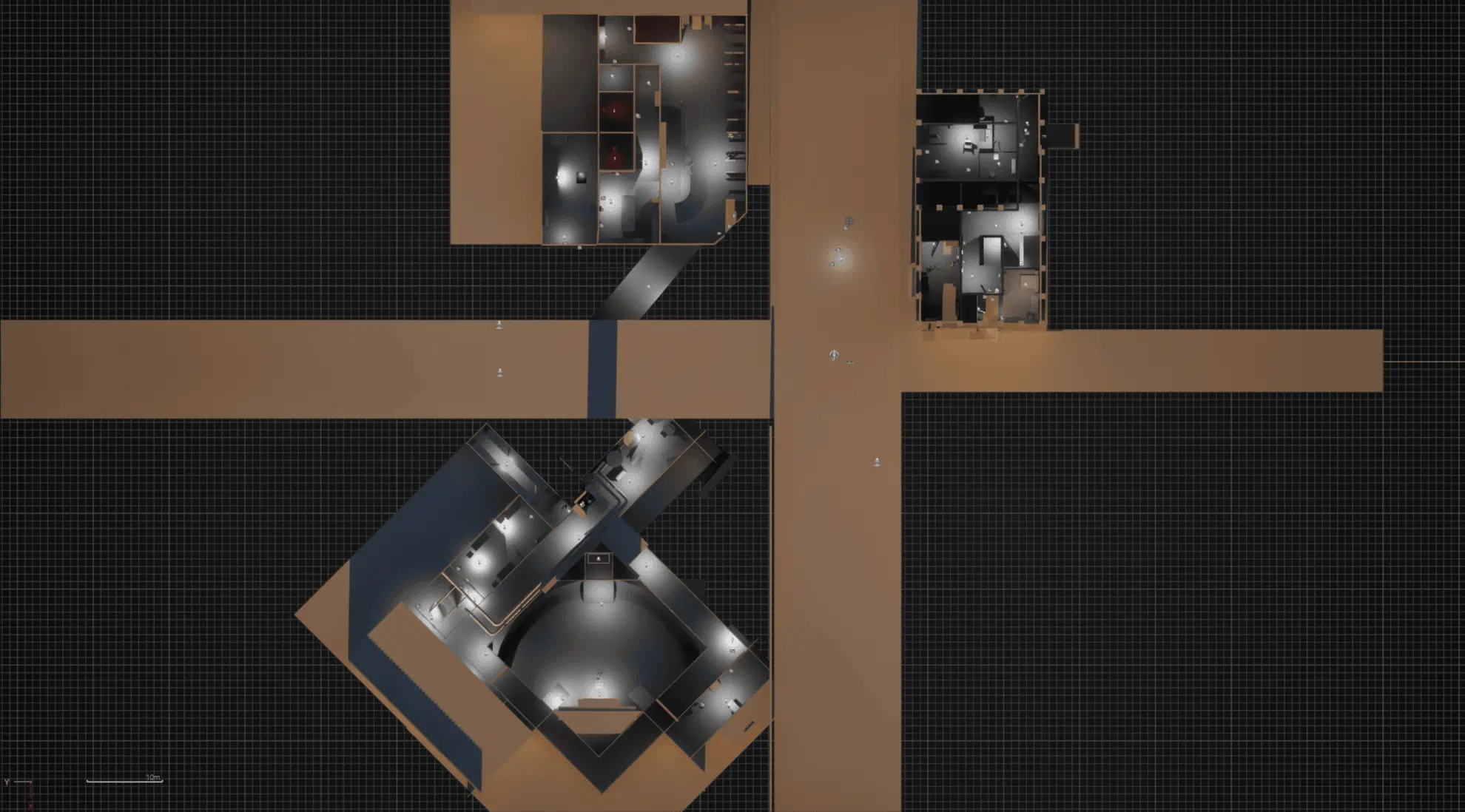
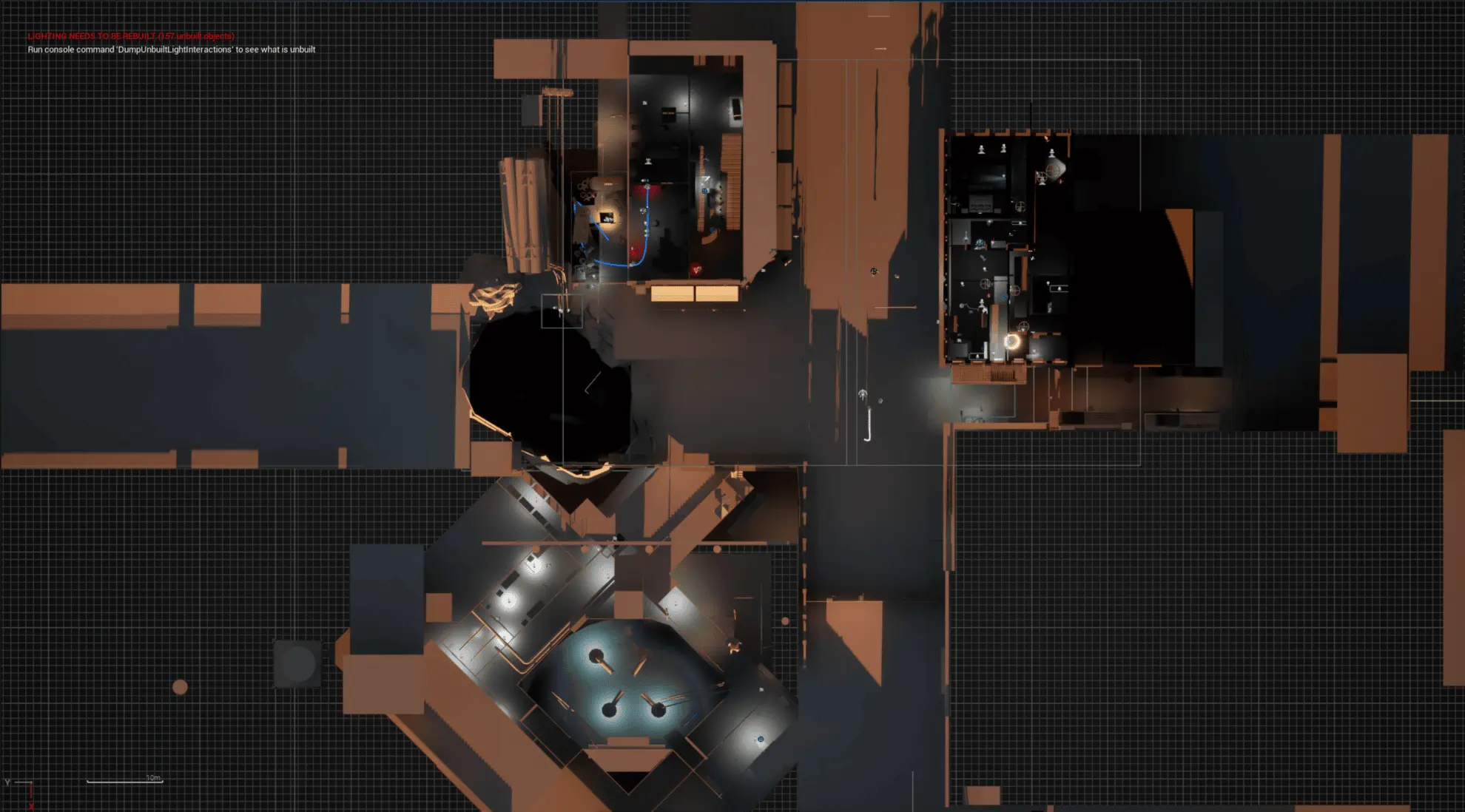
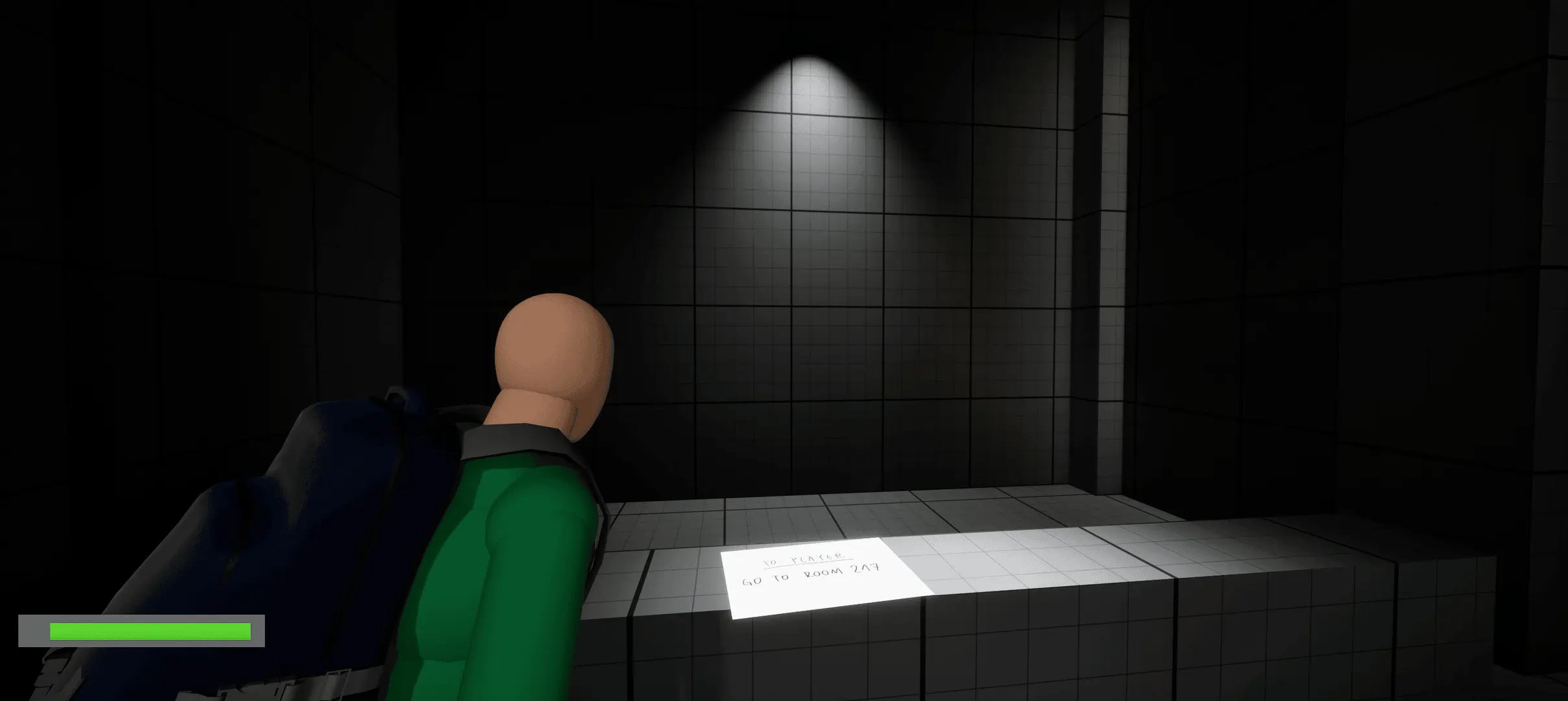
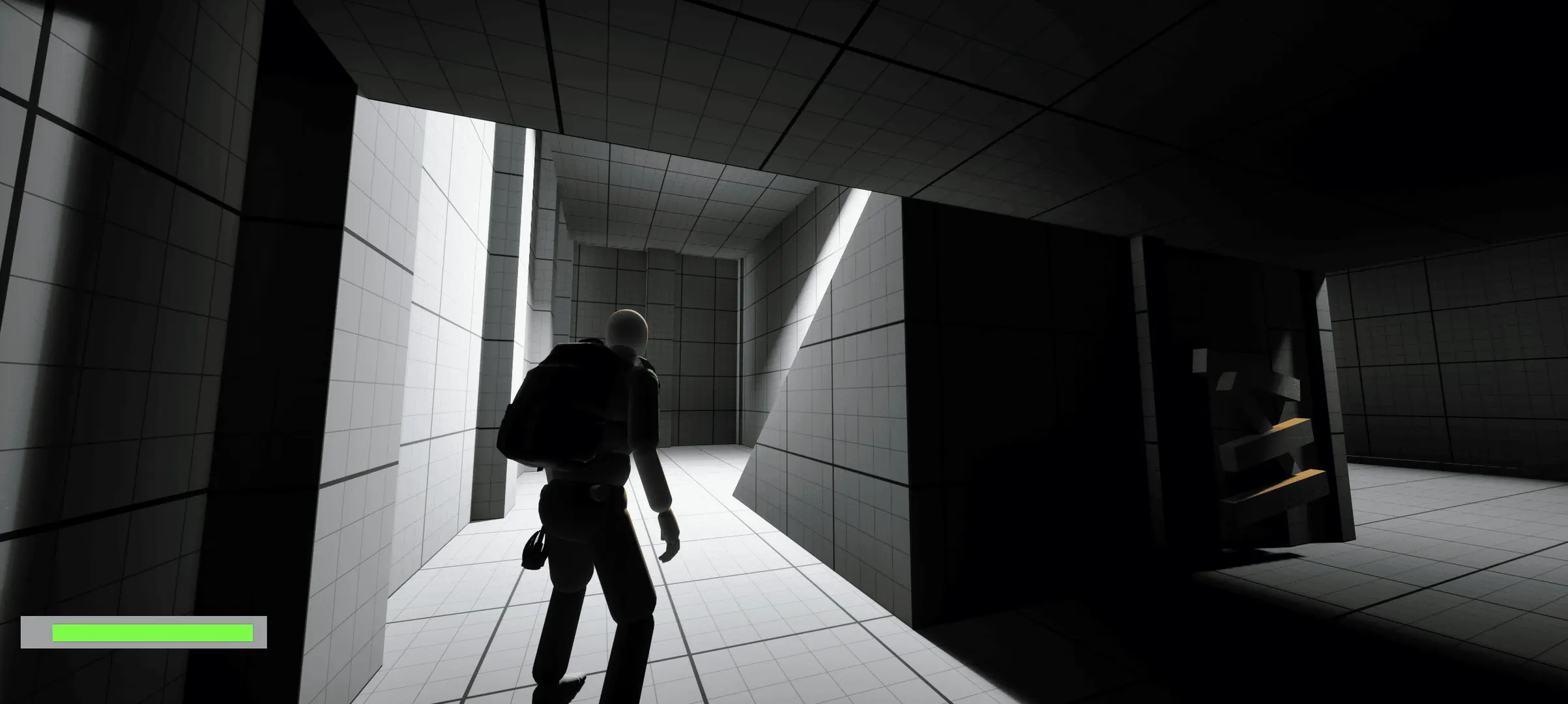
Results: I nearly doubled most of the level, rebuilt the hospital around the route a patient takes through it, and raised the city massing around the whole block, so the player gets vistas from inside the buildings and always has a landmark to navigate by.
Goal: Put storytelling into the level. Mark where the systems will go, make the final beat location more interesting.
Instructor feedback:
“The number of text boxes you’re using is a strong point. They do a great job of explaining what’s happening and make the level easy to follow.”
Playtest feedback:
“Emergency stairs path to 217 is easy to miss (swap rooms)” … “add connection RESTAURANT<->HOTEL (better showcase for the story of a new manager who stayed at the hotel)”
Implementation:
- Metrics: I widened the corridors and moved the walls because the old proportions were too claustrophobic and caused camera glitches.
- Scale: I added a second wing to the hotel and a back-of-house to the diner, because neither building was believable without them. I also cut the sewer pipe diameter.
- Hospital: the corridor to the autopsy theatre got poor reaction in playtests, so I redesigned it. Now it follows a patient’s route, from admission through decontamination, isolation and autopsy. Also the archive, morgue and pump room were added.
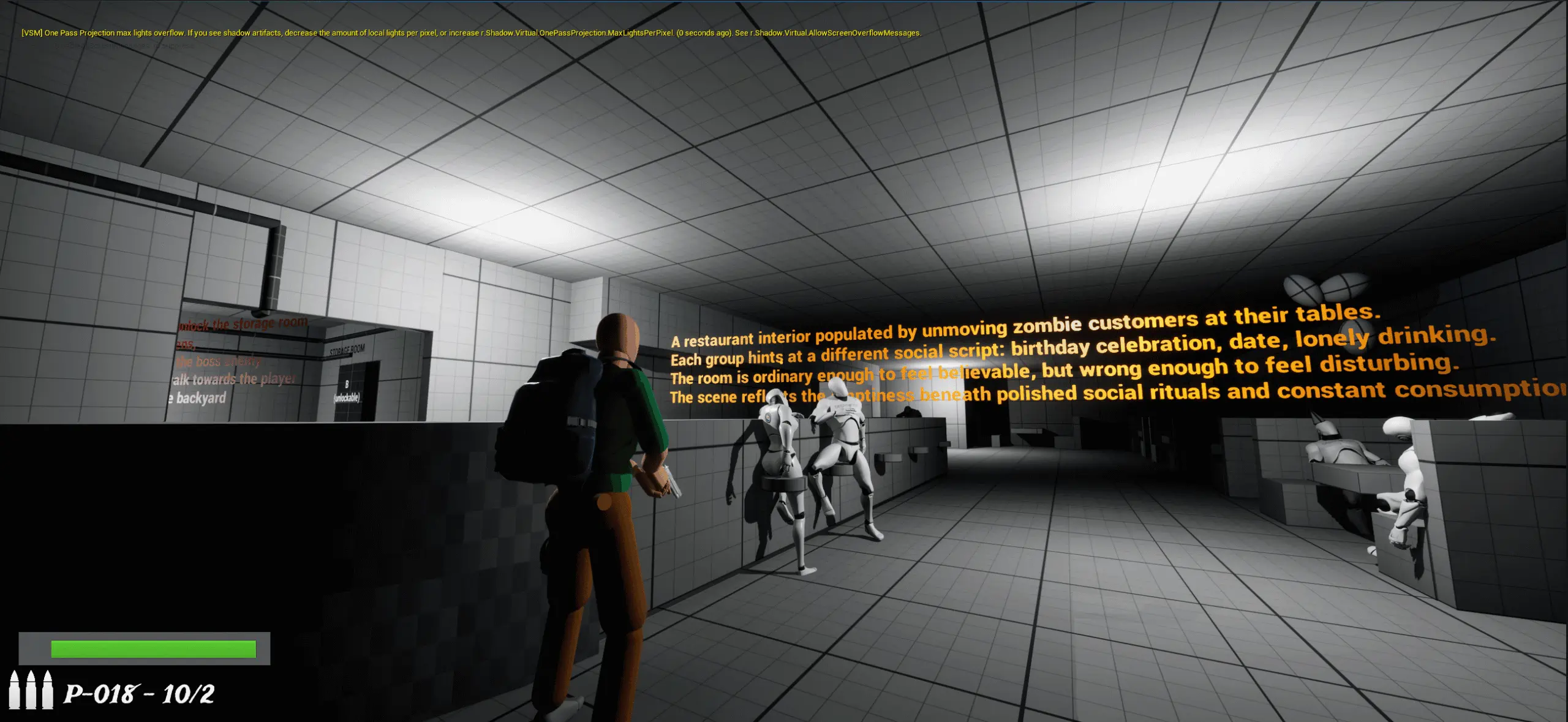
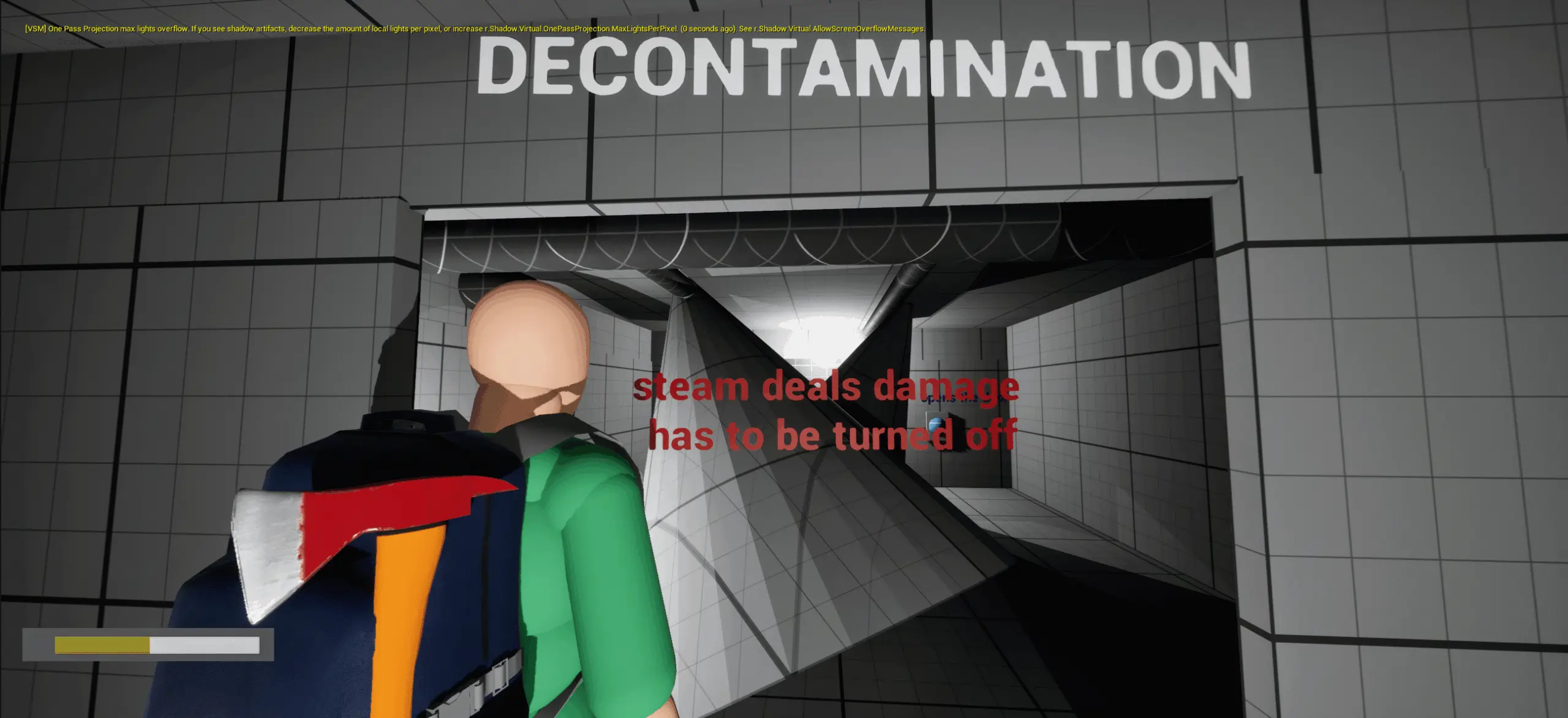
Scripting & Enemies
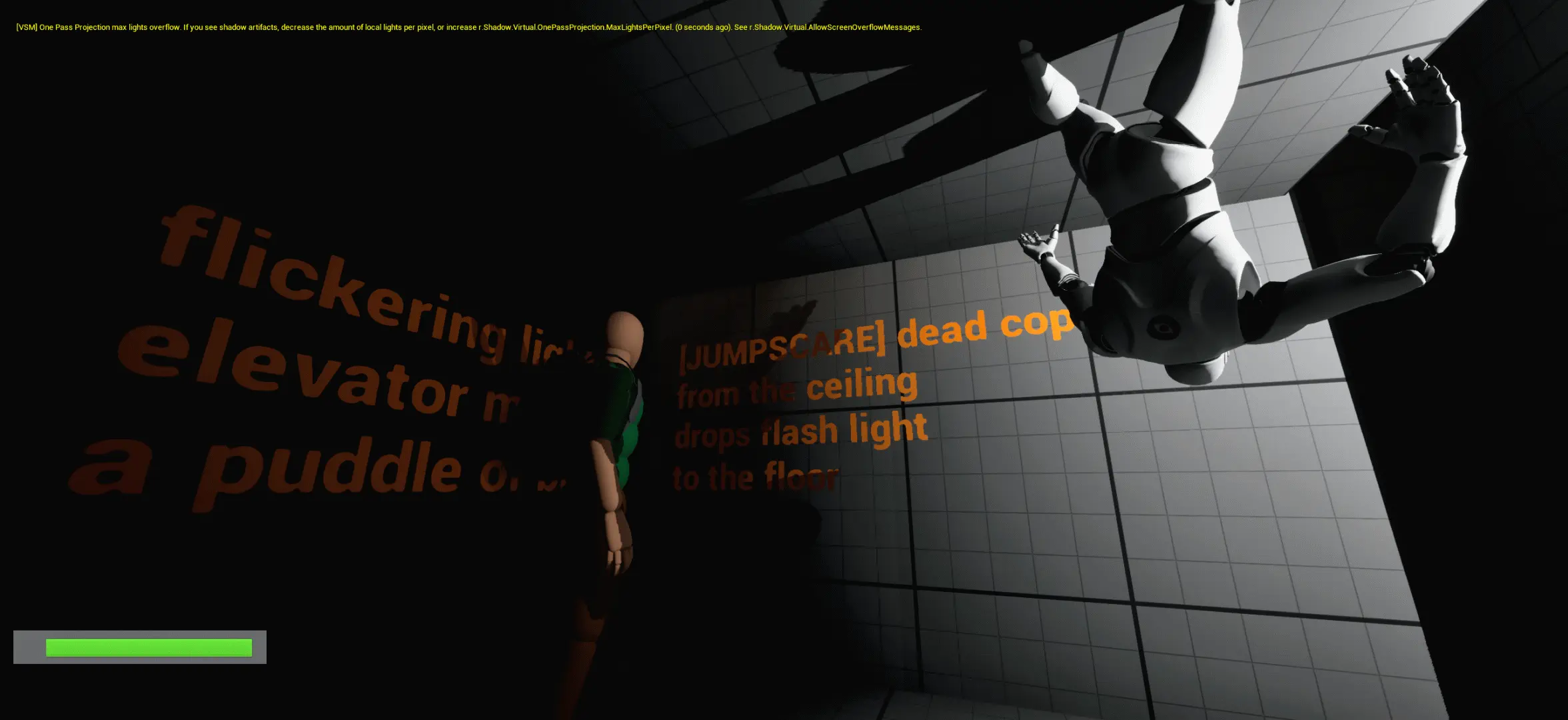
Results: Two scripted sequences: the ambush that turns the diner into a chase, and the dead cop in the broken elevator.
Goal: Get the first scripted sequences working in the build
Instructor feedback:
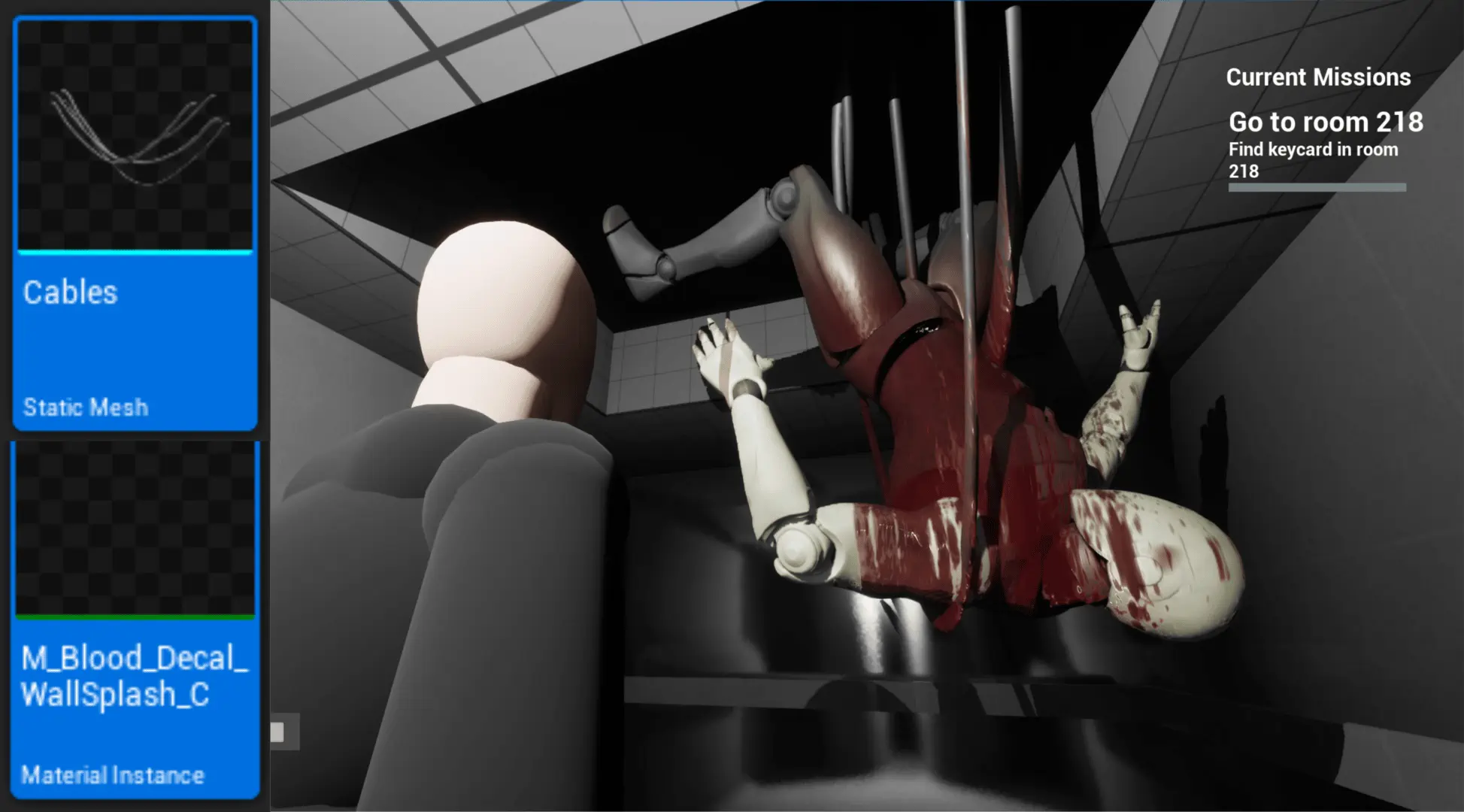
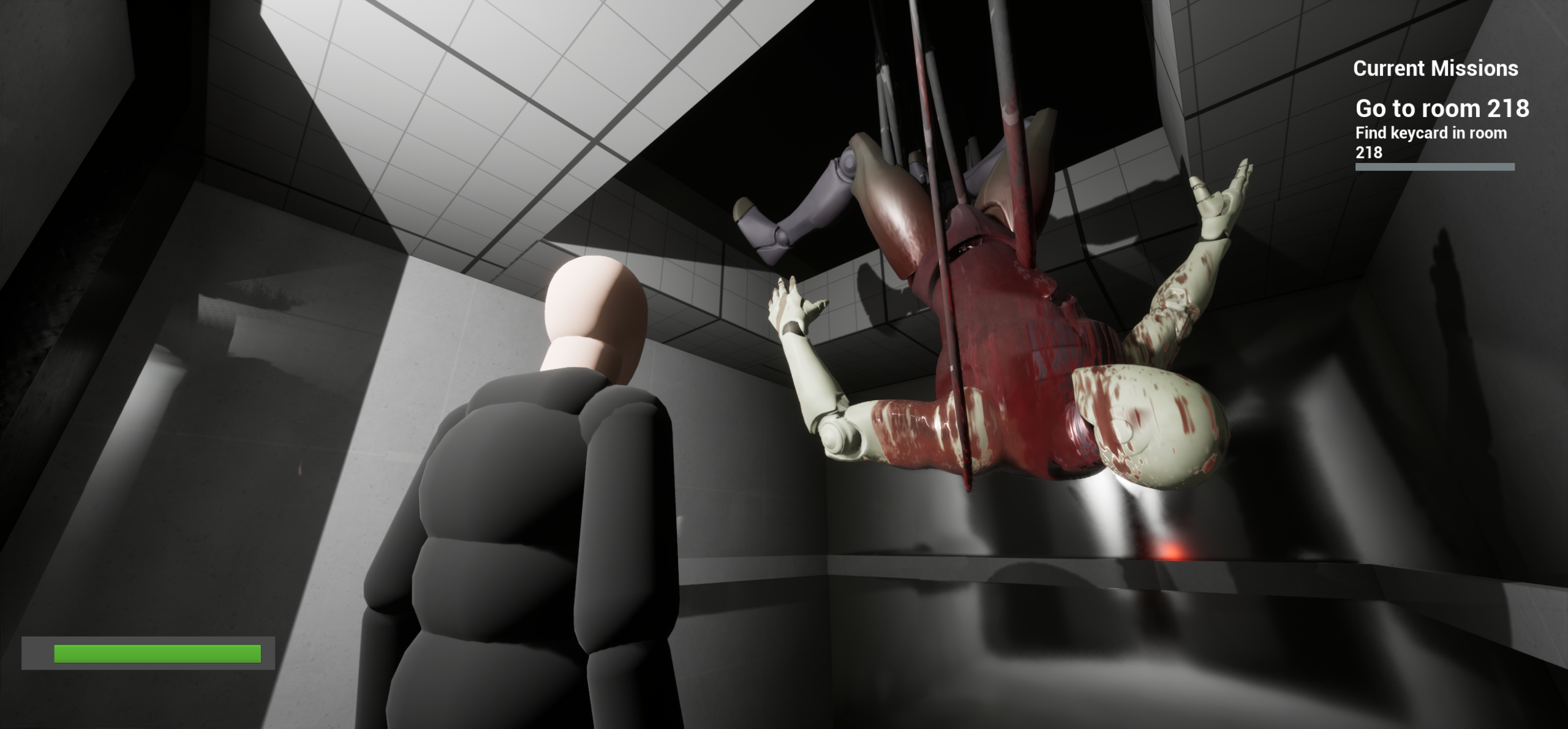
“Things like the cop falling from the ceiling are great since they help build tension and make the space feel more immersive. These kinds of details go a long way.”
Playtest feedback: “The ambush gave me a panic attack… the boss fight music is too loud an the enemy is too powerful”
Implementation:
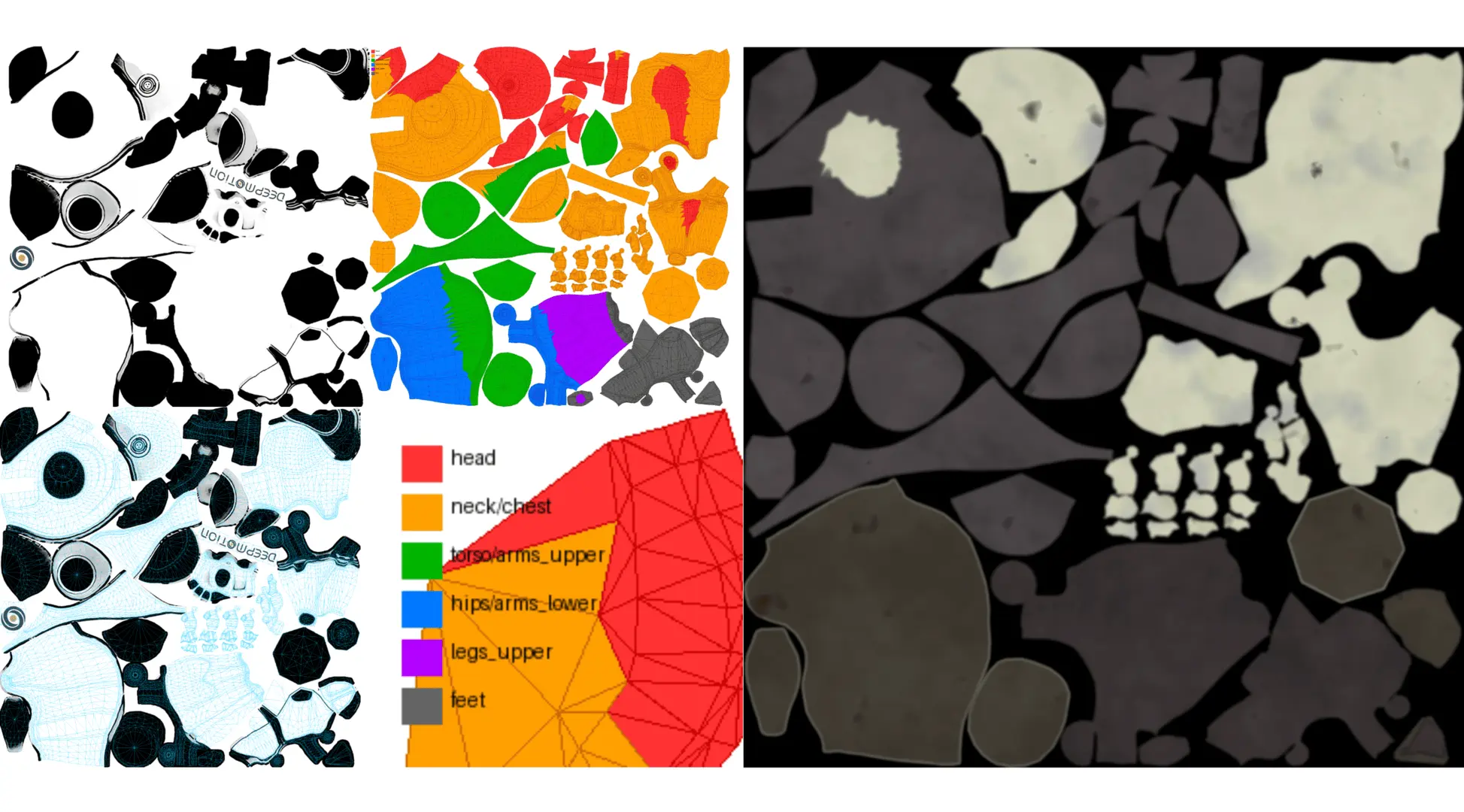
- Items: the AGLS kit had no keys, so I built custom items with their own mesh and icon, and blueprint logic that checks the player’s inventory before anything fires.
- Ambush: using the keycard opens the back-of-house, locks the other doors, opens the yard door and releases the boss. The music switches to the chase theme, and switches again when the player drops into the hole.
- Boss, first version: it used the standard zombie mesh, was no bigger than the others and had no health bar, only a lot of HP. Players tried to kill it, failed, and did not understand why. I fixed that later, during the worldbuilding & polishing phase..
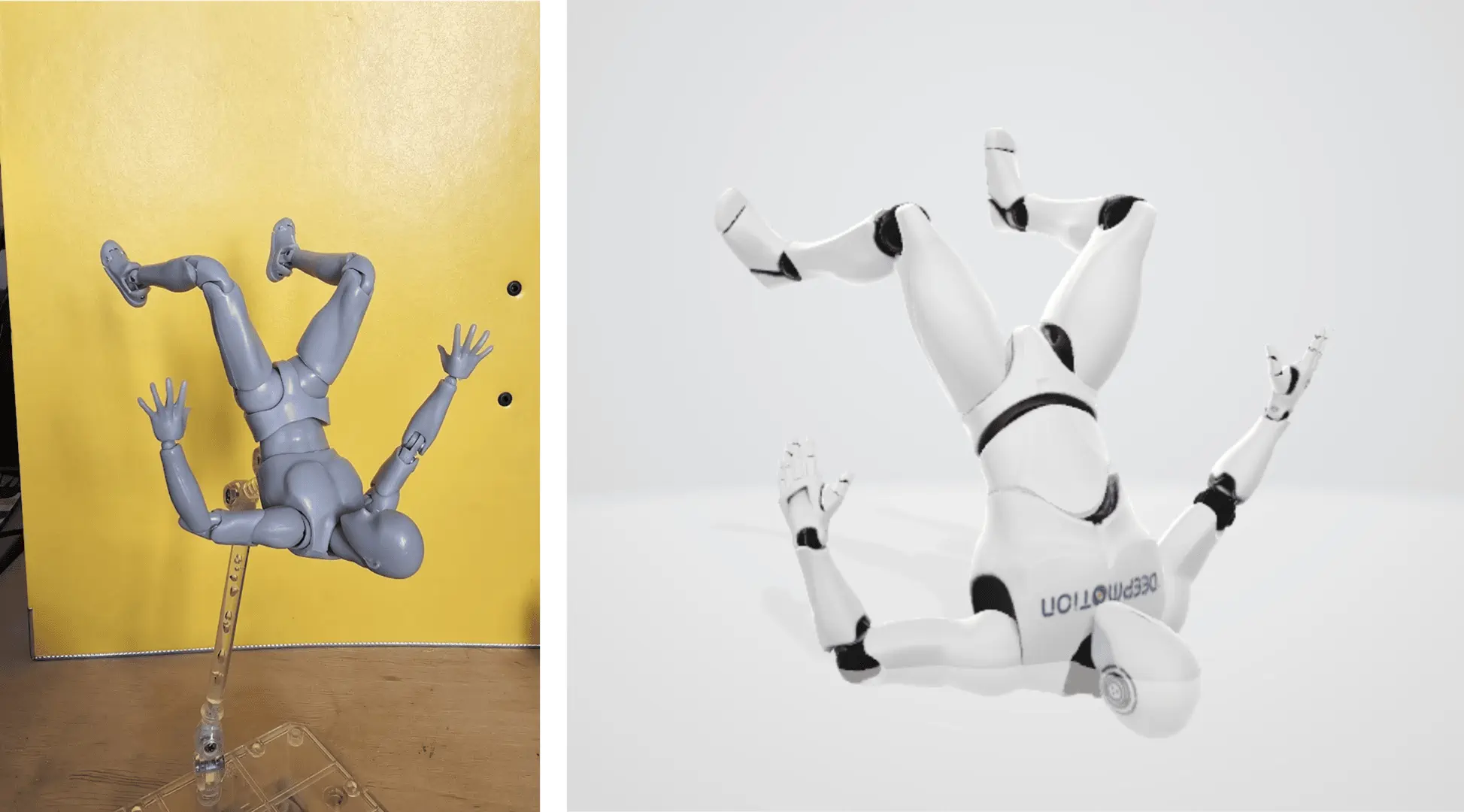
- Elevator: I put it at the end of a dark corridor off the golden path, and warned the player on the way with a CCTV feed, signs on each floor and muzak leaking through the ceiling. When they squeeze through the jammed doors, a dead policeman drops from the ceiling.